• Fri frakt över 249 kr
  • •
  • Snabba leveranser
  • •
  • Billiga böcker
Kundservice

Du är på sajten för privatpersoner.

Företag, bibliotek eller offentlig verksamhet?

Du handlar på classic.bokus.com, där alla dina funktioner finns intakta.
Till classic.bokus.com
Bokus logotyp. Gå till startsidan.
  • Erbjudanden
  • Nyheter
  • Student
  • Topplistor
  • Barn & ungdom
  • Bokus Play
  • E-böcker
  • Pocketböcker
  • Spel & pussel

10% rabatt på allt med kod: NYSTART10 →

Sidfot

Mina sidor

    Hjälp

    • Kundservice
    • Vanliga frågor och svar
    • Frakt och leverans
    • Retur vid ångerrätt
    • Reklamera vara
    • Betalning
    • Köpvillkor
    • Allmänna villkor
    • Information om webbplatsens tillgänglighet

    Om Bokus

    • Om oss
    • Pressrum
    • För studenter
    • För företag
    • För bibliotek och offentlig verksamhet
    • För leverantörer
    • Hållbarhet

    Populärt

    • Aktuella erbjudanden
    • Presentkort
    • Studentlitteratur
    • Nya böcker
    • Topplistor
    • Signerade böcker
    • Engelska böcker

    Inspiration

    • Boktips
    • BookTok
    • Populära bokserier
    • Barnbokskaraktärer
    • Populära författare
    Logotyp för Bokus
    Följ oss på Facebook (extern länk)Följ oss på Instagram (extern länk)Följ oss på YouTube (extern länk)Följ oss på TikTok (extern länk)
    bokus @ CookiesAnpassa cookiesIntegritetspolicyKöpvillkor
    Till Citymail hemsida (extern länk)Till Budbee hemsida (extern länk)Till Postnord hemsida (extern länk)Till Schenker hemsida (extern länk)Till Early Bird hemsida (extern länk)Till Walleys hemsida (extern länk)
    1. Historia och arkeologi
    2. Historia
    3. Historia: teori och metod

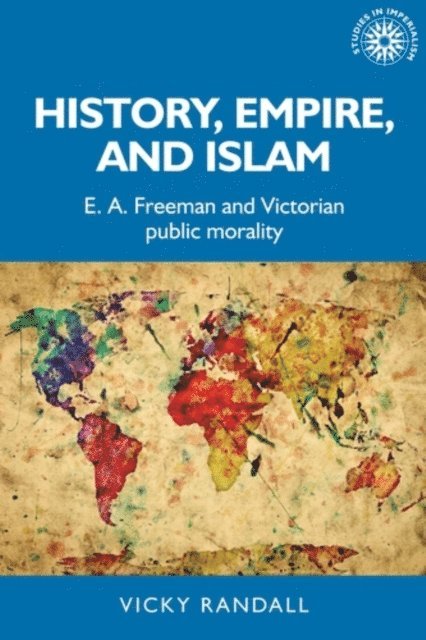
    History, Empire, and Islam

    E. A. Freeman and Victorian Public Morality

    AvVicky Randall

    E-bok
    PDF, Engelska, 2020

    Del 176 i serien Studies in Imperialism

    1 177 kr

    Läs direkt i Bokus Reader – eller ladda ned till din enhet (PDF kräver ofta zoom och scroll på små skärmar).

    Fler format och utgåvor

    Inbunden

    1 192 kr

    E-bok

    1 174 kr

    Beskrivning

    This book offers the first comprehensive treatment of the historian and public moralist E. A. Freeman since the publication of W. R. W. Stephens’ Life and Letters of Edward A. Freeman (1895). While Freeman is often viewed by modern scholars as a panegyrist to English progress and a proponent of Aryan racial theory, this study suggests that his world-view was more complicated than it appears. Revisiting Freeman’s most important historical works, this book positions Thomas Arnold as a significant influence on Freeman’s view of world-historical development. Conceptualising the past as cyclical rather than unilinear, and defining race in terms of culture, rather than biology, Freeman’s narratives were pervaded by anxieties about recapitulation. Ultimately, this study shows that Freeman’s scheme of universal history was based on the idea of conflict between Euro-Christendom and the Judeo-Islamic Orient, and this shaped his engagement with contemporary issues.

    Produktinformation

    • Utgivningsdatum:2020-03-05
    • Språk:Engelska
    • Filformat:PDF
    • Kopieringsskydd:LCP
    • ISBN:9781526135827
    • Förlag:Manchester University Press
    • Serie:Studies in Imperialism

    Utforska kategorier

    • Historia: teori och metod inom Historia och arkeologi
    • Socialhistoria och kulturhistoria inom Historia och arkeologi
    • Kolonialism och imperialism inom Historia och arkeologi

    Mer om författaren

    Vicky Randall is Senior Lecturer in History at the University of Gloucestershire

    Innehållsförteckning

    • Introduction: ‘History is past politics, politics is present history’Part I: The West1 The Norman Conquest (1867–79) 2 The Aryan race and Comparative Politics (1873)3 ‘I am no lover of Empire’: the critique of British expansionismPart II: The East4 Islam and Orientalism in the History and Conquests of the Saracens (1856) 5 The Great Eastern Crisis and the ‘Oriental Conspiracy’6 Fear and guilt in the Ottoman Power in Europe (1877) ConclusionAppendixReferencesIndex