• Fri frakt över 249 kr
  • •
  • Snabba leveranser
  • •
  • Billiga böcker
Kundservice

Du är på sajten för privatpersoner.

Företag, bibliotek eller offentlig verksamhet?

Du handlar på classic.bokus.com, där alla dina funktioner finns intakta.
Till classic.bokus.com
Bokus logotyp. Gå till startsidan.
  • Erbjudanden
  • Nyheter
  • Student
  • Topplistor
  • Barn & ungdom
  • Bokus Play
  • E-böcker
  • Pocketböcker
  • Spel & pussel

10% rabatt på allt med kod: NYSTART10 →

Sidfot

Mina sidor

    Hjälp

    • Kundservice
    • Vanliga frågor och svar
    • Frakt och leverans
    • Retur vid ångerrätt
    • Reklamera vara
    • Betalning
    • Köpvillkor
    • Allmänna villkor
    • Information om webbplatsens tillgänglighet

    Om Bokus

    • Om oss
    • Pressrum
    • För studenter
    • För företag
    • För bibliotek och offentlig verksamhet
    • För leverantörer
    • Hållbarhet

    Populärt

    • Aktuella erbjudanden
    • Presentkort
    • Studentlitteratur
    • Nya böcker
    • Topplistor
    • Signerade böcker
    • Engelska böcker

    Inspiration

    • Boktips
    • BookTok
    • Populära bokserier
    • Barnbokskaraktärer
    • Populära författare
    Logotyp för Bokus
    Följ oss på Facebook (extern länk)Följ oss på Instagram (extern länk)Följ oss på YouTube (extern länk)Följ oss på TikTok (extern länk)
    bokus @ CookiesAnpassa cookiesIntegritetspolicyKöpvillkor
    Till Citymail hemsida (extern länk)Till Budbee hemsida (extern länk)Till Postnord hemsida (extern länk)Till Schenker hemsida (extern länk)Till Early Bird hemsida (extern länk)Till Walleys hemsida (extern länk)
    1. Historia och arkeologi
    2. Historia
    3. Historia: särskilda händelser och ämnen
    4. Sjöfartshistoria

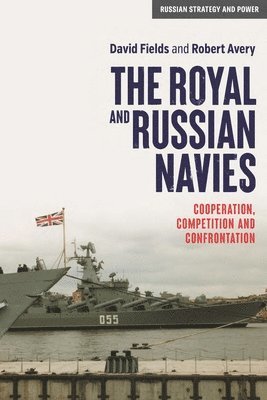
    Royal and Russian Navies

    Cooperation, competition and confrontation

    AvDavid Fields,Robert Avery

    Häftad, Engelska, 2025

    Del i serien Russian Strategy and Power

    292 kr

    Skickas . Fri frakt över 249 kr.

    Fler format och utgåvor

    Inbunden

    1 227 kr

    Beskrivning

    Before the political rupture between Russia and the West—triggered by Russia's annexation of Crimea in 2014 and the invasion of Ukraine in 2022—the Royal Navy and the Russian Navy engaged in a complex programme of military cooperation. From 1988, the Royal Navy first collaborated with the Soviet Navy, then the Russian Federation Navy, culminating in a 1998 Memorandum of Understanding on naval cooperation. This book explores that unique period, examining how both navies operated and the lessons Russia drew about maritime power in advancing its global interests. With the ongoing conflict in Ukraine and growing tensions between Russia and the Euro-Atlantic community, the maritime domain remains a critical arena for defence, deterrence, and potential military dialogue. The lessons from this era of cooperation offer valuable insights for navigating an uncertain future.

    Produktinformation

    • Utgivningsdatum:2025-04-08
    • Mått:156 x 234 x 23 mm
    • Vikt:404 g
    • Format:Häftad
    • Språk:Engelska
    • Serie:Russian Strategy and Power
    • Antal sidor:264
    • Förlag:Manchester University Press
    • ISBN:9781526184597

    Utforska kategorier

    • Sjöfartshistoria inom Historia och arkeologi
    • Militär strategi inom Samhälle och politik
    • Internationella relationer inom Samhälle och politik

    Mer om författaren

    David Fields is a retired Royal Naval officer and former Naval Attache in RussiaRobert Avery is a retired Principal Burnham Lecturer, Defence Centre for Languages & Culture, Defence Academy of the UK

    Recensioner i media

    'This is a most valuable and timely review of Royal Navy/Russian Navy relations, ably compiled by two highly qualified authoritative authors. From wide experience they analyse periods when the two Navies have deterred each other to a promising quarter-century of constructive dialogue ending in further depressing antagonism. Strongly recommended.' Admiral Sir Jock Slater GCB LVO. First Sea Lord, 1995-98'This excellent book provides not only a superb historical record of the relationship between the Royal and Russian Navies, but also offers hugely insightful analysis on the importance of understanding and engagement. Enriched with fascinating vignettes of personal interactions revealing the character of the Russian naval leadership, it is gold dust for anyone involved in developing maritime strategy and policy.' Admiral Sir Tim Fraser KCB. Vice Chief of Defence Staff, 2019-22 'Whatever the eventual outcome of the Russo-Ukraine war, Russia is not going to go away. It will remain a major and uncomfortable player in the European scene. For that reason alone, we are going to have to think about how to deal with it. The Royal and Russian Navies should help us do so because it reminds us that alongside the very necessary requirements to deter and defend against future aggression, there is a need for dialogue and pragmatic engagement if only to prevent things getting worse. This completely unique and quite fascinating review of the initially hopeful but eventually failing role that the two navies played in this process before Russia’s attack on Ukraine provides both encouragement and warning. It gives a very human account and is highly recommended. Policy-makers, in particular, need to read it.' Geoff Till, Emeritus Professor of Maritime Studies of King's College London 'This outstanding book provides a critical assessment of Putin’s Russia, focussing on the clash of cultures between open and closed societies, one that can be traced through the very different ways in which closed societies attempt to run navies, and the strategic priorities that shape Soviet and Russian naval policy. Russian Fleets have always focused on defending the homeland, as territory and ideology, they had no interest in refighting a Battle of the Atlantic.' Andrew Lambert, Laughton Professor of Naval History, King's College London'The Royal and Russian Navies is a quite exceptional book, a true unprejudiced historical record of a unique moment in time from the pragmatic and professional viewpoint of the people actually engaged in it. Navies both reflect and affect the countries they defend and the strategic environment within which they operate. The book also illustrates both these points exactly. Better still for something so important, it is written in an engaging reader-friendly style and painlessly leaves us with much to ponder that is especially appropriate for these tumultuous times.'Professor Geoffrey Till, The Naval Review'David Fields and Robert Avery [...] provide a most timely assessment of naval frenemies. It is also an excellent profile of the Russian navy since the late 1980s.'Iain Ballantyne, Warships International Fleet Review'Fields and Avery’s thoughtful study provides an important and evocative historical record of a significant period in modern naval diplomacy. It is a reminder that human factors can materially affect such a process, and provides firm guidance to those contemplating when, how and why to look to navies to forge greater stability in global affairs.'Nick Childs, Survival (The International Institute for Strategic Studies)'The one thread that links all the sections, chapters, anecdotes and observations of the book is the importance the authors attach to communication. The ability to discuss problems, to closely observe the other and to talk is something that Avery and Fields rightly challenge us to remember; Russia and its navy is not going to go away. Whether friend or adversary, Western navies - indeed, Western states - will have to coexist with it, and navies provide a very useful vehicle through which those conversations can be had, whether in competition, cooperation or confrontation.'Duncan Redford, The RUSI Journal

    Innehållsförteckning

    • ForewordPreface1 A concise history of the Russian Navy2 Pre-1988 UK-Russia naval relations3 1988–1999 From confrontation to cooperation4 1999–2010 Back towards confrontation5 2010–2014 Collapse of cooperation and return to confrontation6 What did the two navies learn about each other?7 The Russian Navy - future prospects8 Future defence engagement with RussiaConclusion