• Fri frakt över 249 kr
  • •
  • Snabba leveranser
  • •
  • Billiga böcker
Kundservice

Du är på sajten för privatpersoner.

Företag, bibliotek eller offentlig verksamhet?

Du handlar på classic.bokus.com, där alla dina funktioner finns intakta.
Till classic.bokus.com
Bokus logotyp. Gå till startsidan.
  • Erbjudanden
  • Nyheter
  • Student
  • Topplistor
  • Barn & ungdom
  • Bokus Play
  • E-böcker
  • Pocketböcker
  • Spel & pussel

10% rabatt på allt med kod NYSTART10 →

Sidfot

Mina sidor

    Hjälp

    • Kundservice
    • Vanliga frågor och svar
    • Frakt och leverans
    • Retur vid ångerrätt
    • Reklamera vara
    • Betalning
    • Köpvillkor
    • Allmänna villkor
    • Information om webbplatsens tillgänglighet

    Om Bokus

    • Om oss
    • Pressrum
    • För studenter
    • För företag
    • För bibliotek och offentlig verksamhet
    • För leverantörer
    • Hållbarhet

    Populärt

    • Aktuella erbjudanden
    • Presentkort
    • Studentlitteratur
    • Nya böcker
    • Topplistor
    • Signerade böcker
    • Engelska böcker

    Inspiration

    • Boktips
    • BookTok
    • Populära bokserier
    • Barnbokskaraktärer
    • Populära författare
    Logotyp för Bokus
    Följ oss på Facebook (extern länk)Följ oss på Instagram (extern länk)Följ oss på YouTube (extern länk)Följ oss på TikTok (extern länk)
    bokus @ CookiesAnpassa cookiesIntegritetspolicyKöpvillkor
    Till Citymail hemsida (extern länk)Till Budbee hemsida (extern länk)Till Postnord hemsida (extern länk)Till Schenker hemsida (extern länk)Till Early Bird hemsida (extern länk)Till Walleys hemsida (extern länk)
    1. Psykologi och pedagogik
    2. Pedagogik
    3. Specialundervisning

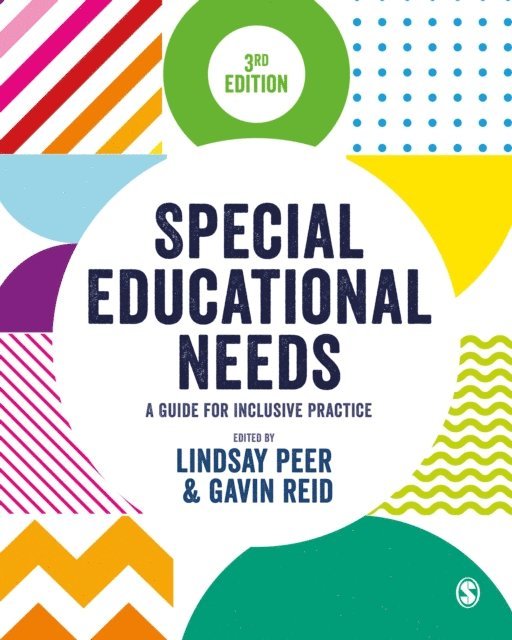
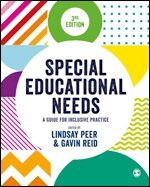
    Special Educational Needs

    A Guide for Inclusive Practice

    AvLindsay Peer,Gavin Reid

    Häftad, Engelska, 2020

    430 kr

    Beställningsvara. Skickas inom 5-8 vardagar. Fri frakt över 249 kr.

    Beskrivning


    This guide to inclusive practice covers contemporary policy issues, perspectives from practice and specialist guidance from across a wide range of common syndromes. Bringing together the important combination of theory, knowledge and practice, each chapter is written by experts from fields within Special and Additional Educational Needs.

    This third edition includes new chapters on:

    -          The current context of SEN current context: in research and practice

    -          Speech, language and communication

    -          The role and use of technology in supporting learners with SEND

    -          Pathological/Extreme Demand Avoidance (PDA/EDA)

    -          Working together

    -          Children and Young People’s Perspectives

    Providing a solid foundation for understanding and supporting learners with additional needs, this comprehensive text is ideal whether you are a student, teacher or education practitioner.

    Produktinformation

    • Utgivningsdatum:2020-11-24
    • Mått:186 x 232 x 28 mm
    • Vikt:730 g
    • Format:Häftad
    • Språk:Engelska
    • Antal sidor:424
    • Upplaga:3
    • Förlag:SAGE Publications
    • ISBN:9781526492180

    Utforska kategorier

    • Specialundervisning inom Psykologi och pedagogik

    Mer om författaren

    Dr Lindsay Peer CBE is a recently retired Practitioner Psychologist, international speaker, author and expert witness. In 2002, she was appointed Commander of the Order of the British Empire for services to Education and Dyslexia. She was a Patron of GroOops, a charity dedicated to creating an emotionally healthy, dyslexia aware world. In 2011, she was presented with an Outstanding Lifetime Academic Achievement Award by the British Dyslexia Association. In 2017, she was awarded a Science Council Chartered Scientist CPD Commendation. She was an Associate Fellow and Chartered Scientist of the British Psychological Society, and a Fellow of the International Academy of Research in Learning Disabilities and the Royal Society of Arts. She was a member of the Association of Child Psychologists in Private Practice, and of the Association for Child and Adolescent Mental Health. She remains registered to practice with the Health and Care Professions Council. She was Education Director and Deputy CEO of the British Dyslexia Association. She has many years’ experience as a teacher, teacher trainer and SENCo. She has lectured extensively as a keynote speaker and advised governments, policy makers, lawyers, adults, schools, psychologists, therapists and parents. She has published a considerable body of material both theoretical and practical, and published the first ground-breaking book linking Glue Ear with Dyslexia. She is also an Advanced Paediatric Sleep Practitioner. Dr Gavin Reid is an international consultant, psychologist and author based in Vancouver, Canada. He is co-director of the Reading Lab where he carries out consultancies and psychological assessments. He is also currently involved in a number of consultancy and writing projects. Dr. Reid was formerly a classroom teacher (10 years) and university lecturer (16 years). He was a senior lecturer at Moray House School of Education, University of Edinburgh from 1991-2007 where he wrote the first Masters course in dyslexia in the UK in 1993. He has written 40 books in the field of dyslexia, learning skills and motivation. His books have been translated into seven languages.

    Recensioner i media

    Students felt it was not a straightforward read and found other sources of information more relevant

    Innehållsförteckning

    • Chapter 1: Introduction - Gavin Reid & Lindsay PeerPart I: Policy, Practice and ProvisionChapter 2: Special and additional support needs in England and Scotland: current dilemmas and solutions - Sheila Riddell, Elisabet Weedon & Neville HarrisChapter 3: Putting the dyslexic learner at the centre - Janice WearmouthChapter 4: Inclusion and special educational needs: a dialogic inquiry into controversial issues - Artemi SakellariadisChapter 5: The potential impact and influence of the social model of disability - Charles WeedonPart II: Perspectives from PracticeChapter 6: Speech, language and communication - Juanita Hurley and Sally MooreChapter 7: Auditory Processing Disorder - Tony SirimannaChapter 8: Developmental coordination disorder/ developmental dyspraxia in the context of education - Sally Scott-Roberts & Dr Catherine PurcellChapter 9: Vision and learning - John StevensonChapter 10: Literacy: literacy and the training of professionals who teach and assess individuals with literacy difficulties - Margaret Crombie, Julian Brown & Una LodgeChapter 11: Mathematics learning difficulties and dyscalculia - Steve ChinnChapter 12: The role of technology in supporting young people with Additional and Special Needs - Arran SmithChapter 13: Using technology to support learners with additional needs: practical information and advice - Adam GordonPart III: Syndromes and the BrainChapter 14: Students with Down syndrome in inclusive classrooms: using evidence-based practices - Iva Strnadová & David EvansChapter 15: Attention deficit hyperactivity disorder - Fin O′ReganChapter 16: Visual and cerebral impairment and mainstream education: beyond mere awareness raising - John RavenscroftChapter 17: Students with hearing loss - Jill DuncanChapter 18: Pathological/Extreme Demand Avoidance (PDA/EDA) - Richard SoppittChapter 19: Autism Spectrum Disorder (ASD): Identification, Intervention and Research - Jo-Ann PagePart IV: Working TogetherChapter 20: Working together: a system working together to serve the child with Special Educational Needs? A critical look at current practice in Irish primary education - Fidelma Healy Eames & Annmarie MeehanChapter 21: Parents as partners - Jillian Zocher & Katie NelsonChapter 22: Children and Young People’s Perspectives - Jennie Guise, Jenn Clark & Jo-Ann Page