• Fri frakt över 249 kr
  • •
  • Snabba leveranser
  • •
  • Billiga böcker
Kundservice

Du är på sajten för privatpersoner.

Företag, bibliotek eller offentlig verksamhet?

Du handlar på classic.bokus.com, där alla dina funktioner finns intakta.
Till classic.bokus.com
Bokus logotyp. Gå till startsidan.
  • Erbjudanden
  • Nyheter
  • Student
  • Topplistor
  • Barn & ungdom
  • Bokus Play
  • E-böcker
  • Pocketböcker
  • Spel & pussel

10% rabatt på allt med kod NYSTART10 →

Sidfot

Mina sidor

    Hjälp

    • Kundservice
    • Vanliga frågor och svar
    • Frakt och leverans
    • Retur vid ångerrätt
    • Reklamera vara
    • Betalning
    • Köpvillkor
    • Allmänna villkor
    • Information om webbplatsens tillgänglighet

    Om Bokus

    • Om oss
    • Pressrum
    • För studenter
    • För företag
    • För bibliotek och offentlig verksamhet
    • För leverantörer
    • Hållbarhet

    Populärt

    • Aktuella erbjudanden
    • Presentkort
    • Studentlitteratur
    • Nya böcker
    • Topplistor
    • Signerade böcker
    • Engelska böcker

    Inspiration

    • Boktips
    • BookTok
    • Populära bokserier
    • Barnbokskaraktärer
    • Populära författare
    Logotyp för Bokus
    Följ oss på Facebook (extern länk)Följ oss på Instagram (extern länk)Följ oss på YouTube (extern länk)Följ oss på TikTok (extern länk)
    bokus @ CookiesAnpassa cookiesIntegritetspolicyKöpvillkor
    Till Citymail hemsida (extern länk)Till Budbee hemsida (extern länk)Till Postnord hemsida (extern länk)Till Schenker hemsida (extern länk)Till Early Bird hemsida (extern länk)Till Walleys hemsida (extern länk)
    1. Samhälle och politik
    2. Samhälle och kultur
    3. Kultur och medier
    4. Referensverk och tvärvetenskap

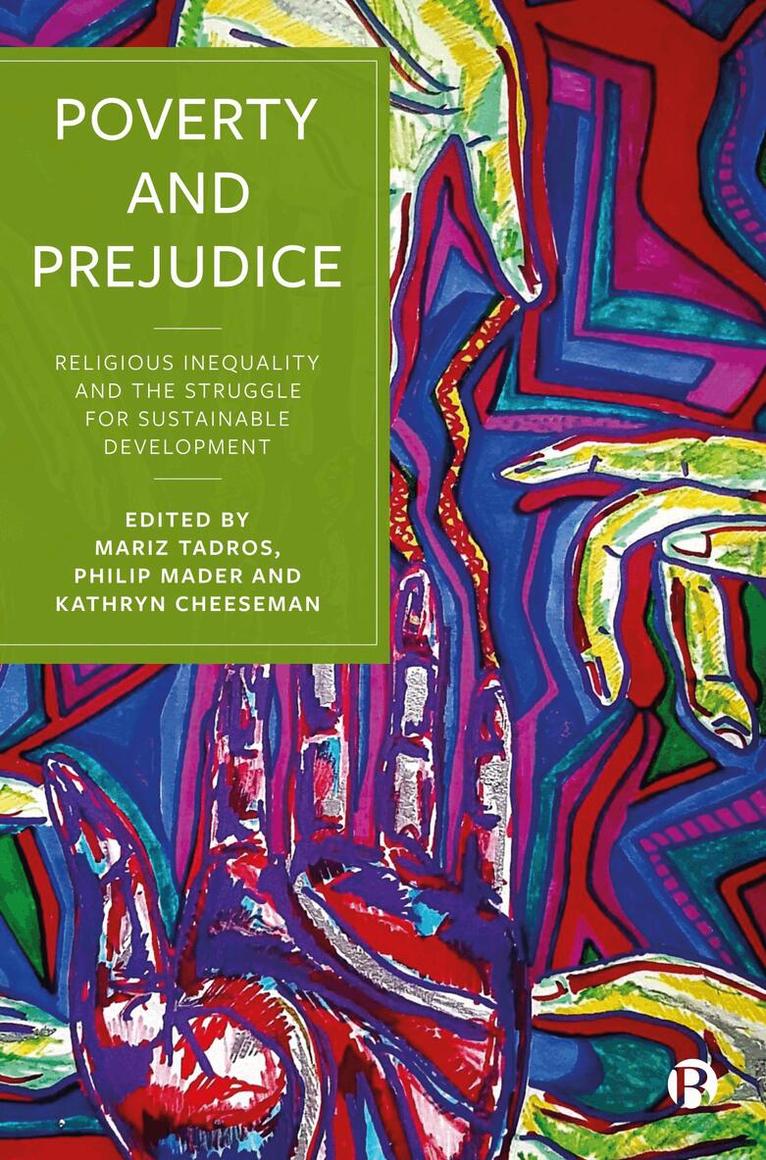
    Poverty and Prejudice

    Religious Inequality and the Struggle for Sustainable Development

    AvMariz Tadros,Philip Mader

    Häftad, Engelska, 2023

    445 kr

    Beställningsvara. Skickas inom 5-8 vardagar. Fri frakt över 249 kr.

    Beskrivning

    EPDF and EPUB available Open Access under CC-BY-NC-ND licence.Freedom of religion and belief is crucial to any sustainable development process, yet the Sustainable Development Goals (SDGs) pay little attention to religious inequalities. This book offers a comprehensive overview of how efforts to achieve SDGs can be enhanced by paying greater attention to freedom of religion and belief. In particular, it illustrates how poverty is often a direct result of religious prejudice and how religious identity can shape a person’s job prospects, their children’s education and the quality of public services they receive. Drawing on evidence from Asia, the Middle East and sub-Saharan Africa, the book foregrounds the lived experiences of marginalized communities as well as researchers and non-state actors.

    Produktinformation

    • Utgivningsdatum:2023-09-19
    • Mått:156 x 234 x 20 mm
    • Vikt:486 g
    • Format:Häftad
    • Språk:Engelska
    • Antal sidor:312
    • Förlag:Bristol University Press
    • ISBN:9781529229042

    Utforska kategorier

    • Referensverk och tvärvetenskap inom Samhälle och politik
    • Sociala och etiska frågor inom Samhälle och politik
    • Diskriminering och rättvisa inom Samhälle och politik

    Mer om författaren

    Mariz Tadros is Professorial Fellow at the Institute of Development Studies at the University of Sussex.Philip Mader is Senior Research Fellow at the Institute of Development Studies at the University of Sussex.Kathryn Cheeseman is Senior Project Support Officer–CREID at the Institute of Development Studies at the University of Sussex.

    Innehållsförteckning

    • 1. Confronting Poverty, Prejudice and Religious Inequality: Ensuring No One Is Left Behind – Mariz Tadros, Philip Mader and Kathryn CheesemanPart 1: Health and Wellbeing2. The Intersection of Religion With the Health and Wellbeing SDG – Jill Olivier3. How the Pandemic Impacted Religious Minorities in Iraq, and How Inclusive Journalism Helped – Salam Omer4. Religion and Confidence in COVID-19 Vaccination: The Trust Deficit – Claire Thomas, Mayya Kelova and Albashir Mohamed5. Religious Inequality and Health: Taking the Pulse Through a Global Review of the Literature – Ghazala Mir6. Health and Wellbeing Alongside Belief Systems at the Patient Care Coalface: How Does Policy Fit in? – Somnath Mukhopadhyay and Haitham Abul-EisPart 2: Education7. Religion, Religiosity and Educational Progress – Elizabeth M. King8. Training Iraqi Teachers To Become Effective Promoters of FoRB Principles in Primary Education – Haidar Lapcha and Yusra Mahdi9. Advancing Freedom of Religion or Belief Through Religiously Inclusive Education – Knox ThamesPart 3: Gender10. Interrogating the Gender and Religious Equality Nexus – Mariz Tadros11. Dire Conditions for Hazara Shia Pilgrims During COVID-19 Quarantine in Pakistan – Sadiqa Sultan12. The ‘Messy’ World of Women and Religious Inequality – Kate Ward13. Empty Chairs: FoRB’s Gender Problem – Andrea Mari and Kathryn CheesemanPart 4: Water and Sanitation14. Freedom of Religion or Belief, and Access to Safe Water – Kate Bayliss15. How Clean Drinking Water in Joseph Colony Addresses Religious Inequalities and SDGs – Ali Abbas Zaidi and Bariya Shah16. Why Do Religious Minorities in Pakistan Receive Less Water? – Mary Gill and Asif Aqeel17. Drinking Water, Sanitation and the Religion Paradox in India – Nitya JacobPart 5: Infrastructure and the Economy18. How Digital Discrimination Affects Sustainable Development for Religious and Ethnic Minorities – Kevin Hernandez and Becky Faith19. Poverty, Prejudice and Technology – Nighat Dad and Shmyla Khan20. Beyond the Rhetoric of Freedom: Religious Inequity in Nigeria – Chris Kwaja21. Religious Identity-Based Inequality in the Labour Market: Policy Challenges in India – Surbhi Kesar and Rosa AbrahamPart 6: Inequalities22. Religious Inequality and Economic Opportunity: Implications for SDG10 – Simone Schotte23. The Justice Gap: Religious Minorities, Discrimination and Accountability Challenges – Claire Thomas and Mary Gill24. Disability and Religious Inequality Intertwined: Double Discrimination Against Deaf Jehovah’s Witnesses in Uzbekistan – Dilmurad Yusupov25. What Is Distinctive About Religious Inequality? Challenges and Opportunities for Development Policy – Michael WoolcockPart 7: Cities and Communities26. Religious Inequalities, Inclusive Cities and Sustainable Development – Francesca Giliberto27. ISIS Attack on the Divinely Protected City of Mosul: The Assault of Terrorism on Diversity and Peace – Omar Mohammed28. Renaming Places in India: Conjuring the Present by Exorcising a Past – Rachna Mehra29. Urban Development for Religious Equality: The Case of Youhanabad in Pakistan – Amen JafferPart 8: Climate and Nature30. Religious Inequality and Environmental Change – Shilpi Srivastava and Vinitha Bachina31. Discrimination Against Minorities and Its Detrimental Effect on Biodiversity Conservation: Lessons From the Batwa ‘Pygmies’ Around Semuliki National Park, Western Uganda – Moses Muhumuza32. A Wounded Landscape and the Right To Protest at the River Club Site – Rifqah Tifloen33. Climate Justice for the Religiously Marginalised – Lyla MehtaPart 9: Peace and Justice34. The Significance of Freedom of Religion or Belief for Peace, Justice and Strong Institutions – W. Cole Durham Jr.35. Recovering From the Trauma of Insurgency in Northern Nigeria – Maji Peterx36. Religion, Caste and Marginality: Reflections on the Indian Criminal Justice and Prison System – Devangana Kalita37. Key Blindspots in Thinking Around Peacebuilding Policy Makers and Practitioners Need To Address – Katharine ThanePart 10: Partnership38. Partnerships and Religious Inequality – Amro Hussain39. The Need for Secular-Religious Engagement – Kishan Manocha40. Co-Creation for Freedom of Religion or Belief – Mike Battcock41. Promoting FoRB in Fragile Contexts: Emerging Lessons From CREID on Legitimacy – Mariz Tadros42. Epilogue – Mariz Tadros, Philip Mader and Kathryn Cheeseman