• Fri frakt över 249 kr
  • •
  • Snabba leveranser
  • •
  • Billiga böcker
Kundservice

Du är på sajten för privatpersoner.

Företag, bibliotek eller offentlig verksamhet?

Du handlar på classic.bokus.com, där alla dina funktioner finns intakta.
Till classic.bokus.com
Bokus logotyp. Gå till startsidan.
  • Erbjudanden
  • Nyheter
  • Student
  • Topplistor
  • Barn & ungdom
  • Bokus Play
  • E-böcker
  • Pocketböcker
  • Spel & pussel

Må bättre, för mindre! Upp till 50% rabatt på hälsoböcker

Sidfot

Mina sidor

    Hjälp

    • Kundservice
    • Vanliga frågor och svar
    • Frakt och leverans
    • Retur vid ångerrätt
    • Reklamera vara
    • Betalning
    • Köpvillkor
    • Allmänna villkor
    • Information om webbplatsens tillgänglighet

    Om Bokus

    • Om oss
    • Pressrum
    • För studenter
    • För företag
    • För bibliotek och offentlig verksamhet
    • För leverantörer
    • Hållbarhet

    Populärt

    • Aktuella erbjudanden
    • Presentkort
    • Studentlitteratur
    • Nya böcker
    • Topplistor
    • Signerade böcker
    • Engelska böcker

    Inspiration

    • Boktips
    • BookTok
    • Populära bokserier
    • Barnbokskaraktärer
    • Populära författare
    Logotyp för Bokus
    Följ oss på Facebook (extern länk)Följ oss på Instagram (extern länk)Följ oss på YouTube (extern länk)Följ oss på TikTok (extern länk)
    bokus @ CookiesAnpassa cookiesIntegritetspolicyKöpvillkor
    Till Citymail hemsida (extern länk)Till Budbee hemsida (extern länk)Till Postnord hemsida (extern länk)Till Schenker hemsida (extern länk)Till Early Bird hemsida (extern länk)Till Walleys hemsida (extern länk)
    1. Samhälle och politik
    2. Samhälle och kultur
    3. Kultur och medier
    4. Medievetenskap

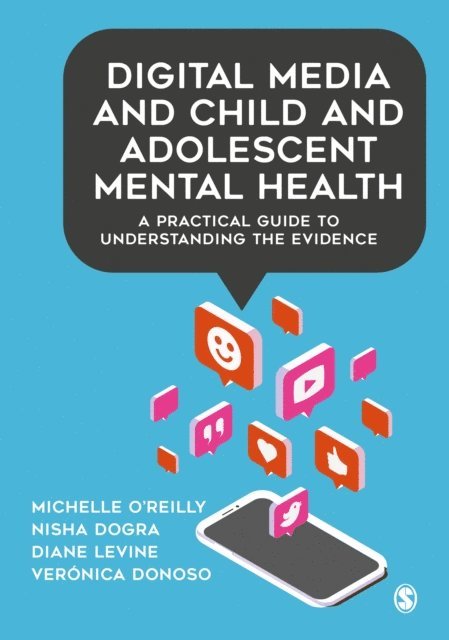
    Digital Media and Child and Adolescent Mental Health

    A Practical Guide to Understanding the Evidence

    AvMichelle O'Reilly,Nisha Dogra

    Inbunden, Engelska, 2021

    1 852 kr

    Beställningsvara. Skickas inom 3-6 vardagar. Fri frakt över 249 kr.

    Fler format och utgåvor

    Häftad

    528 kr

    Beskrivning

    Can moderated screen time actually have a positive impact on young people’s mental health? 

    With over 30 expert contributors spanning a range of disciplines including psychology, education and communications, as well as young people's own perspectives, this book dispels some of the myths that surround young people’s use of digital media and covers important topics ranging from safeguarding, to digital citizenship and the fear of missing out.

    Using reflective activities, practical tips and evidence-based research, this book will help you find out informed ways social and digital media can be used beneficially, providing vital understanding to anyone studying child and adolescent mental health. 

    Produktinformation

    • Utgivningsdatum:2021-06-24
    • Mått:170 x 242 x 28 mm
    • Vikt:830 g
    • Format:Inbunden
    • Språk:Engelska
    • Antal sidor:400
    • Upplaga:1
    • Förlag:SAGE Publications
    • ISBN:9781529709391

    Utforska kategorier

    • Medievetenskap inom Samhälle och politik
    • Barnpsykologi och utvecklingspsykologi inom Psykologi och pedagogik

    Mer om författaren

    Michelle O’Reilly (BSc [hons], MSc, MA, PhD, PGCAPHE) is an Associate Professor of Communication in Mental Health at the University of Leicester and a Research Consultant for Leicestershire Partnership NHS Trust. Michelle is also a Chartered Psychologist in Health. Michelle has specific interest in child and adolescent mental health and has been investigating the relationship between mental health and social media as part of that work. Michelle has made several media contributions about the research with adolescents, educationalists, and parents, as funded by the Wellcome Trust. Additional to her research interests in mental health and social media, Michelle also undertakes research in self-harm and suicidal behaviour, neurodevelopmental conditions, and child mental health services, such as mental health assessments and family therapy. Michelle recently won the Anselm Strauss Award for Qualitative Family Research for her co-authored contribution on discursive psychology in this area. Michelle has expertise in qualitative methodologies and specialises in discursive psychology and conversation analysis.  Nisha Dogra (BM DCH FRCPsych MA [Socio-legal studies, children], Postgraduate Certificate in Systemic Practice, PhD) is Emeritus Professor of Psychiatry Education at the Greenwood Institute of Child Health, University of Leicester. She is an external lecturer on the MMedSci Medical Education Masters at the University of Nottingham. She was until her retirement working as a generic child and adolescent psychiatrist. Currently, her work in child mental health is focused on how young people see the relationship between mental health and social media. Throughout her career Nisha was been involved in the development and delivery of a wide variety of teaching and training events in undergraduate and postgraduate education, locally, nationally, and internationally in both psychiatry and diversity.  She has published widely including peer reviewed publications, edited and written books as well as contributing chapters to edited books related to psychiatry and education.Diane Thembekile Levine (BA [QTS], MRes, MA, PhD) is Deputy Director of the Leicester Institute for Advanced Studies, University of Leicester. She began her career as a primary school teacher, before spending many years working in public service as a commissioner, translator and senior manager of an evidence function in national government. Di’s research interests focus on interdisciplinary approaches to understanding the ways – including digitally-mediated ways – children and young people develop their resilience pathways. In particular, she works with collaborators in South Africa and Kenya to raise the voices of under-represented young people in majority world contexts in research and practice. Di has published both in academic journals and as co-author of Oxford University Press’ best-selling textbooks on computing for 4-14-year olds. Verónica Donoso is (PhD in Social Sciences [KU Leuven, Belgium], MA in education and BA in linguistics [Universidad de Chile]). Verónica is a Research Associate at the Institute for Media Studies (IMS), University of Leuven (KU Leuven) and an independent consultant specialised in children, digital technologies & online safety with more than 18 years of experience on research and policy work. She provides advice and works with organisations committed to improving digital literacy and to better protect children online. Through her career Verónica has advised several organisations including the United Nations, the European Commission and UNICEF, and she has written several pieces which have served to inform researchers, practitioners, and policymakers both in the EU and worldwide. Before becoming an independent consultant, Verónica was INHOPE’s Executive Director. INHOPE is the leading global network combatting online Child Sexual Abuse Material. Verónica currently serves on the Global Kids Online International advisory group.

    Recensioner i media

    Relevant to the topics

    Innehållsförteckning

    • PART I: DIGITAL MEDIA AND CHILD MENTAL HEALTH: DEFINING TERMS AND IDENTIFYING RELEVANT ISSUESChapter 1: Children, Childhood and Child DevelopmentChapter 2: Child and Adolescent Mental HealthChapter 3: An Introduction to Digital MediaChapter 4: Risk, Resilience and VulnerabilityPART II: THE IMPACT OF DIGITAL MEDIAChapter 5: Exploring the Positive Impact on Mental Health – The Rhetoric of ′The Good′Chapter 6: Exploring the Potential Risks to Mental Health: The Rhetoric of ‘The Bad’Chapter 7: Exploring the Negative Side of Digital Media – The Rhetoric of ′The Ugly′Chapter 8: Exploring When Digital Media Impacts on Mental Health – The Rhetoric of ′The Ugly′ ContinuedPART III: PRACTICAL IDEAS FOR FAMILIES AND PROFESSIONALSChapter 9: The Role of Parents and CaregiversChapter 10: The Role of Schools in Mental Health and Digital MediaChapter 11: The Role of Mental Health and Other Related ServicesChapter 12: Conclusions