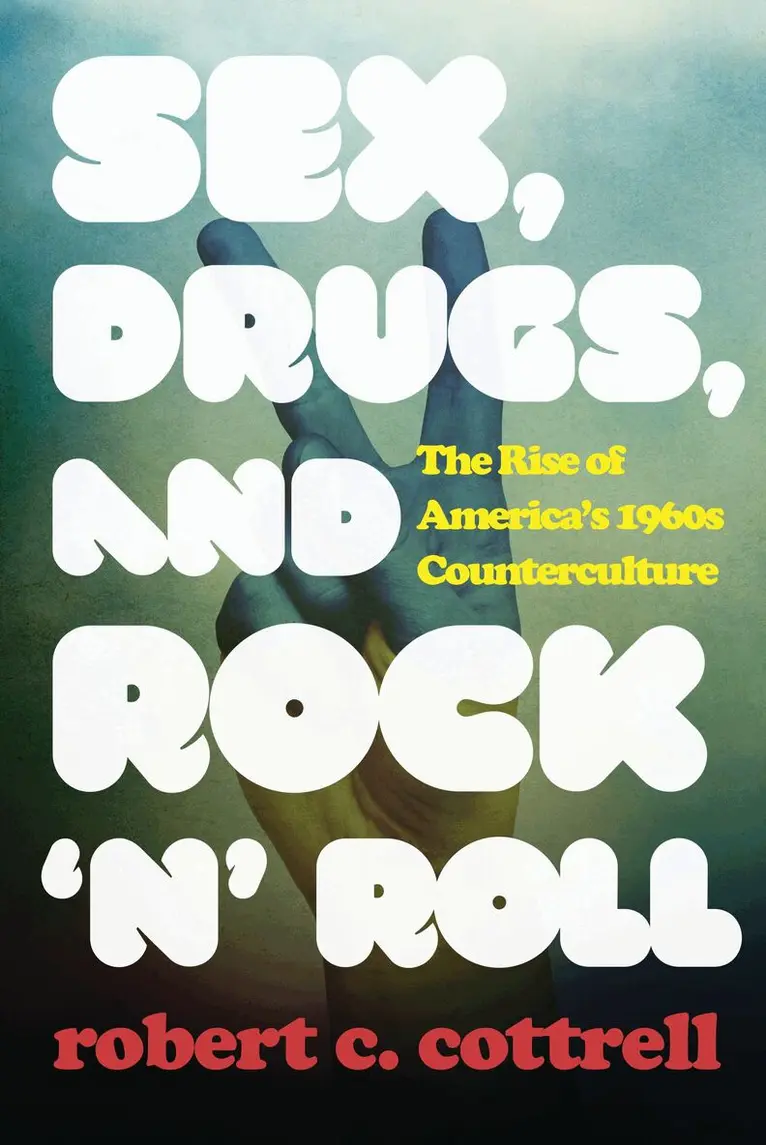
Häftad, Engelska, 2017
Sex, Drugs, and Rock 'n' Roll
The Rise of America’s 1960s Counterculture
471 kr
Beställningsvara. Skickas inom 10-15 vardagar. Fri frakt över 249 kr.
Beskrivning
Produktinformation
- Utgivningsdatum: 2017-11-01
- Mått: 151 x 228 x 26 mm
- Vikt: 603 g
- Format: Häftad
- Språk: Engelska
- Antal sidor: 452
- Förlag: Bloomsbury Publishing Plc
- ISBN: 9781538111116
- Utmärkelser: Washington Book Publishers 2015 Book Design & Effectiveness Competition: Typographic Cover (Tied First Place)
Utforska kategorier
Mer om författaren
Robert C. Cottrell has written over twenty books, including biographies of the radical journalist I. F. Stone, ACLU icon Roger Nash Baldwin, and Negro League founder Rube Foster. He is the author most recently of Two Icons: How Hank Greenberg and Jackie Robinson TransformedBaseball and America. Cottrell, professor of history and American studies at California State University, Chico, has also taught in London; Puebla, Mexico; and Moscow, Russia, in the latter instance as a Distinguished Fulbright Chair. He is currently working on a collective biographyof four key members of the early twentieth-century American left: Crystal Eastman, John Reed, Inez Milholland, and Randolph Bourne.
Recensioner i media
This massive and impressively researched look at the cultural revolutions in the U.S. in the post-WWII years is a perfect text for a college class on 1960s culture. Fully aware that 'the hippies of the 1960s, of course, were hardly the first countercultural figures to appear in the United States,' Cottrell (Icons of American Popular Culture) begins with detailed looks at four early seminal countercultural figures: Allen Ginsberg, whose poetry attacked the 'conservatism and conformity' of American 1950s culture; Jack Kerouac, whose novel 'On The Road' popularized the youthful image of 'the restless wanderer;' Timothy Leary, the most notable proselytizer for LSD; and author Ken Kesey, whose Merry Prankster commune 'kicked off the liberal employment of psychedelics.' Cottrell expertly shows how their outlaw images and ideas influenced almost every aspect of the 1960s counterculture: the political shift from traditional protest to the violence of the Weathermen; the popularization of the use of psychedelics for personal liberation; and the move from cities into country communes as an escape from the collapsing countercultural ideals in the 1970s. Cottrell believes that the positive aspects of Sixties culture live on, quoting Whole Earth Catalog editor Stewart Brand’s belief that 'the counterculture’s scorn for centralized authority provided the philosophical foundations of not only the leaderless Internet but also the entire personal-computer revolution.'
Betyg & recensioner
0 recensioner
Inga recensioner tillgängliga.