• Fri frakt över 249 kr
  • •
  • Snabba leveranser
  • •
  • Billiga böcker
Kundservice

Du är på sajten för privatpersoner.

Företag, bibliotek eller offentlig verksamhet?

Du handlar på classic.bokus.com, där alla dina funktioner finns intakta.
Till classic.bokus.com
Bokus logotyp. Gå till startsidan.
  • Erbjudanden
  • Nyheter
  • Student
  • Topplistor
  • Barn & ungdom
  • Bokus Play
  • E-böcker
  • Pocketböcker
  • Spel & pussel

10% rabatt på allt med kod: NYSTART10 →

Sidfot

Mina sidor

    Hjälp

    • Kundservice
    • Vanliga frågor och svar
    • Frakt och leverans
    • Retur vid ångerrätt
    • Reklamera vara
    • Betalning
    • Köpvillkor
    • Allmänna villkor
    • Information om webbplatsens tillgänglighet

    Om Bokus

    • Om oss
    • Pressrum
    • För studenter
    • För företag
    • För bibliotek och offentlig verksamhet
    • För leverantörer
    • Hållbarhet

    Populärt

    • Aktuella erbjudanden
    • Presentkort
    • Studentlitteratur
    • Nya böcker
    • Topplistor
    • Signerade böcker
    • Engelska böcker

    Inspiration

    • Boktips
    • BookTok
    • Populära bokserier
    • Barnbokskaraktärer
    • Populära författare
    Logotyp för Bokus
    Följ oss på Facebook (extern länk)Följ oss på Instagram (extern länk)Följ oss på YouTube (extern länk)Följ oss på TikTok (extern länk)
    bokus @ CookiesAnpassa cookiesIntegritetspolicyKöpvillkor
    Till Citymail hemsida (extern länk)Till Budbee hemsida (extern länk)Till Postnord hemsida (extern länk)Till Schenker hemsida (extern länk)Till Early Bird hemsida (extern länk)Till Walleys hemsida (extern länk)
    1. Samhälle och politik
    2. Sociologi och antropologi
    3. Antropologi

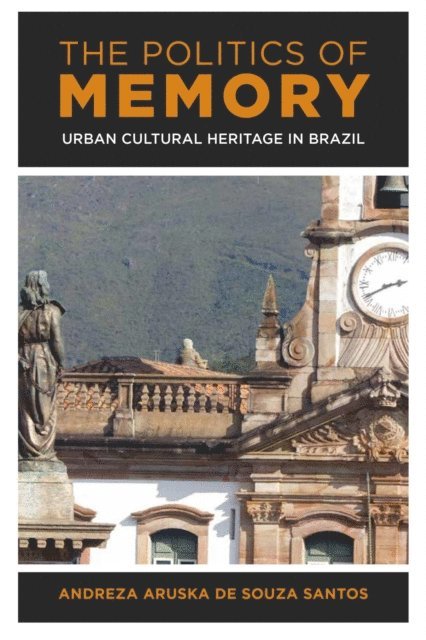
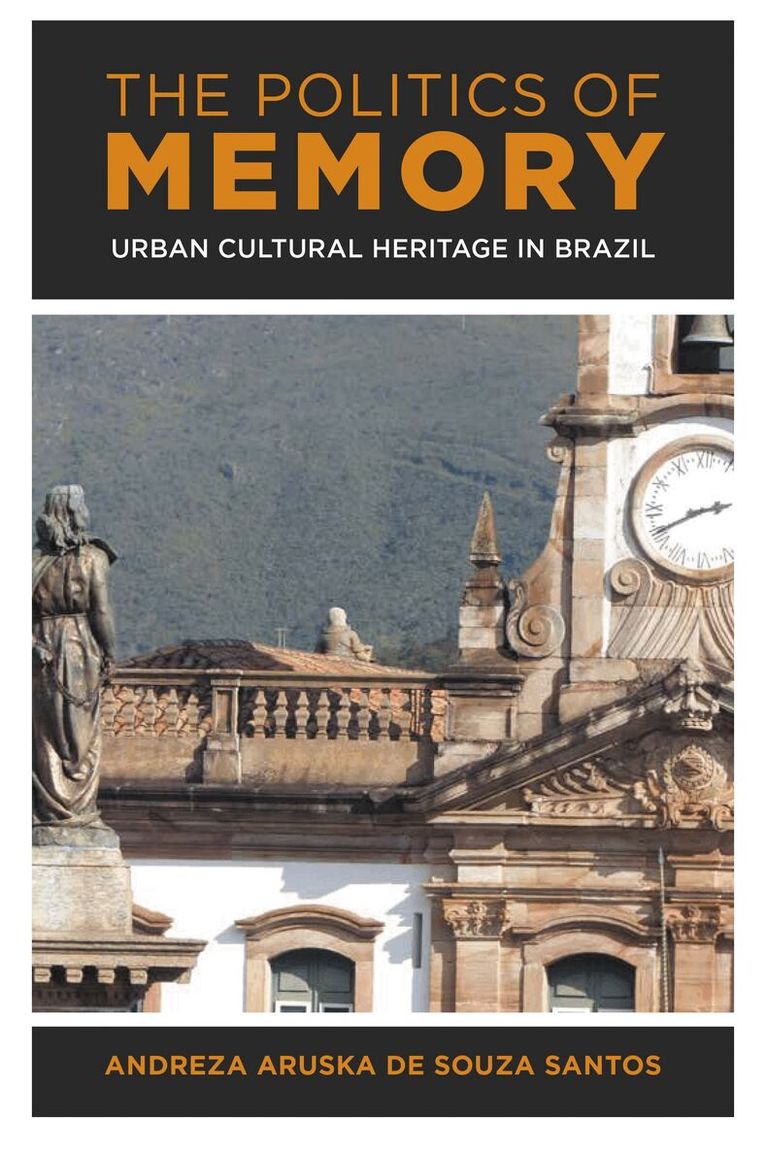
    Politics of Memory

    Urban Cultural Heritage in Brazil

    AvAndreza Aruska de Souza Santos

    Häftad, Engelska, 2022

    451 kr

    Beställningsvara. Skickas inom 10-15 vardagar. Fri frakt över 249 kr.

    Fler format och utgåvor

    Inbunden

    1 811 kr

    E-bok

    483 kr

    Beskrivning

    Who decides which stories about a city are remembered? How do interpretations of the past shape a city’s present and future? In this book, Andreza Aruska de Souza Santos discusses notions of power and national identity by examining how nation-states negotiate the preservation of urban spaces and how a city interprets, resists, and consents to the functions and meanings that it has inherited and that it reinvents for itself. Looking at the Brazilian city of Ouro Preto, de Souza Santos applies fine-grained ethnography and historical analysis to discuss the limits of Brazil’s imagery of social harmony and participatory democracy amid continuous inequality.

    Produktinformation

    • Utgivningsdatum:2022-05-15
    • Mått:151 x 228 x 17 mm
    • Vikt:331 g
    • Format:Häftad
    • Språk:Engelska
    • Antal sidor:216
    • Förlag:Bloomsbury Publishing Plc
    • ISBN:9781538148136

    Utforska kategorier

    • Antropologi inom Samhälle och politik
    • Referensverk och tvärvetenskap inom Samhälle och politik
    • Regional planering inom Naturvetenskap och teknik

    Mer om författaren

    Andreza Aruska de Souza Santos is the Director of the Brazilian Studies Programme and Departmental Lecturer at the Latin American Centre, University of Oxford. Her work focuses on urban ethnography, incorporating themes of cultural heritage, participatory city planning, and mining economies. Before arriving in Oxford, Andreza completed her PhD in Social Anthropology at the University of St Andrews; a Masters in Social Sciences at the University of Freiburg, University of KwaZulu Natal and Jawaharlal Nehru University; and her Bachelor’s Degree in Political Science at the University of Brasilia.

    Recensioner i media

    Andreza Aruska de Souza Santos’ work provides a strong sense of Ouro Preto’s evolution as an urban core, as well as inside access to the challenges posed by a student population, exclusive events targeting outsiders, and the political landscape of decision-making during the twentieth and twenty-first centuries.

    Innehållsförteckning

    • PrefaceIntroductionChapter 1. Expressing the Nation through Planning and Architecture: Locating National MemoriesChapter 2. Fault Lines in a Fragmented CityChapter 3. Sightseeing the CityChapter 4. Opportunities for Participation in the Governance of Cultural HeritageChapter 5. Infrastructure in Heritage SitesChapter 6. Preservation or Mummification in Miguel BurnierFinal ConsiderationsNotesBibliography