• Fri frakt över 249 kr
  • •
  • Snabba leveranser
  • •
  • Billiga böcker
Kundservice

Du är på sajten för privatpersoner.

Företag, bibliotek eller offentlig verksamhet?

Du handlar på classic.bokus.com, där alla dina funktioner finns intakta.
Till classic.bokus.com
Bokus logotyp. Gå till startsidan.
  • Erbjudanden
  • Nyheter
  • Student
  • Topplistor
  • Barn & ungdom
  • Bokus Play
  • E-böcker
  • Pocketböcker
  • Spel & pussel

10% rabatt på allt med kod NYSTART10 →

Sidfot

Mina sidor

    Hjälp

    • Kundservice
    • Vanliga frågor och svar
    • Frakt och leverans
    • Retur vid ångerrätt
    • Reklamera vara
    • Betalning
    • Köpvillkor
    • Allmänna villkor
    • Information om webbplatsens tillgänglighet

    Om Bokus

    • Om oss
    • Pressrum
    • För studenter
    • För företag
    • För bibliotek och offentlig verksamhet
    • För leverantörer
    • Hållbarhet

    Populärt

    • Aktuella erbjudanden
    • Presentkort
    • Studentlitteratur
    • Nya böcker
    • Topplistor
    • Signerade böcker
    • Engelska böcker

    Inspiration

    • Boktips
    • BookTok
    • Populära bokserier
    • Barnbokskaraktärer
    • Populära författare
    Logotyp för Bokus
    Följ oss på Facebook (extern länk)Följ oss på Instagram (extern länk)Följ oss på YouTube (extern länk)Följ oss på TikTok (extern länk)
    bokus @ CookiesAnpassa cookiesIntegritetspolicyKöpvillkor
    Till Citymail hemsida (extern länk)Till Budbee hemsida (extern länk)Till Postnord hemsida (extern länk)Till Schenker hemsida (extern länk)Till Early Bird hemsida (extern länk)Till Walleys hemsida (extern länk)
    1. Samhälle och politik
    2. Krig och försvar

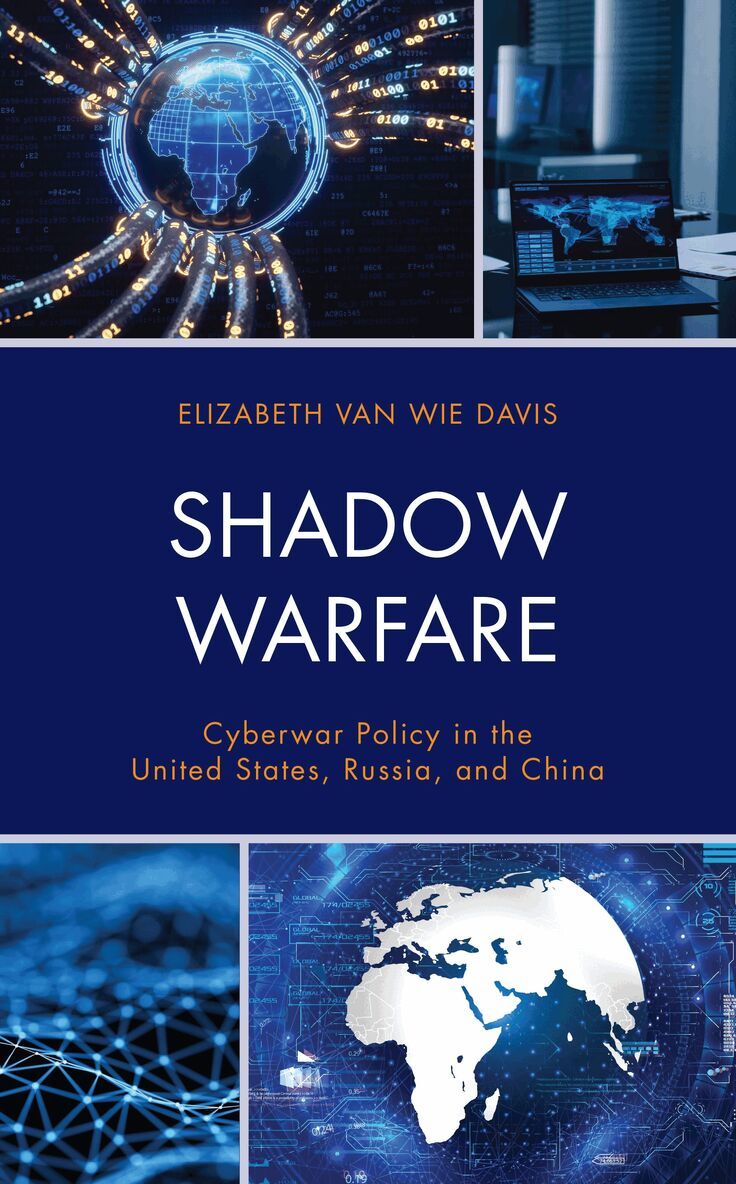
    Shadow Warfare

    Cyberwar Policy in the United States, Russia and China

    AvElizabeth Van Wie Davis

    Häftad, Engelska, 2021

    Del i serien Security and Professional Intelligence Education Series

    507 kr

    Beställningsvara. Skickas inom 10-15 vardagar. Fri frakt över 249 kr.

    Fler format och utgåvor

    Inbunden

    1 326 kr

    Beskrivning

    Cyberwarfare—like the seismic shift of policy with nuclear warfare—is modifying warfare into non-war warfare. A few distinctive characteristics of cyberwar emerge and blur the distinction between adversary and ally. Cyber probes continuously occur between allies and enemies alike, causing cyberespionage to merge with warfare. Espionage—as old as war itself—has technologically merged with acts of cyberwar as states threaten each other with prepositioned malware in each other’s cyberespionage-probed infrastructure. These two cyber shifts to warfare are agreed upon and followed by the United States, Russia, and China. What is not agreed upon in this shifting era of warfare are the policies on which cyberwarfare is based. In Shadow Warfare, Elizabeth Van Wie Davis charts these policies in three key actors and navigates the futures of policy on an international stage. Essential reading for students of war studies and security professionals alike.

    Produktinformation

    • Utgivningsdatum:2021-02-28
    • Mått:152 x 229 x 12 mm
    • Vikt:300 g
    • Format:Häftad
    • Språk:Engelska
    • Serie:Security and Professional Intelligence Education Series
    • Antal sidor:200
    • Förlag:Bloomsbury Publishing Plc
    • ISBN:9781538149676

    Utforska kategorier

    • Krig och försvar inom Samhälle och politik
    • Internationella relationer inom Samhälle och politik

    Mer om författaren

    Elizabeth Van Wie Davis is Professor at the Colorado School of Mines. She has published four books, including, Ruling, Resources and Religion in China (Palgrave, 2012) and Islam, Oil and Geopolitics (Rowman & Littlefield, 2007).

    Recensioner i media

    Davis argues persuasively that cyber technology—like the Cold War development of increasingly destructive nuclear weapons—requires of nations a complex rethinking of the nature of modern warfare.... Davis does an excellent job of explaining such concepts as hacktivism, cyberespionage, weaponized cyberattacks, cyberterrorism, and online disinformation campaigns by presenting numerous illustrative examples. She also points out that entirely laudable policies, such as tracking COVID exposure through facial recognition, social network analysis, cell phone monitoring, and other invasive technologies may lead to increased governmental privacy violations in the future. Davis's most creative argument is that the longstanding differences between the Western nations, Russia, and China in their philosophical attitudes to warfare now are impacting the various ways in which these countries approach cyber conflicts. Recommended.

    Innehållsförteckning

    • Chapter 1. Non-War WarfareChapter 2. Cyber United StatesChapter 3. Cyber RussiaChapter 4. Cyber ChinaChapter 5. Cyberwar PolicyBibliography