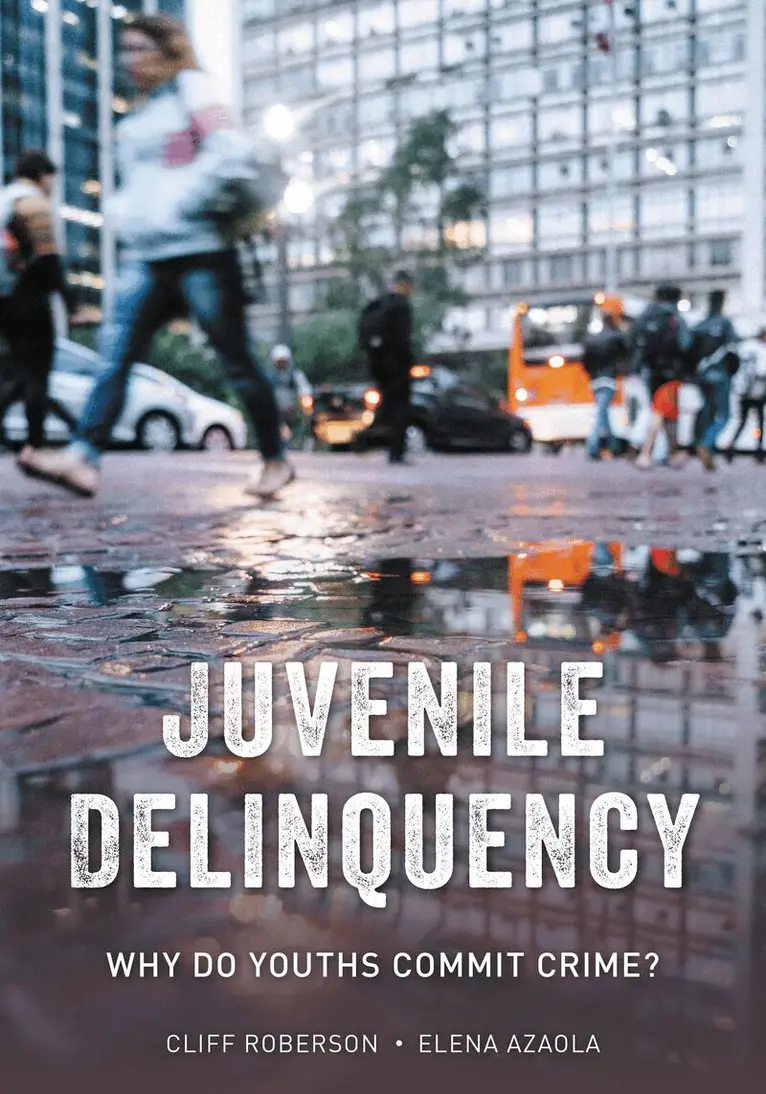
Inbunden, Engelska, 2021
Juvenile Delinquency
Why Do Youths Commit Crime?
Av Cliff Roberson, Elena Azaola
1453 kr
Beställningsvara. Skickas inom 10-15 vardagar. Fri frakt över 249 kr.
Fler format och utgåvor
Beskrivning
Produktinformation
- Utgivningsdatum: 2021-04-01
- Mått: 189 x 267 x 26 mm
- Vikt: 885 g
- Format: Inbunden
- Språk: Engelska
- Antal sidor: 316
- Förlag: Bloomsbury Publishing Plc
- ISBN: 9781538151945
Utforska kategorier
Mer om författaren
Cliff Roberson is former managing editor in chief of the journal Police Practice & Research, an international journal that is distributed in over 50 countries. In addition, he is an Emeritus Professor at Washburn University and retired Professor of Criminology at California State University, Fresno. Elena Azaola, PhD, is a professor at the Center for Advanced Studies and Research in social anthropology located in Mexico City. She has published more than 150 journal articles and numerous books on human behavior, crime, and human rights. Presently Azaola is working on a United Nations funded research on developing “Standards for Mexican Prisons.”
Recensioner i media
Adolescents commit a large proportion of crimes in the US and other nations. To investigate this, Roberson and Azaola furnish a comprehensive treatment of juvenile involvement in delinquent behaviors and how society responds to it. They begin by describing the uneven definitions of adolescence, followed by an overview of types of juvenile misconduct, ways researchers measure misconduct, and factors that influence these types of behavior. In chapters on delinquency theories, the authors provide a thorough overview of various explanations for juvenile misconduct, including those that address rational, biological, psychological, social structural, social process, and institutional factors. Although the book’s title suggests that these explanations are its key focus, the authors also discuss the juvenile justice system, including the major goals of and justification for a separate system for young people and how this involves policing, courts, corrections, and specialized institutions, such as training schools and group homes. In many ways, this is a standard textbook on juvenile delinquency, but one advantage is the authors’ inclusion of examples from Mexico, Canada, and elsewhere. The final chapter illustrates this benefit by furnishing a brief comparative review of the juvenile justice systems in several nations. Recommended. All undergraduates.
Betyg & recensioner
0 recensioner
Inga recensioner tillgängliga.