E-bok, Engelska, 2023
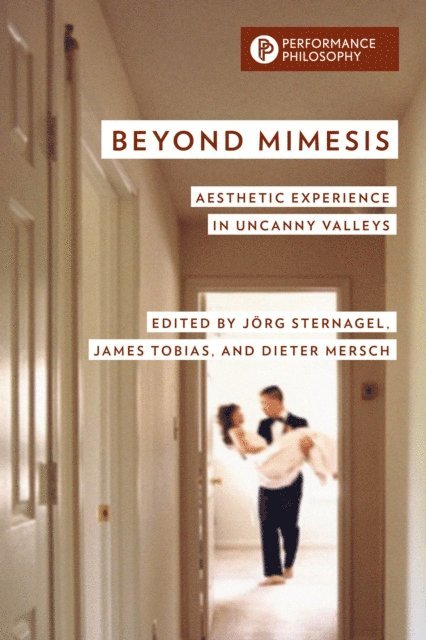
Beyond Mimesis
Av Jörg Sternagel, James Tobias, Dieter Mersch
452 kr
Läs direkt i Bokus Reader – eller ladda ned till din enhet
Beskrivning
Providing a solid media-philosophical groundwork, Beyond Mimesis contributes to the theory of mimesis and alterity in performance philosophy while serving to stimulate and inspire future inquiries where studies in media and art intersect with philosophy. It collects a wide range of philosophical and artistic thinkers'' work to develop an exacting framework with clear movement beyond mimesis in aesthetic experiences in uncanny valleys. Together, the chapters ask if intersubjective acts of relating that are defined by alterity, responsivity or witness and trust can be transferred to artificial beings without remainder.
The proposed framework uses a particularly fruitful theoretical model for this inquiry known as the “uncanny valley”—a fictitious schema developed in 1970 by Japanese roboticist Masahiro Mori. According to Mori, artificial beings or animated dolls become more eerie to us the more “humanlike” they appear. The model’s utility requires distinguishing between visual media and real life, but in general, it suggests that there is a fundamental incommensurability between people and artificial beings that cannot be ignored. This necessitates that all-too realistic representations as well as fictional encounters with artificial beings do not transgress certain limits. According to Mori, it is an ethical imperative of their design that they evidence a certain degree of dissimilarity with people. This notion seems especially applicable to artistic projects in which animated dolls or robots make explicit their “doll-ness” or “robot-ness” and thus inscribe a moment of reflexivity into the relations they establish.
With contributions by Elena Dorfman, Jörg Sternagel, Dieter Mersch, Allison de Fren, Nadja Ben Khelifa, James Tobias, Grant Palmer, Stephan Günzel, Nicole Ku?uleinapuananioliko?awapuhimelemeleolani Furtado, Misha Choudhry and a conversation between Carolin Bebek, Simon Makhali, and Anna Suchard.
The proposed framework uses a particularly fruitful theoretical model for this inquiry known as the “uncanny valley”—a fictitious schema developed in 1970 by Japanese roboticist Masahiro Mori. According to Mori, artificial beings or animated dolls become more eerie to us the more “humanlike” they appear. The model’s utility requires distinguishing between visual media and real life, but in general, it suggests that there is a fundamental incommensurability between people and artificial beings that cannot be ignored. This necessitates that all-too realistic representations as well as fictional encounters with artificial beings do not transgress certain limits. According to Mori, it is an ethical imperative of their design that they evidence a certain degree of dissimilarity with people. This notion seems especially applicable to artistic projects in which animated dolls or robots make explicit their “doll-ness” or “robot-ness” and thus inscribe a moment of reflexivity into the relations they establish.
With contributions by Elena Dorfman, Jörg Sternagel, Dieter Mersch, Allison de Fren, Nadja Ben Khelifa, James Tobias, Grant Palmer, Stephan Günzel, Nicole Ku?uleinapuananioliko?awapuhimelemeleolani Furtado, Misha Choudhry and a conversation between Carolin Bebek, Simon Makhali, and Anna Suchard.
Produktinformation
- Utgivningsdatum: 2023-12-20
- Språk: Engelska
- Antal sidor: 226
- Filformat: EPUB
- Kopieringsskydd: LCP
- ISBN: 9781538171813
- Förlag: Bloomsbury Publishing Plc
- Serie: Performance Philosophies
- Mått: 152 x 229 x undefined mm
Utforska kategorier
Betyg & recensioner
0 recensioner
Inga recensioner tillgängliga.