• Fri frakt över 249 kr
  • •
  • Snabba leveranser
  • •
  • Billiga böcker
Kundservice

Du är på sajten för privatpersoner.

Företag, bibliotek eller offentlig verksamhet?

Du handlar på classic.bokus.com, där alla dina funktioner finns intakta.
Till classic.bokus.com
Bokus logotyp. Gå till startsidan.
  • Erbjudanden
  • Nyheter
  • Student
  • Topplistor
  • Barn & ungdom
  • Bokus Play
  • E-böcker
  • Pocketböcker
  • Spel & pussel

10% rabatt på allt med kod NYSTART10 →

Sidfot

Mina sidor

    Hjälp

    • Kundservice
    • Vanliga frågor och svar
    • Frakt och leverans
    • Retur vid ångerrätt
    • Reklamera vara
    • Betalning
    • Köpvillkor
    • Allmänna villkor
    • Information om webbplatsens tillgänglighet

    Om Bokus

    • Om oss
    • Pressrum
    • För studenter
    • För företag
    • För bibliotek och offentlig verksamhet
    • För leverantörer
    • Hållbarhet

    Populärt

    • Aktuella erbjudanden
    • Presentkort
    • Studentlitteratur
    • Nya böcker
    • Topplistor
    • Signerade böcker
    • Engelska böcker

    Inspiration

    • Boktips
    • BookTok
    • Populära bokserier
    • Barnbokskaraktärer
    • Populära författare
    Logotyp för Bokus
    Följ oss på Facebook (extern länk)Följ oss på Instagram (extern länk)Följ oss på YouTube (extern länk)Följ oss på TikTok (extern länk)
    bokus @ CookiesAnpassa cookiesIntegritetspolicyKöpvillkor
    Till Citymail hemsida (extern länk)Till Budbee hemsida (extern länk)Till Postnord hemsida (extern länk)Till Schenker hemsida (extern länk)Till Early Bird hemsida (extern länk)Till Walleys hemsida (extern länk)
    1. Samhälle och politik
    2. Samhälle och kultur
    3. Kultur och medier
    4. Medievetenskap

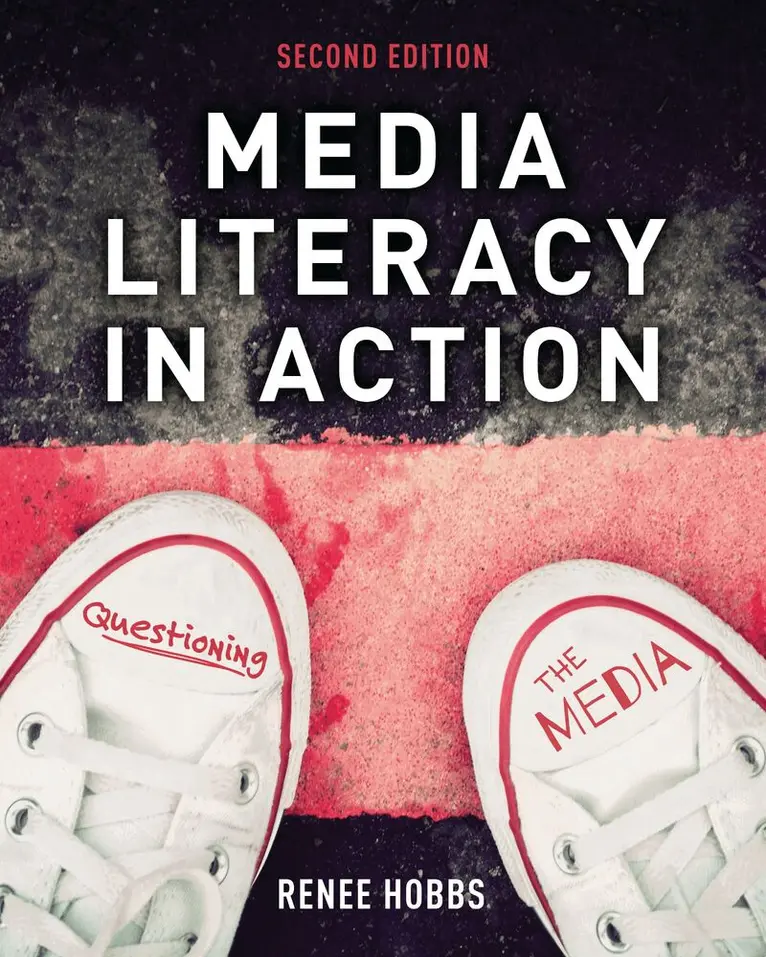
    Media Literacy in Action

    Questioning the Media

    AvRenee Hobbs

    Inbunden, Engelska, 2024

    2 006 kr

    Beställningsvara. Skickas inom 5-8 vardagar. Fri frakt över 249 kr.

    Fler format och utgåvor

    Häftad

    856 kr

    E-bok

    936 kr

    Beskrivning

    There’s never been a more important time for students to develop media literacy competencies. When students ask critical questions about the media they consume, they develop fundamental knowledge and critical thinking skills that prepare them for life, work, and meaningful citizenship. Media Literacy in Action addresses learners who are simultaneously active as both creators and consumers of media messages. At the same time, the book recognizes that everyone is vulnerable to media influence because of our dependence on the instant gratification and feelings of connectedness that digital platforms provide. To thrive in a media-saturated society, people need to ask critical questions about what we watch, see, listen to, read, and use. This book gives students those tools.Key features of the second edition: Critical examination of AI technologies, algorithmic personalization, data privacy and surveillance, and the increased global regulation of digital platforms Attention to media literacy for empowerment and protectionInquiry-oriented approach to learning that cultivates intellectual curiosity and creative expressionFull-color presentation with figures and photos to increase student engagement Each chapter includes: Media Literacy Trailblazers: Profiles of key thinkers and their theories connect students with the discipline of media literacyMedia Literacy DISCourse (NEW): Visual representations of media literacy theoretical principles help learners internalize the practice of asking critical questions as they respond to specific media examplesLearning in Action (NEW): Summary and vocabulary sections combine with Analyze, Create, Reflect, and Act activities to empower students to apply ideas from each chapter.Supplemental Materials available at www.mlaction.com: Students can review key ideas, learn about more Media Literacy Trailblazers, and watch videos aligned with each chapterInstructors can access a Teacher’s Guide of best practices, in-class activities, homework, and projects. Also available are chapter summaries, lecture slides, YouTube playlists, and test materials.

    Produktinformation

    • Utgivningsdatum:2024-11-05
    • Mått:203 x 254 x 30 mm
    • Vikt:1 361 g
    • Format:Inbunden
    • Språk:Engelska
    • Antal sidor:426
    • Upplaga:2
    • Förlag:Bloomsbury Publishing Plc
    • ISBN:9781538180136

    Utforska kategorier

    • Medievetenskap inom Samhälle och politik
    • Referensverk och tvärvetenskap inom Samhälle och politik
    • Sociologi inom Samhälle och politik

    Mer om författaren

    Renee Hobbs is one of the world’s leading authorities on digital and media literacy education and a professor at the University of Rhode Island’s Harrington School of Communication and Media. As a teacher, researcher, activist, and media professional, she has offered programs for educators on four continents and produced some of the leading empirical research on the subject. Hobbs is the author of 12 books and more than 200 scholarly and professional articles. Her work has received awards from professional organizations including the International Communication Association, the Media Ecology Association, the National Association for Media Literacy Education, and others. In collaboration with the Media Education Lab, Hobbs created COURAGEOUS RI, a statewide media literacy program designed to use media literacy and active listening to reduce the fear and hate that leads to violence, funded by the U.S. Department of Homeland Security. She has spoken at the United Nations and consulted extensively with educators, school leaders, and government officials in Belgium, Brazil, China, Croatia, Lebanon, the Netherlands, Germany, Romania, and many other countries.

    Recensioner i media

    This is the best media literacy book on the market for college students. This is the book I had been waiting for.

    Innehållsförteckning

    • PrefaceAbout the AuthorPART I: UNDERSTANDING MEDIAChapter 1 What Is Media Literacy?Heightening AwarenessAsking Critical QuestionsConnecting Past, Present, and FutureExpanding LiteracyProtecting Against Harmful MediaConfronting Institutional and Social PowerResisting Distorted RepresentationsCritically Analyzing What’s True and FalseAdvancing Citizenship in a DemocracyActivating a Global Media Literacy CommunityMedia Literacy TheoryMedia Literacy as a Moving TargetMedia Literacy Trailblazer: Neil PostmanDISCourse: Crash Course Media LiteracyChapter 2 Why Do People Use Media?Media: A DefinitionSmartphones Take Center StageTracking Your Online LifeUses and GratificationsMedia Literacy Trailblazer: Sonia LivingstoneDISCourse: Egg Crack ChallengeChapter 3 How Do Search Engines Work?Five Eras of the InternetQuestioning AIAlgorithmic PersonalizationSearch as Strategic ExplorationSearch as Prelude to PurchaseHow AI is Changing How We SearchThe Politics of Filter BubblesAlgorithms and PrivacyHow Algorithms DiscriminateCensored SearchSurveillance SocietyRegulating the InternetAI Hype CyclesMedia Literacy Trailblazer: Michel FoucaultDISCourse: Take That FacebookPART II: FORMS AND GENRESChapter 4 How Do People Get the News?Reading, Watching, and Listening to NewsNews ValuesTwo Forms of NewsNews Aggregation on the RiseThe Power of LanguageTrust but VerifyFraming Crime NewsEyewitness ReportsPartisanship and Journalistic ObjectivityDetecting Ideological Bias in the NewsFox NewsVirality and SensationalismMedia Literacy Trailblazer: Walter LippmannDISCourse: New Police Abuse FootageChapter 5 What Is the Difference between Advertising, Public Relations, and Propaganda?Consumer CultureSurveillance CapitalismWhere Art Meets CommerceChildren and AdvertisingRegulating Advertising to ChildrenAdvertising’s Unreal RealitiesInfluencer MarketingDefining PropagandaPropaganda TechniquesPublicity MattersPR Approaches Political SpinMedia Literacy Trailblazer: Roland BarthesDISCourse: Fixed on PixelChapter 6 Why Are We Attracted to Characters and Stories?Storytelling and CultureStorytelling as Social ChangeTelling Emotional Truths Through FictionThe Paradox of TragedyWho is the Author?Characters CountArchetypes of StorytellingNarrative ConflictSeven Basic PlotsConstructing Drama in Reality TVFandom, Copyright and CreativityAI StorytellingMedia Literacy Trailblazer: Vladimir ProppDISCourse: Willie Wonka and the Chocolate FactoryPART III: JUDGMENTS ABOUT TASTE, QUALITY, AND TRUSTChapter 7 Why Do People Prefer Different Kinds of Music, Movies, and TV Shows?What is Taste?The Power of PlaylistsHow do People’s Taste Develop?Media as EnvironmentChoices MatterMedia AwarenessRepetition & PopularityRemixes and Spin-OffsGenres Shape ExpectationsThe Birth of the VlogChapter 8 Who Decides What Makes Media “Good”?Tournaments of ValueBook Challenges in Schools and SocietyCultural HierarchiesMemes: Making Morality VisualHashtag ActivismPopularity as a Measure of QualityReviews and RatingsReview AggregationJudging Quality While Shopping OnlineVirality MattersMedia Literacy Trailblazer: Pierre BourdieuDISCourse: Barbie Movie Review by Chris StuckmannChapter 9 How Do People Decide Who and What to Trust?Learning to DoubtOrganization TrustTrust and HappinessTruth DecayReality CheckTrust in AuthorityAuthenticity RulesPolitical PolarizationSocial Norms and TrustRebuilding TrustMedia Literacy Trailblazer: George Herbert MeadDISCourse: Global Warming CartoonPART III: MEDIA ECONOMICSChapter 10 How Do Media Companies Make Money?Entrepreneurship MattersJobs & Careers in Media IndustriesThe Media MarketplacePurchases: The Direct Revenue StreamAdvertising: The Indirect Revenue StreamPurchase + Advertising: The Mixed Revenue StreamThe First AmendmentRegulating CompetitionDeregulationNet NeutralityMedia OwnershipAntitrust RegulationCensorshipMedia Regulation WorldwideMedia Literacy Trailblazer: Dallas SmytheDISCourse: Big Profits, Small Paybacks ChartChapter 11 Are Social Media Free?Digital Authors Create ContentDigital Identity Remix, Copyright, and Fair UseThe Doctrine of Fair UseProtecting Digital Platforms from UsersSurveillance CapitalismRegulating the Internet EconomyYour Private Life on TikTokFrom Public to PrivateFeeling FreeContent ModerationMedia Literacy Trailblazer: danah boydDISCourse: How WhatsApp Makes MoneyPART IV: MEDIA EFFECTSChapter 12 Why Do People Worry about Stereotypes?Stereotypes as SensemakingThe Art of the StereotypeThe Danger of the Single StoryAre Stereotypes Realistic? Similarity MattersCultivation TheoryExploiting Stereotypes for Fun & ProfitGender MattersIdentification & LoyaltyRepresentations of SexualityImplicit BiasRewards and Risks of Self-RepresentationOwning Your SubjectivityRacist and Sexist AIMedia Literacy Trailblazer: Stuart HallDISCourse: DisclosureChapter 13 What are the Benefits and Harms of Using Media?Understanding Media EffectsEmpowerment & Protection in Video GamesGaming AddictionChildren: A Special GroupChildren & Media InfluenceRisks & Harms of ConflictDigital DetoxMoral PanicsSexually Explicit MediaPornography Risks & HarmsSextingPorn Media LiteracyMedia Literacy Trailblazer: Albert BanduraDISCourse: The Neuroscience of Porn Addiction ExplainedChapter 14 How Do People Become Media Literate?How Media Literacy Changes Over TimeMedia Literacy for Young ChildrenMedia Literacy as Public Health IssueReading in a Digital WorldCreating MediaReflection MattersThe Politics of Media LiteracyLies My Teacher Told MeMedia Literacy for DemocracyMedia Industry Support for Media LiteracyMedia Literacy MediaThe Changing Nature of KnowledgePathways & ObstaclesMedia Literacy for AllMedia Literacy Trailblazer: Len MastermanAcknowledgmentsReferencesIndex