• Fri frakt över 249 kr
  • •
  • Snabba leveranser
  • •
  • Billiga böcker
Kundservice

Du är på sajten för privatpersoner.

Företag, bibliotek eller offentlig verksamhet?

Du handlar på classic.bokus.com, där alla dina funktioner finns intakta.
Till classic.bokus.com
Bokus logotyp. Gå till startsidan.
  • Erbjudanden
  • Nyheter
  • Student
  • Topplistor
  • Barn & ungdom
  • Bokus Play
  • E-böcker
  • Pocketböcker
  • Spel & pussel

10% rabatt på allt med kod: NYSTART10 →

Sidfot

Mina sidor

    Hjälp

    • Kundservice
    • Vanliga frågor och svar
    • Frakt och leverans
    • Retur vid ångerrätt
    • Reklamera vara
    • Betalning
    • Köpvillkor
    • Allmänna villkor
    • Information om webbplatsens tillgänglighet

    Om Bokus

    • Om oss
    • Pressrum
    • För studenter
    • För företag
    • För bibliotek och offentlig verksamhet
    • För leverantörer
    • Hållbarhet

    Populärt

    • Aktuella erbjudanden
    • Presentkort
    • Studentlitteratur
    • Nya böcker
    • Topplistor
    • Signerade böcker
    • Engelska böcker

    Inspiration

    • Boktips
    • BookTok
    • Populära bokserier
    • Barnbokskaraktärer
    • Populära författare
    Logotyp för Bokus
    Följ oss på Facebook (extern länk)Följ oss på Instagram (extern länk)Följ oss på YouTube (extern länk)Följ oss på TikTok (extern länk)
    bokus @ CookiesAnpassa cookiesIntegritetspolicyKöpvillkor
    Till Citymail hemsida (extern länk)Till Budbee hemsida (extern länk)Till Postnord hemsida (extern länk)Till Schenker hemsida (extern länk)Till Early Bird hemsida (extern länk)Till Walleys hemsida (extern länk)
    1. Samhälle och politik
    2. Samhälle och kultur
    3. Kultur och medier
    4. Kulturvetenskap

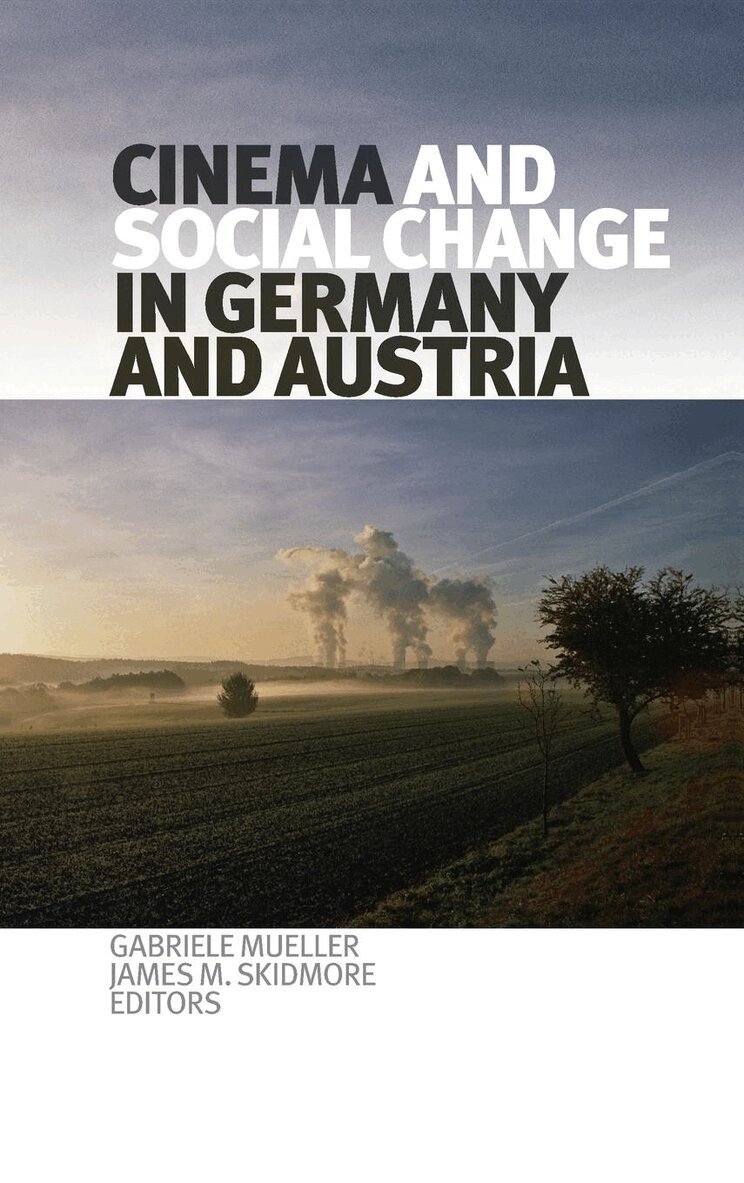
    Cinema and Social Change in Germany and Austria

    AvGabriele Mueller,James M. Skidmore

    Inbunden, Engelska, 2012

    Del i serien Film and Media Studies

    1 006 kr

    Beställningsvara. Skickas inom 10-15 vardagar. Fri frakt över 249 kr.

    Beskrivning

    During the last decade, contemporary German and Austrian cinema has grappled with new social and economic realities. The ""cinema of consensus,"" a term coined to describe the popular and commercially oriented filmmaking of the 1990s, has given way to a more heterogeneous and critical cinema culture. Making the greatest artistic impact since the 1970s, contemporary cinema is responding to questions of globalization and the effects of societal and economic change on the individual. This book explores this trend by investigating different thematic and aesthetic strategies and alternative methods of film production and distribution. Functioning both as a product and as an agent of globalizing processes, this new cinema mediates and influences important political and social debates. The contributors illuminate these processes through their analyses of cinema's intervention in discourses on such concepts as ""national cinema,"" the effects of globalization on social mobility, and the emergence of a ""global culture."" The essays illustrate the variety and inventiveness of contemporary Austrian and German filmmaking and highlight the complicated interdependencies between global developments and local specificities. They confirm a broader trend toward a more complex, critical, and formally diverse cinematic scene. This book offers insights into the strategies employed by German and Austrian filmmakers to position themselves between the commercial pressures of the film industry and the desire to mediate or even attempt to affect social change. It will be of interest to scholars in film studies, cultural studies, and European studies.

    Produktinformation

    • Utgivningsdatum:2012-09-30
    • Mått:152 x 229 x 25 mm
    • Vikt:550 g
    • Format:Inbunden
    • Språk:Engelska
    • Serie:Film and Media Studies
    • Antal sidor:314
    • Förlag:Wilfrid Laurier University Press
    • ISBN:9781554582259

    Utforska kategorier

    • Kulturvetenskap inom Samhälle och politik
    • Film inom Kultur

    Mer om författaren

    Gabriele Mueller is an associate professor of German Studies and affiliated with the Canadian Centre for German and European Studies at York University, Toronto. Her research focuses mainly on German cultural studies and German film studies. She has published essays on various aspects of post-unification German film, in particular on cinematic contributions to cultural memory discourses.James M. Skidmore teaches German literature, film, and cultural studies at the University of Waterloo. His research focuses mainly on the intersections of politics, history, and societal development in narrative literature and film. He is the author of The Trauma of Defeat: Ricarda Huch's Historiography during the Weimar Republic (2005), as well as articles on German and Canadian literature and film.

    Recensioner i media

    "German-language cinema has always been more diverse than film historians admit. The contributions in this volume challenge us to recognize this heterogeneity in recent, post-millennial films from Germany and Austria. Close readings elaborate how filmmakers respond to the tensions that arise as the national and European social landscape changes, with implications for film aesthetics, funding, production, distribution, and reception. At the same time these crisply written chapters redefine the emerging cinema landscape within transnational market dynamics and capital flow. I recommend this volume to readers seeking to understand the multiplicity and hybridity of the post-1990s 'consensus' cinema." -- Marc Silberman, University of Wisconsin, editor of 'The German Wall: Fallout in Europe' (2011)

    Innehållsförteckning

    • Cinema and Social Change in Germany and Austria, edited by Gabrielle Mueller and James M. SkidmoreList of IllustrationsAcknowledgements1. Cinema of Dissent? Confronting Social, Economic, and Political Change in German-Language Cinema Gabriele Mueller and James M. SkidmoreChallenging Viewing Habits2. The Counter-Cinema of the Berlin School Marco Abel3. The Triumph of Hyperreality: A Baudrillardian Reading of Michael Haneke's Cinematic Oeuvre Sophie Boyer 4. Subversions of the Medical Gaze: Disability and Media Parody in Christoph Schlingensief's Freakstars 3000 Morgan Koerner Reassessing and Consuming History5. Literary Discourse and Cinematic Narrative: Scripting Affect in Das Leben der Anderen Roger Cook6. Heimat 3: Edgar Reitz's Time Machine Alasdair King 7. Troubled Parents, Angry Children: The Difficult Legacy of 1968 in Contemporary German-Language Film Joanne Leal8. Creative Chaos as Political Strategy in Recent German-Language Cinema Mary-Elizabeth O'Brien9. ""Looking for an Old Man with a Black Moustache"": Hitler, Humor, Fake and Forgery in Schtonk! Florentine Strzelczyk10. Haha, Hitler! Coming to Terms with Dani Levy Peter GölzQuestioning Collective Identities 11. German Fascination for Jews in Oliver Hirschbiegel's Ein ganz gewöhnlicher Jude Myriam Léger12. Border, Bridge, or Barrier? Images of German-Polish Borderlands in German Cinema of the 2000s Jakub Kazecki13. The Transnational Deutschkei in Yilmaz Arslan's Brudermord Michael Zimmermann14. Diasporic Queers: Reading for the Intersections of Alterities in Recent German Cinema Alice KuzniarAn Insider's View15. The Construction of Reality: Aspects of Austrian Cinema between Fiction and Documentary Barbara PichlerFilmographyNotes on ContributorsIndexContributors' BiosMarco Abel is associate professor of English and Film Studies at the University of Nebraska-Lincoln. He is the author of Violent Affect: Literature, Cinema, and Critique after Representation (University of Nebraska Press, 2008) and is currently working on The Berlin School: Toward a Minor Cinema, which is under contract at Camden House. He teaches film history and theory at the University of Nebraska-Lincoln. Sophie Boyer is associate professor of German Studies at Bishop's University in Sherbrooke, Quebec. Her research focuses on nineteenth-century poetry and the representation of crime and sexuality in Weimar literature. She is the author of La femme chez Heinrich Heine et Charles Baudelaire: le langage moderne de l'amour (L'Harmattan, 2004). Roger Cook is professor of German and director of Film Studies at the Missouri State University in Springfield. He is the author of By the Rivers of Babylon: Heinrich Heine's Late Songs and Reflections (Wayne State University Press, 1998) and The Demise of the Author: Autonomy and the German Writer 1770-1848 (Peter Lang, 1993), and he is editor with Gerd Gemünden of The Cinema of Wim Wenders: Image, Narrative, and the Postmodern Condition (Wayne State University Press, 1996). Peter Gölz is associate professor of German and chair of the Department of Germanic and Slavic Studies at the University of Victoria. He has published on film, contemporary literature, computer-assisted language learning, and vampires. Jakub Kazecki holds an M.A. from Dalhousie University, Halifax, and a Ph.D. from The University of British Columbia, Vancouver. He is currently working as an assistant professor of German at Central Connecticut State University in New Britain, Connecticut. Alasdair King is senior lecturer in German and Film Studies at Queen Mary, University of London. His recent publications include a monograph on Hans Magnus Enzensberger, and numerous articles on German cinema. He is currently working on a monograph on Edgar Reitz's Heimat trilogy as part of a wider research interest in contemporary cinematic engagements with space and time. Morgan Koerner is an assistant professor of German at the College of Charleston in South Carolina. His research focuses on intermediality and laughter in contemporary German theatre performances after unification. Alice Kuzniar is professor of German at the University of Waterloo, Ontario. She has edited Outing Goethe and His Age (Stanford University Press, 1996) and authored Delayed Endings: Nonclosure in Novalis and Hölderlin (University of Georgia Press, 1987), The Queer German Cinema (Stanford University Press, 2000), and Melancholia's Dog: Reflections on Our Animal Kinship (University of Chicago Press, 2006). Joanne Leal is director of the M.A. in European Cultures program at Birkbeck, University of London. She has published on feminist literature and contemporary fiction and film, and she has recently completed a project on the collaborative works of Wim Wenders and Peter Handke (with Martin Brady, King's College London), funded by the Arts and Humanities Research Council (United Kingdom). Myriam Léger is a Ph.D. candidate at the University of Waterloo, Ontario. Her research interests are in twentieth-century German literature and film, representations of Jewish identity, intersections of politics and literature, and cultural studies. Gabriele Mueller Gabriele Mueller is associate professor of German and affiliated with The Canadian Centre for German and European Studies at York University in Toronto. Her research focuses mainly on contemporary German cinema. She has published on various aspects of post-unification cinema in Germany, in particular, on cinematic contributions to memory discourses. Mary-Elizabeth O'Brien is professor of German and the Courtney and Steven Ross Chair in Interdisciplinary Studies at Skidmore College in Saratoga Springs, New York. Her book Nazi Cinema as Enchantment: The Politics of Entertainment in the Third Reich (Camden House, 2004) explores how cinema participated in the larger framework of everyday fascism. Currently she is writing a book on national identity in post-wall German cinema. Barbara Pichler is the director of Diagonale, the festival of Austrian film at Graz, which is the main platform for the presentation and discussion of Austrian film. She studied theatre and film at the University of Vienna and at the British Film Institute. An experienced member of film-festival juries, she is also an adjunct lecturer on film at the University of Vienna and the co-editor of moving landscapes: Landschaft und Film (Synema, 2006) and James Benning (FilmmuseumSynemaPublikationen, 2007). James M. Skidmore is associate professor and chair of the Department of Germanic and Slavic Studies at the University of Waterloo, Ontario. Florentine Strzelczyk is associate professor of German and director of the Language Research Centre at the University of Calgary, Alberta. Her research interests include the concept of Heimat in literature and film, and the afterlife of Nazism in North American cinema. She is the author of Unheimliche Heimat: Reibungsflächen zwischen Kultur und Nation (Iudicium, 1999) and co-editor of Glaube und Geschlecht: Fromme Frauen-Spirituelle ErfahrungenReligióse Traditionen (Böhlau, 2008). Michael Zimmermann teaches in the Department of International Languages at the University of Regina, Saskatchewan. His areas of research interest are the twentieth-century novel, film, German as a heritage language, and language pedagogy.