• Fri frakt över 249 kr
  • •
  • Snabba leveranser
  • •
  • Billiga böcker
Kundservice

Du är på sajten för privatpersoner.

Företag, bibliotek eller offentlig verksamhet?

Du handlar på classic.bokus.com, där alla dina funktioner finns intakta.
Till classic.bokus.com
Bokus logotyp. Gå till startsidan.
  • Erbjudanden
  • Nyheter
  • Student
  • Topplistor
  • Barn & ungdom
  • Bokus Play
  • E-böcker
  • Pocketböcker
  • Spel & pussel

10% rabatt på allt med kod: NYSTART10 →

Sidfot

Mina sidor

    Hjälp

    • Kundservice
    • Vanliga frågor och svar
    • Frakt och leverans
    • Retur vid ångerrätt
    • Reklamera vara
    • Betalning
    • Köpvillkor
    • Allmänna villkor
    • Information om webbplatsens tillgänglighet

    Om Bokus

    • Om oss
    • Pressrum
    • För studenter
    • För företag
    • För bibliotek och offentlig verksamhet
    • För leverantörer
    • Hållbarhet

    Populärt

    • Aktuella erbjudanden
    • Presentkort
    • Studentlitteratur
    • Nya böcker
    • Topplistor
    • Signerade böcker
    • Engelska böcker

    Inspiration

    • Boktips
    • BookTok
    • Populära bokserier
    • Barnbokskaraktärer
    • Populära författare
    Logotyp för Bokus
    Följ oss på Facebook (extern länk)Följ oss på Instagram (extern länk)Följ oss på YouTube (extern länk)Följ oss på TikTok (extern länk)
    bokus @ CookiesAnpassa cookiesIntegritetspolicyKöpvillkor
    Till Citymail hemsida (extern länk)Till Budbee hemsida (extern länk)Till Postnord hemsida (extern länk)Till Schenker hemsida (extern länk)Till Early Bird hemsida (extern länk)Till Walleys hemsida (extern länk)
    1. Samhälle och politik
    2. Samhälle och kultur
    3. Kultur och medier
    4. Kulturvetenskap

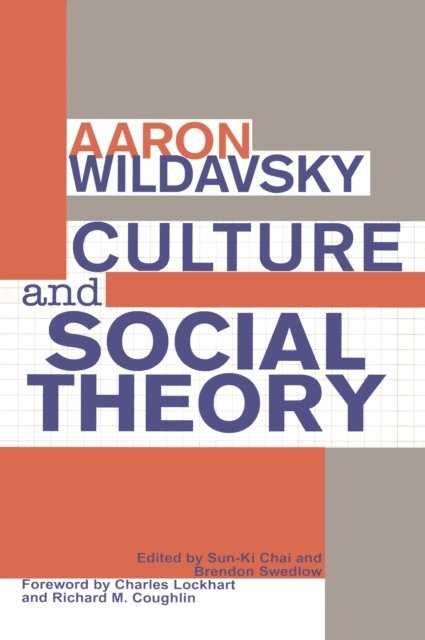
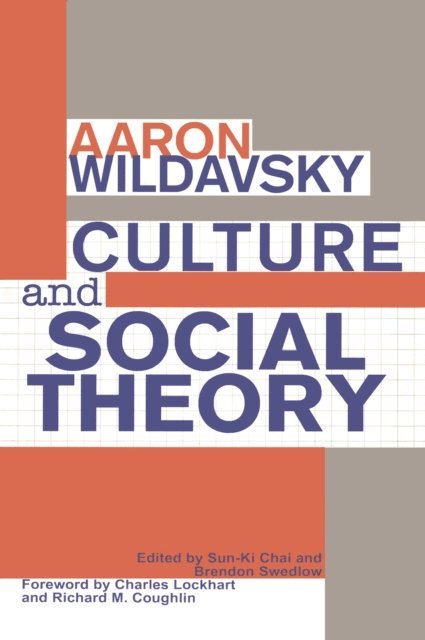
    Culture and Social Theory

    AvAaron Wildavsky

    Inbunden, Engelska, 1996

    2 421 kr

    Beställningsvara. Skickas inom 10-15 vardagar. Fri frakt över 249 kr.

    Fler format och utgåvor

    Häftad

    723 kr

    E-bok

    858 kr

    E-bok

    855 kr

    Beskrivning

    Aaron Wildavsky, along with Mary Douglas, identified what they called grid-group theory. Wildavsky began calling this "cultural theory," and applied it to an astounding array of subjects. The essays in this volume exemplify the theory's potential contributions to three seemingly disparate, but related, areas: the social construction of meaning, normative/analytic political philosophy, and a theory of rational choices. This book is the first in a series of Aaron Wildavsky's collected writings being published posthumously by Transaction. Wildavsky selected, sequenced, and grouped all but three of the essays included in Culture and Social Theory prior to his death. Some are presented here for the first time. Wildavsky's cultural theory provides ways to organize and interpret the world.In the first section, he shows how social scientists, particularly economists and sociologists, apply the theory. Wildavsky argues that concepts such as externalities, public goods, altruism, and even risk and rape are tools of rival, ubiquitous cultures engaged in perpetual struggle with one another. The second section deals with cultural theory as a way to interpret the works of normative and analytic political philosophers, including Thomas Hobbes and John Stuart Mill, on competing human objectives. Wildavsky argues that particular types of interaction among a society's cultures are necessary for effective realization of basic concepts such as democracy. In the third section, Wildavsky applies cultural theory in conjunction with instrumental rationality, the former as a theory of preference formation, the latter as a device for realizing preferences efficiently. High-priority objectives, and thus the character of norms and rational action, shift across cultures. The world and its various elements comprise a complex, frequently changing, and thus ambiguous reality, nowhere more so than in the dynamic contours of the United States. For cultural theory, individualistic, hierarchical, and egalitarian interpretations of the world are the only ones capable of forming and sustaining institutions and related patterns of social relations that will support human social groups.Wildavsky's central objective is to strip away the camouflage and to reveal varying domains of social life as fields of cultural competition. Culture and Social Theory will be a necessary addition to the libraries of political scientists, economists, and policymakers, not to mention all those who admire Aaron Wildavsky and his work.

    Produktinformation

    • Utgivningsdatum:1996-01-30
    • Mått:152 x 229 x 24 mm
    • Vikt:725 g
    • Format:Inbunden
    • Språk:Engelska
    • Antal sidor:352
    • Förlag:Taylor & Francis Inc
    • ISBN:9781560002758

    Utforska kategorier

    • Kulturvetenskap inom Samhälle och politik
    • Antropologi inom Samhälle och politik

    Innehållsförteckning

    • I: Economists and the Social Construction of Distinctions; 1: On the Social Construction of Distinctions: Risk, Rape, Public Goods, and Altruism; 2: Why the Traditional Distinction between Public and Private Goods Should be Abandoned; 3: At Once Ubiquitous and Elusive, the Concept of Externalities is Either Vacuous or Misapplied; 4: Accounting for the Environment 1; 5: The Social Construction of Cooperation: Egalitarian, Hierarchical, and Individualistic Faces of Altruism 1; II: Philosophers, Political Theory, and Democracy; 6: If Institutions Have Consequences, Why Don’t We Hear about Them from Moral Philosophers? 1; 7: Thomas Hobbes and His Critics: Interpretive Implications of Cultural Theory; 8: The “Multicultural” Mill 1; 9: Democracy as a Coalition of Cultures; 10: Cultural Pluralism Can Both Strengthen and Weaken Democracy; III: Social Scientists, Self-interest, and Rational Choice; 11: Indispensable Framework or Just Another Ideology? Prisoner’s Dilemma as an Antihierarchical Game 1; 12: Why Self-interest Means Less Outside of a Social Context: Cultural Contributions to a Theory of Rational Choices; 13: Can Norms Rescue Self-Interest or Macro Explanation be Joined to Micro Explanation?; 14: Culture, Rationality, and Political Violence; 15: Cultural Change, Party Ideology and Electoral Outcomes