• Fri frakt över 249 kr
  • •
  • Snabba leveranser
  • •
  • Billiga böcker
Kundservice

Du är på sajten för privatpersoner.

Företag, bibliotek eller offentlig verksamhet?

Du handlar på classic.bokus.com, där alla dina funktioner finns intakta.
Till classic.bokus.com
Bokus logotyp. Gå till startsidan.
  • Erbjudanden
  • Nyheter
  • Student
  • Topplistor
  • Barn & ungdom
  • Bokus Play
  • E-böcker
  • Pocketböcker
  • Spel & pussel

10% rabatt på allt med kod: NYSTART10 →

Sidfot

Mina sidor

    Hjälp

    • Kundservice
    • Vanliga frågor och svar
    • Frakt och leverans
    • Retur vid ångerrätt
    • Reklamera vara
    • Betalning
    • Köpvillkor
    • Allmänna villkor
    • Information om webbplatsens tillgänglighet

    Om Bokus

    • Om oss
    • Pressrum
    • För studenter
    • För företag
    • För bibliotek och offentlig verksamhet
    • För leverantörer
    • Hållbarhet

    Populärt

    • Aktuella erbjudanden
    • Presentkort
    • Studentlitteratur
    • Nya böcker
    • Topplistor
    • Signerade böcker
    • Engelska böcker

    Inspiration

    • Boktips
    • BookTok
    • Populära bokserier
    • Barnbokskaraktärer
    • Populära författare
    Logotyp för Bokus
    Följ oss på Facebook (extern länk)Följ oss på Instagram (extern länk)Följ oss på YouTube (extern länk)Följ oss på TikTok (extern länk)
    bokus @ CookiesAnpassa cookiesIntegritetspolicyKöpvillkor
    Till Citymail hemsida (extern länk)Till Budbee hemsida (extern länk)Till Postnord hemsida (extern länk)Till Schenker hemsida (extern länk)Till Early Bird hemsida (extern länk)Till Walleys hemsida (extern länk)
    1. Samhälle och politik
    2. Sociologi och antropologi
    3. Sociologi

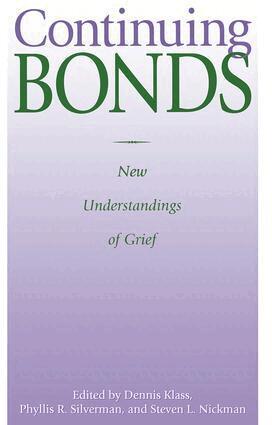
    Continuing Bonds

    New Understandings of Grief

    AvDennis Klass,Phyllis R. Silverman

    Häftad, Engelska, 1996

    Del i serien Death Education, Aging and Health Care

    779 kr

    Beställningsvara. Skickas inom 10-15 vardagar. Fri frakt över 249 kr.

    Beskrivning

    First published in 1996. This new book gives voice to an emerging consensus among bereavement scholars that our understanding of the grief process needs to be expanded. The dominant 20th century model holds that the function of grief and mourning is to cut bonds with the deceased, thereby freeing the survivor to reinvest in new relationships in the present. Pathological grief has been defined in terms of holding on to the deceased. Close examination reveals that this model is based more on the cultural values of modernity than on any substantial data of what people actually do.Presenting data from several populations, 22 authors - among the most respected in their fields - demonstrate that the health resolution of grief enables one to maintain a continuing bond with the deceased. Despite cultural disapproval and lack of validation by professionals, survivors find places for the dead in their on-going lives and even in their communities. Such bonds are not denial: the deceased can provide resources for enriched functioning in the present.Chapters examine widows and widowers, bereaved children, parents and siblings, and a population previously excluded from bereavement research: adoptees and their birth parents. Bereavement in Japanese culture is also discussed, as are meanings and implications of this new model of grief. Opening new areas of research and scholarly dialogue, this work provides the basis for significant developments in clinical practice in the field.

    Produktinformation

    • Utgivningsdatum:1996-02-01
    • Mått:152 x 229 x 21 mm
    • Vikt:710 g
    • Format:Häftad
    • Språk:Engelska
    • Serie:Death Education, Aging and Health Care
    • Antal sidor:384
    • Förlag:Taylor & Francis Inc
    • ISBN:9781560323396

    Utforska kategorier

    • Sociologi inom Samhälle och politik
    • Sorghantering inom Hälsa och familj
    • Socialt arbete och välfärd inom Samhälle och politik

    Mer om författaren

    Dennis Klass, Phyllis R. Silverman, Steven L., Nickman

    Innehållsförteckning

    • Part 1 Examining the Dominant Model; Chapter 1 Introduction: What’s the Problem?, Phyllis R. Silverman, Dennis Klass; Part 2 Setting the Stage; Chapter 2 Broken Hearts or Broken Bonds?, Margaret Stroebe, Mary Gergen, Kenneth Gergen, Wolfgang Stroebe; Chapter 3 Grief That Does Not End, Paul C. Rosenblatt; Chapter 4 Grief in an Eastern Culture: Japanese Ancestor Worship, Dennis Klass; Part 3 Bereaved Children; Chapter 5 Children’s Construction of Their Dead Parents, Phyllis R. Silverman, Steven L. Nickman; Chapter 6 Bereaved Children’s Changing Relationships with the Deceased, Claude L. Normand, Phyllis R. Silverman, Steven L. Nickman; Chapter 7 Remembering a Parent Who Has Died: A Developmental Perspective, Betty C. Buchsbaum; Chapter 8 Relationship and Heritage: Manifestations of Ongoing Attachment Following Father Death, Kirsten Tyson-Rawson; Part 4 Spousal Bereavement; Chapter 9 Widowhood and Husband Sanctification, Helena Znaniecka Lopata; Chapter 10 Remarriage of Widowed Persons: A Triadic Relationship, Miriam S. Moss, Sidney Z. Moss; Chapter 11 Memories of the Death and Life of a Spouse: The Role of Images and Sense of Presence in Grief, Roberta Dew Conant; Part 5 Parental Bereavement; Chapter 12 The Deceased Child in the Psychic and Social Worlds of Bereaved Parents During the Resolution of Grief, Dennis Klass; Chapter 13 The Wounded Family: Bereaved Parents and the Impact of Adult Child Loss, Simon Shimshon Rubin; Part 6 Bereaved Siblings; Chapter 14 Basic Constructs of a Theory of Adolescent Sibling Bereavement, Nancy Hogan, Lydia DeSantis; Part 7 Adoptee Losses; Chapter 15 Retroactive Loss in Adopted Persons, Steven L. Nickman; Chapter 16 Grief and the Birth Origin Fantasies of Adopted Women, Susan Miller-Havens; Part 8 Meanings and Implications; Chapter 17 Grief and the Role of the Inner Representation of the Deceased, Samuel J. Marwit, Dennis Klass; Chapter 18 Attachment and the Reactions of Bereaved College Students: A Longitudinal Study, David E. Balk; Chapter 19 Dilemmas in Identification for the Post-Nazi Generation: “My Good Father Was a Bad Man?”, Lora Heims Tessman; Part 9 Conclusion; Chapter 20 Concluding Thoughts, Phyllis R. Silverman, Steven L. Nickman;