• Fri frakt över 249 kr
  • •
  • Snabba leveranser
  • •
  • Billiga böcker
Kundservice

Du är på sajten för privatpersoner.

Företag, bibliotek eller offentlig verksamhet?

Du handlar på classic.bokus.com, där alla dina funktioner finns intakta.
Till classic.bokus.com
Bokus logotyp. Gå till startsidan.
  • Erbjudanden
  • Nyheter
  • Student
  • Topplistor
  • Barn & ungdom
  • Bokus Play
  • E-böcker
  • Pocketböcker
  • Spel & pussel

10% rabatt på allt med kod: NYSTART10 →

Sidfot

Mina sidor

    Hjälp

    • Kundservice
    • Vanliga frågor och svar
    • Frakt och leverans
    • Retur vid ångerrätt
    • Reklamera vara
    • Betalning
    • Köpvillkor
    • Allmänna villkor
    • Information om webbplatsens tillgänglighet

    Om Bokus

    • Om oss
    • Pressrum
    • För studenter
    • För företag
    • För bibliotek och offentlig verksamhet
    • För leverantörer
    • Hållbarhet

    Populärt

    • Aktuella erbjudanden
    • Presentkort
    • Studentlitteratur
    • Nya böcker
    • Topplistor
    • Signerade böcker
    • Engelska böcker

    Inspiration

    • Boktips
    • BookTok
    • Populära bokserier
    • Barnbokskaraktärer
    • Populära författare
    Logotyp för Bokus
    Följ oss på Facebook (extern länk)Följ oss på Instagram (extern länk)Följ oss på YouTube (extern länk)Följ oss på TikTok (extern länk)
    bokus @ CookiesAnpassa cookiesIntegritetspolicyKöpvillkor
    Till Citymail hemsida (extern länk)Till Budbee hemsida (extern länk)Till Postnord hemsida (extern länk)Till Schenker hemsida (extern länk)Till Early Bird hemsida (extern länk)Till Walleys hemsida (extern länk)
    1. Samhälle och politik
    2. Samhälle och kultur
    3. Kultur och medier
    4. Kulturvetenskap

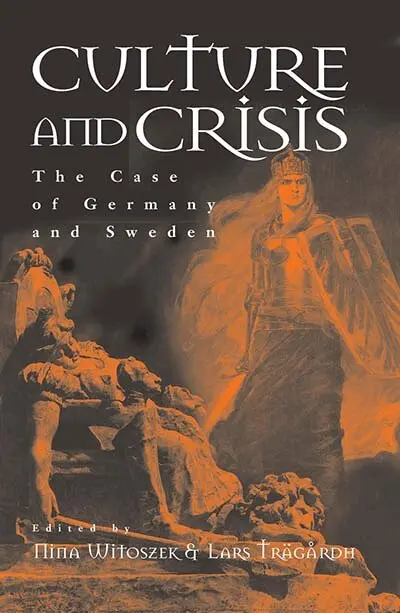
    Culture and Crisis

    The Case of Germany and Sweden

    AvNina Witoszek,Lars Trägårdh

    Häftad, Engelska, 2004

    511 kr

    Beställningsvara. Skickas inom 5-8 vardagar. Fri frakt över 249 kr.

    Beskrivning

    It is often argued that Germany and Scandinavia stand at two opposite ends of a spectrum with regard to their response to social-economic disruptions and cultural challenges. Though, in many respects, they have a shared cultural inheritance, it is nevertheless the case that they mobilize different mythologies and different modes of coping when faced with breakdown and disorder. The authors argue that it is at these "critical junctures," points of crisis and innovation in the life of communities, that the tradition and identity of national and local communities are formed, polarized, and revalued; it is here that social change takes a particular direction.

    Produktinformation

    • Utgivningsdatum:2004-01-15
    • Mått:152 x 229 x 15 mm
    • Vikt:426 g
    • Format:Häftad
    • Språk:Engelska
    • Antal sidor:262
    • Förlag:Berghahn Books, Incorporated
    • ISBN:9781571812704

    Utforska kategorier

    • Kulturvetenskap inom Samhälle och politik

    Mer om författaren

    Nina Witoszek is Professor of Cultural History at Oslo University.

    Recensioner i media

    "... the book deserves credit ... for trying to tackle the tricky issue of crisis as an historical theme, and in doing so offers a novel approach for rethinking the critical 1930s."  ·  H-German

    Innehållsförteckning

    • IntroductionNina Witoszek and Lars TrägårdhChapter 1. Some Questions Concerning the Conceptual History of "Crisis"Reinhart KoselleckChapter 2. The Institutionalization of Modernity: Shocks and Crises in Germany and SwedenErik RingmarChapter 3. Moral Community and the Crisis of the Enlightenment: Sweden and Germany in the 1920s and 1930sNina WitoszekChapter 4. Crisis and the Politics of National Community: Germany and Sweden, 1933-1994Lars TrägårdhChapter 5. Interpreting the Holocaust: Crisis of Modernity or Crisis of German Ideology?Benjamin LappChapter 6. Politics and Catastrophe: Why Is the World So Obsessed with German History?Manfred HenningsenChapter 7. Race, Nation, and Folk: On the Repressed Memory of World War II in Sweden and Its Hidden CategoriesPiero CollaChapter 8. Crisis: The Road to Happiness?Yvonne HirdmanChapter 9. The Crisis of Consensus in Postwar SwedenGöran RosenbergChapter 10. Political Modernity's Critical Juncture in the Course of the French RevolutionRobert WoklerNotes on ContributorsBibliographyIndex