• Fri frakt över 249 kr
  • •
  • Snabba leveranser
  • •
  • Billiga böcker
Kundservice

Du är på sajten för privatpersoner.

Företag, bibliotek eller offentlig verksamhet?

Du handlar på classic.bokus.com, där alla dina funktioner finns intakta.
Till classic.bokus.com
Bokus logotyp. Gå till startsidan.
  • Erbjudanden
  • Nyheter
  • Student
  • Topplistor
  • Barn & ungdom
  • Bokus Play
  • E-böcker
  • Pocketböcker
  • Spel & pussel

10% rabatt på allt med kod: NYSTART10 →

Sidfot

Mina sidor

    Hjälp

    • Kundservice
    • Vanliga frågor och svar
    • Frakt och leverans
    • Retur vid ångerrätt
    • Reklamera vara
    • Betalning
    • Köpvillkor
    • Allmänna villkor
    • Information om webbplatsens tillgänglighet

    Om Bokus

    • Om oss
    • Pressrum
    • För studenter
    • För företag
    • För bibliotek och offentlig verksamhet
    • För leverantörer
    • Hållbarhet

    Populärt

    • Aktuella erbjudanden
    • Presentkort
    • Studentlitteratur
    • Nya böcker
    • Topplistor
    • Signerade böcker
    • Engelska böcker

    Inspiration

    • Boktips
    • BookTok
    • Populära bokserier
    • Barnbokskaraktärer
    • Populära författare
    Logotyp för Bokus
    Följ oss på Facebook (extern länk)Följ oss på Instagram (extern länk)Följ oss på YouTube (extern länk)Följ oss på TikTok (extern länk)
    bokus @ CookiesAnpassa cookiesIntegritetspolicyKöpvillkor
    Till Citymail hemsida (extern länk)Till Budbee hemsida (extern länk)Till Postnord hemsida (extern länk)Till Schenker hemsida (extern länk)Till Early Bird hemsida (extern länk)Till Walleys hemsida (extern länk)
    1. Psykologi och pedagogik
    2. Pedagogik
    3. Undervisning i specifika ämnen

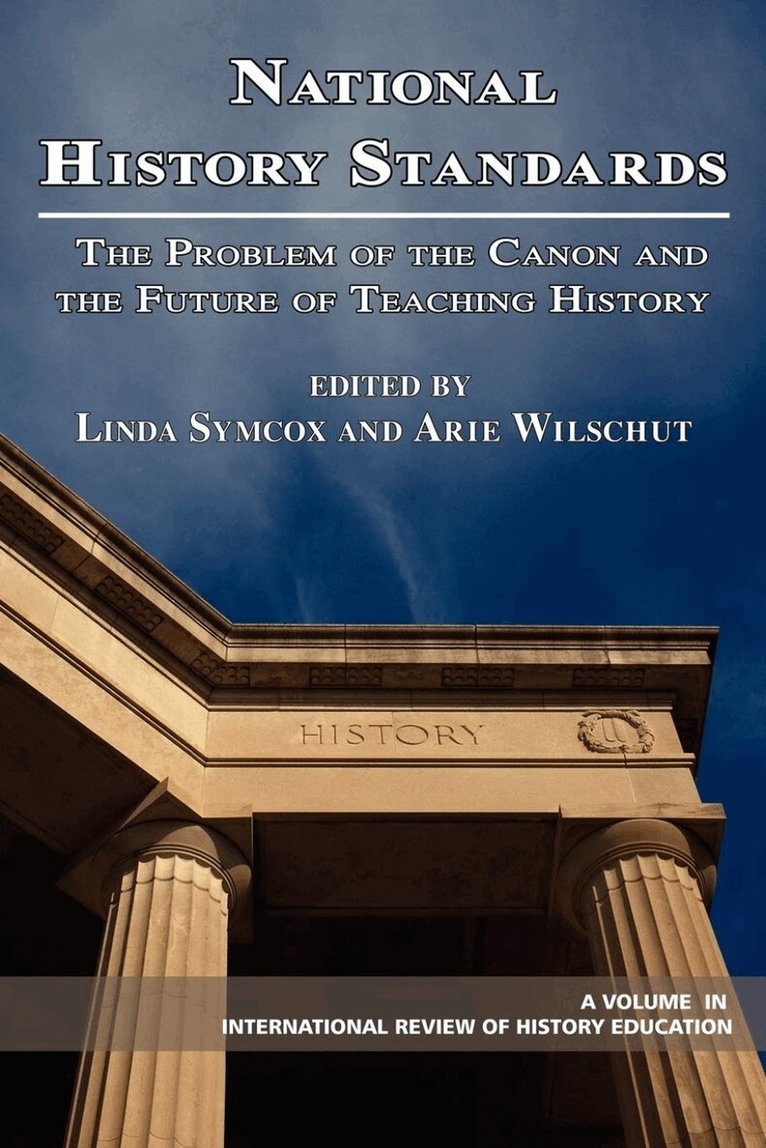
    National History Standards

    The Problem of the Canon and the Future of Teaching History

    AvLinda Symcox,Arie Wilschut

    Häftad, Engelska, 2009

    Del i serien International Review of History Education

    774 kr

    Beställningsvara. Skickas inom 5-8 vardagar. Fri frakt över 249 kr.

    Beskrivning

    As educators in the United States and Europe develop national history standards for K-12 students, the question of what to do with national history canons is a subject of growing concern. Should national canons still be the foundation for the teaching of history? Do national canons develop citizenship or should they be modified to accommodate the new realities of globalization? Or should they even be discarded outright? These questions become blurred by the debates over preserving national heritages, by so-called 'history wars' or 'culture wars,' and by debates over which pedagogical frameworks to use. These canon and pedagogical debates often overlap, creating even more confusion. A misconceived “skills vs. content” debate often results. Teaching students to think chronologically and historically is not the same as teaching a national heritage or a cosmopolitan outlook. But what exactly is the difference? Policy-makers and opinion leaders often confuse the pedagogical desirability of using a ‘framework’ for studying history with their own efforts to reaffirm the centrality of national identity rooted in a vision of their nation's history as a way of inculcating citizenship and patriotism. These are the issues discussed in this volume.Today's students are citizens of the world and must be taught to think in global, supranational terms. At the same time, the traditionalists have a point when they argue that the ideal of the nation-state is the cultural glue that has traditionally held society together, and that social cohesion depends on creating and inculcating a common national culture in the schools. From an educational perspective, the problem is how to teach chronological thinking at all. How are we to reconcile the social, political and intellectual realities of a globalizing world with the continuing need for individuals to function locally as citizens of a nation-state, who share a common past, a common culture, and a common political destiny? Is it a duty of history education to create a frame of reference, and if so, what kind of frame of reference should this be? How does frame-of-reference knowledge relate to canonical knowledge and the body of knowledge of history as a whole?

    Produktinformation

    • Utgivningsdatum:2009-03-04
    • Mått:155 x 233 x 18 mm
    • Vikt:467 g
    • Format:Häftad
    • Språk:Engelska
    • Serie:International Review of History Education
    • Antal sidor:332
    • Förlag:Emerald Publishing Inc
    • ISBN:9781593116682

    Utforska kategorier

    • Undervisning i specifika ämnen inom Psykologi och pedagogik

    Mer om författaren

    Nothing can better serve the promotion of a deeply humanistic but analytic history in precollegiate classrooms than discourse among an internationally diverse body of reform-minded history educators. This books delivers just that. The essays in National History Standards: The Problem of the Canon and the Future of Teaching History, by leading history educators on both sides of the Atlantic, offer cogent critiques of the tangled reform efforts on how history should be taught in the schools as well as sophisticated models for constructing both national and trans-national history for the young people who will determine the course of twenty-first- century human affairs. Gary B. Nash, Director, National Center for History in the Schools, UCLA

    Innehållsförteckning

    • Acknowledgements; Linda Symcox and Arie Wilschut.Series Introduction: International Review of History Education, Volume 5; Rosalyn Ashby, Stuart Foster and Peter Lee.Chapter 1. Introduction; Linda Symcox and Arie Wilschut.Section I. New Curricula in a Post-National World.Chapter 2. The Evaporated Canon and the Overvalued Source: History Education in Belgium: An Historical Perspective; Kaat Wils.Chapter 3. Internationalizing the U.S. History Curriculum: From Nationalism to Cosmopolitanism; Linda Symcox.Chapter 4. The Two World Histories; Ross E. Dunn.Section II. The Persistence of Traditional Curricula.Chapter 5. Yearning for Yesterday: Efforts of History Professionals in Europe at Designing Meaningful and Effective School History Curricula; Joke van der Leeuw-Roord.Chapter 6. Containing and Regulating Knowledge: Some Thoughts on Standards and Canonization as a Response to the Complex Demands of a Globalizing World; Hanna Schissler.Section III. The Educational Debate Over How to Teach History.Chapter 7. Canonical Standards or Orientational Frames of Reference? The Cultural and the Educational Approach to the Debate About Standards in History Teaching; Arie Wilschut.Chapter 8. Drinking an Ocean and Pissing a Cupful: How Adolescents Make Sense of History; Denis Shemilt.Chapter 9. Two Out of Five Did Not Know That Henry VIII Had Six Wives: History Education, Historical Literacy, and Historical Consciousness; Peter Lee and Jonathan Howson.Section IV. The Debate Over How Students Learn History.Chapter 10. The Denial of Desire: How to Make History Education Meaningless; Keith Barton.Chapter 11. Competence in Historical Thinking, Mastering of a Historical Framework, or Knowledge of the Historical Canon; Bodo von Borries.Chapter 12. Closing Comments; Wijnand M. Mijnhardt.About the Authors.