• Fri frakt över 249 kr
  • •
  • Snabba leveranser
  • •
  • Billiga böcker
Kundservice

Du är på sajten för privatpersoner.

Företag, bibliotek eller offentlig verksamhet?

Du handlar på classic.bokus.com, där alla dina funktioner finns intakta.
Till classic.bokus.com
Bokus logotyp. Gå till startsidan.
  • Erbjudanden
  • Nyheter
  • Student
  • Topplistor
  • Barn & ungdom
  • Bokus Play
  • E-böcker
  • Pocketböcker
  • Spel & pussel

10% rabatt på allt med kod: NYSTART10 →

Sidfot

Mina sidor

    Hjälp

    • Kundservice
    • Vanliga frågor och svar
    • Frakt och leverans
    • Retur vid ångerrätt
    • Reklamera vara
    • Betalning
    • Köpvillkor
    • Allmänna villkor
    • Information om webbplatsens tillgänglighet

    Om Bokus

    • Om oss
    • Pressrum
    • För studenter
    • För företag
    • För bibliotek och offentlig verksamhet
    • För leverantörer
    • Hållbarhet

    Populärt

    • Aktuella erbjudanden
    • Presentkort
    • Studentlitteratur
    • Nya böcker
    • Topplistor
    • Signerade böcker
    • Engelska böcker

    Inspiration

    • Boktips
    • BookTok
    • Populära bokserier
    • Barnbokskaraktärer
    • Populära författare
    Logotyp för Bokus
    Följ oss på Facebook (extern länk)Följ oss på Instagram (extern länk)Följ oss på YouTube (extern länk)Följ oss på TikTok (extern länk)
    bokus @ CookiesAnpassa cookiesIntegritetspolicyKöpvillkor
    Till Citymail hemsida (extern länk)Till Budbee hemsida (extern länk)Till Postnord hemsida (extern länk)Till Schenker hemsida (extern länk)Till Early Bird hemsida (extern länk)Till Walleys hemsida (extern länk)
    1. Psykologi och pedagogik
    2. Pedagogik
    3. Undervisning i specifika ämnen

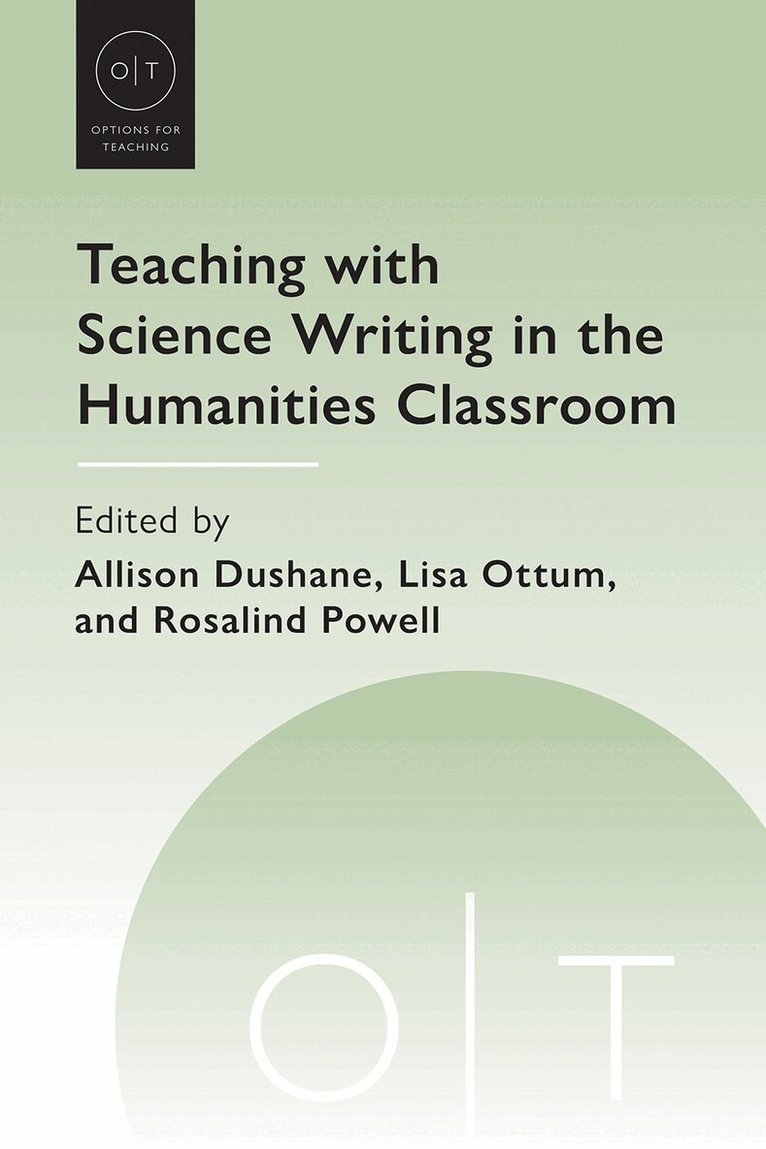
    Teaching with Science Writing in the Humanities Classroom

    AvAllison Dushane,Lisa Ottum

    Inbunden, Engelska, 2026

    Del i serien Options for Teaching

    1 435 kr

    Beställningsvara. Skickas inom 3-6 vardagar. Fri frakt över 249 kr.

    Beskrivning

    Options for teaching science writing in humanities courses Science writing is an expansive genre that invites collaborations between the humanities and science—not as separate endeavors but as mutually constitutive practices. Engaging with long-standing scholarly conversations in science and technology studies, literature and science, rhetoric, and science communication, the essays in this volume showcase the value of science writing as a mode of cultural analysis, as an object of close reading, and as a foundation for justice-oriented pedagogies. Readers will find practical strategies for teaching science writing in literature, writing, and interdisciplinary classrooms, from general education courses to electives to graduate courses. This volume also contains discussion of the following authors and works: Adelard of Bath, Quaestiones naturales (Natural Questions); Albertus Magnus, On Animals; Amy Matilda Cassey; Geoffrey Chaucer, Parliament of Fowls; Samuel Taylor Coleridge, The Rime of the Ancient Mariner; Charles Darwin; Lorraine Daston and Peter Galison, Objectivity; Emily Dickinson; Amitav Ghosh, The Hungry Tide; Ibn al-Nafis, Theologus Autodidactus (Self-Taught Theologian); Robin Wall Kimmerer, Braiding Sweetgrass; Jamaica Kincaid, My Garden (Book); Thomas S. Kuhn, The Structure of Scientific Revolutions; Bruno Latour; Marie de France, "Bisclavret" ("The Werewolf"); Aimee Nezhukumatathil, World of Wonders; Philosophical Transactions of the Royal Society; Britt Rusert, Fugitive Science; C. P. Snow, The Two Cultures; Bram Stoker, Dracula; Émile Zola, L'Assommoir.

    Produktinformation

    • Utgivningsdatum:2026-02-20
    • Mått:152 x 229 x 28 mm
    • Vikt:544 g
    • Format:Inbunden
    • Språk:Engelska
    • Serie:Options for Teaching
    • Antal sidor:294
    • Förlag:Modern Language Association of America
    • ISBN:9781603297158

    Utforska kategorier

    • Undervisning i specifika ämnen inom Psykologi och pedagogik
    • Pedagogisk metodik inom Psykologi och pedagogik

    Innehållsförteckning

    • Introduction: Science Literacy and Science Writing: A Call to Humanists, by Allison Dushane, Lisa Ottum, and Rosalind PowellPart I: Historical Science WritingBefore Objectivity: Pluralizing Science with Premodern Knowledge, by Aylin MalcolmEpistolary Science: The Early Philosophical Transactions, by Rosalind PowellLess Than Nothing in The Rime of the Ancient Mariner: Literature, Mathematics, Realism, and Anti-Realism, by Aaron OttingerThe Vampire We Need: Bram Stoker's Dracula and the Victorian Science of the Mind, by Melissa DicksonBotany in the American Literature Classroom: Emily Dickinson and Amy Matilda Cassey, by Julia DauerExperiments with the Science of Alcoholism, by Susanna LeePart II: General Education and Writing CoursesDigital Science Communication in Rhetoric and Writing Courses, by Laura McGrathScience, Stories, and Academic Ecology, by Marissa KoppEnvironmental Science Communication as Storytelling, by Luke RodewaldEmbracing Subjectivity: Humanizing and Historicizing Science Writing in the Post-Pandemic Classroom, by Scott C. ThompsonScience Writing as a General Education Linchpin, by Matthew NewcombPart III: Science Writing for ChangeAnti-Racist Science Writing: Environmental Justice and Energy Futures in the Interdisciplinary Humanities Classroom, by Davy Knittle, Annesha Manocha, and Arielle RiveraWomen's Historical Ecomedia and Environmental Advocacy, by Bridgitte BarclayJamaica Kincaid's Anti-Colonial, Black, Cross-Species, Embodied, Feminist Onto-Epistemologies, by Nicole M. MerolaMultispecies Relationships: Nonhumans and Knowledge Production in Science Writing, by Nathaniel OtjenPart IV: Courses and AssignmentsThe Critic Afield: Field Guides as Tools for Interdisciplinary Close Reading, by John MacNeill MillerTeaching the Invisible: Science, Labor, and Pedagogy, by Xan Sarah ChackoTeaching with the Hive: Beekeeping as a Scientific and Creative Practice, by James BarillaSex, Gender, and the Short Story, by Nancy EasterlinScience Writing and the Art of Interpretation, by Joshua DiCaglioTaming a Two-Headed Beast: Integrating Science, Literature, and the Living World, by Bryan Shawn Wang and Sandy FeinsteinPart V: ResourcesNotes on Contributors