• Fri frakt över 249 kr
  • •
  • Snabba leveranser
  • •
  • Billiga böcker
Kundservice

Du är på sajten för privatpersoner.

Företag, bibliotek eller offentlig verksamhet?

Du handlar på classic.bokus.com, där alla dina funktioner finns intakta.
Till classic.bokus.com
Bokus logotyp. Gå till startsidan.
  • Erbjudanden
  • Nyheter
  • Student
  • Topplistor
  • Barn & ungdom
  • Bokus Play
  • E-böcker
  • Pocketböcker
  • Spel & pussel

10% rabatt på allt med kod: NYSTART10 →

Sidfot

Mina sidor

    Hjälp

    • Kundservice
    • Vanliga frågor och svar
    • Frakt och leverans
    • Retur vid ångerrätt
    • Reklamera vara
    • Betalning
    • Köpvillkor
    • Allmänna villkor
    • Information om webbplatsens tillgänglighet

    Om Bokus

    • Om oss
    • Pressrum
    • För studenter
    • För företag
    • För bibliotek och offentlig verksamhet
    • För leverantörer
    • Hållbarhet

    Populärt

    • Aktuella erbjudanden
    • Presentkort
    • Studentlitteratur
    • Nya böcker
    • Topplistor
    • Signerade böcker
    • Engelska böcker

    Inspiration

    • Boktips
    • BookTok
    • Populära bokserier
    • Barnbokskaraktärer
    • Populära författare
    Logotyp för Bokus
    Följ oss på Facebook (extern länk)Följ oss på Instagram (extern länk)Följ oss på YouTube (extern länk)Följ oss på TikTok (extern länk)
    bokus @ CookiesAnpassa cookiesIntegritetspolicyKöpvillkor
    Till Citymail hemsida (extern länk)Till Budbee hemsida (extern länk)Till Postnord hemsida (extern länk)Till Schenker hemsida (extern länk)Till Early Bird hemsida (extern länk)Till Walleys hemsida (extern länk)
    1. Samhälle och politik
    2. Politik och statsskick
    3. Politiska ideologier och rörelser

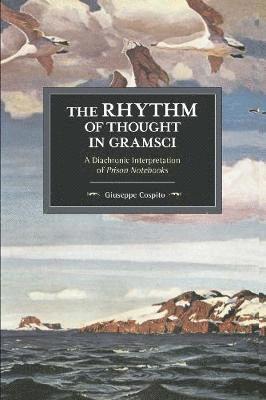
    Rhythm Of Thought In Gramsci

    A Diachronic Interpretation of Prison Notebooks

    AvGiuseppe Cospito

    Häftad, Engelska, 2017

    352 kr

    Beställningsvara. Skickas inom 5-8 vardagar. Fri frakt över 249 kr.

    Fler format och utgåvor

    Inbunden

    2 602 kr

    Beskrivning

    Using a diachronic method of investigation, this work uncovers the origins and development of Gramsci's core concepts. The first section analyses the relation between structure and superstructure and the concepts of hegemony and the regulated society. The second investigates alternative conceptual pairings to structuresuperstructure, encompassing questions of political and cultural organisation, and Gramsci's relation to Marx, Engels, and Lenin.

    Produktinformation

    • Utgivningsdatum:2017-12-26
    • Mått:152 x 229 x 19 mm
    • Vikt:366 g
    • Format:Häftad
    • Språk:Engelska
    • Antal sidor:260
    • Förlag:Haymarket Books
    • ISBN:9781608468263

    Utforska kategorier

    • Politiska ideologier och rörelser inom Samhälle och politik
    • Filosofiska discipliner inom Filosofi och religion
    • Marxism och kommunism inom Samhälle och politik

    Mer om författaren

    Giuseppe Cospito, Ph.D. (1999), University of Turin, is Assistant Professor of History of Philosophy at the University of Pavia. He has published monographs and a number of articles on Niccolò Machiavelli, Giambattista Vico, Carlo Cattaneo and Antonio Gramsci.

    Innehållsförteckning

    • A Note on the TextPreface: Questions of MethodPART ONE: PHILOSOPHY-POLITICS-ECONOMICS 1. Structure and Superstructures1.1. Working hypothesis 1.2. The ‘Bukharin’ phase (from the party school to Notebook 4, §§ 12 and 15: 1925–30) 1.3. The ‘centrist’ thesis from the end of 1930 (Notebook 4, § 38)1.4. The ‘crisis’ of 1931 (Notebook 7)1.5. Moving beyond the architectural metaphor (Notebook 8: end of 1931 – beginning of 1932) 1.6. The ‘inertia’ of the old formulations (Notebooks 10, 11 and 13: 1932–3)1.7. ‘Unended Quest’ (Notebooks 10, 11, 14, 15 e 17: 1932-35)1.8 Provisional conclusions2. Hegemony2.1. Introduction 2.2. ‘Posing the issue’2.3. Hegemony and civil society2.4. Hegemony and the intellectuals2.5. Hegemony and the party 2.6. The sources of Gramsci’s concept of hegemony2.7. A (re)definition of Gramsci’s concept of hegemony3. Regulated Society3.1. Philosophy-Politics-Economics 3.2. ‘Importuning the texts’3.3. The regulated society ‘from Utopia to science’3.4. Towards a new Reformation?3.5. Gramsci as critic of the ‘critical economy’3.6. Toward ‘a new economic science’PART TWO: THE ANALYSIS OF SEVERAL INTERNAL DYNAMICS OF THE NOTEBOOKS4. The ‘Alternatives’ to Structure-Superstructure 4.1. ‘Quantity and quality’4.2. ‘Content and form’4.3. ‘Objective and subjective’4.4. ‘Historical bloc’5. The Gradual Transformation in Gramsci’s Categories5.1. Methodological premise5.2. Organic centralism; Postilla 5.3. Common sense and/or good sense5.4. Civil society6. Gramsci and the Marxist Tradition6.1. ‘Marx, the author of concrete political and historical works’: Caesarism and Bonapartism6.2. Engels and the Marxist vulgate6.3. Conclusion: Gramsci, from Lenin to MarxBibliographyIndex