Inbunden, Engelska, 2017
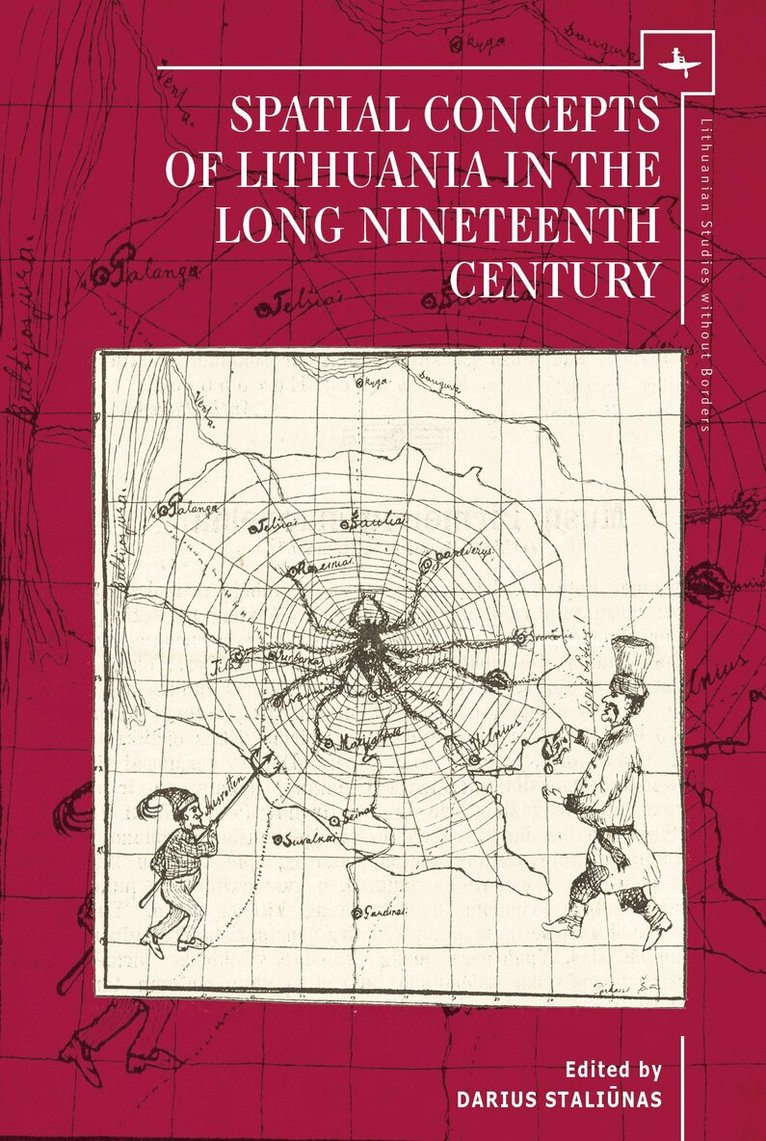
Spatial Concepts of Lithuania in the Long Nineteenth Century
Del i serien Lithuanian Studies without Borders
1357 kr
Skickas tisdag 17/11. Fri frakt över 249 kr.
Beskrivning
Produktinformation
- Utgivningsdatum: 2017-01-19
- Mått: 155 x 234 x 31 mm
- Vikt: 843 g
- Format: Inbunden
- Språk: Engelska
- Serie: Lithuanian Studies without Borders
- Antal sidor: 478
- Förlag: Academic Studies Press
- ISBN: 9781618115324
Utforska kategorier
Mer om författaren
Darius Staliūnas is the author of Making Russians. Meaning and Practice of Russification in Lithuania and Belarus after 1863 (Amsterdam/New York, NY: Rodopi, 2007); Enemies for a Day: Antisemitism and Anti-Jewish Violence in Lithuania under the Tsars (Budapest/New York: CEU Press, 2015); and Lithuanian Nationalism and the Vilnius Question, 1883-1940 (Marburg: Herder-Institut, 2015; co-author – Dangiras Mačiulis). Since 2000 Staliūnas has been a deputy director at Lithuanian Institute of History. He teaches at Vilnius and Klaipėda universities. His research interests include issues of Russian nationality policy in the so-called Northwestern Region (Lithuania and Belorussia), ethnic conflicts, as well as problems of historiography and places of memory in Lithuania.
Recensioner i media
"Darius Staliūnas and his co-authors make an excellent and detailed contribution to the study of the spatialities of national identities with their explorations and explanations of Lithuanian national identity and territory as they emerged and crystalized during the nineteenth century, the age of nationalism. Rather than treat space and territory as unrelated backdrops to national identities, Staliūnas et al. bring these concepts to the forefront and demonstrate how they are instrumental in shaping national identities. . . .the work overall is a great contribution to scholarly literature because it illustrates the role that spatial relationships and conceptions play in the emergence, growth, and development of national identities. The Lithuanian case may seem an unusual example for advancing such arguments. However, through their meticulous work, Staliūnas et al. thoroughly demonstrate that the Lithuanian case brilliantly illustrates broader, more universal processes."
Betyg & recensioner
0 recensioner
Inga recensioner tillgängliga.