• Fri frakt över 249 kr
  • •
  • Snabba leveranser
  • •
  • Billiga böcker
Kundservice

Du är på sajten för privatpersoner.

Företag, bibliotek eller offentlig verksamhet?

Du handlar på classic.bokus.com, där alla dina funktioner finns intakta.
Till classic.bokus.com
Bokus logotyp. Gå till startsidan.
  • Erbjudanden
  • Nyheter
  • Student
  • Topplistor
  • Barn & ungdom
  • Bokus Play
  • E-böcker
  • Pocketböcker
  • Spel & pussel

Må bättre, för mindre! Upp till 50% rabatt på hälsoböcker

Sidfot

Mina sidor

    Hjälp

    • Kundservice
    • Vanliga frågor och svar
    • Frakt och leverans
    • Retur vid ångerrätt
    • Reklamera vara
    • Betalning
    • Köpvillkor
    • Allmänna villkor
    • Information om webbplatsens tillgänglighet

    Om Bokus

    • Om oss
    • Pressrum
    • För studenter
    • För företag
    • För bibliotek och offentlig verksamhet
    • För leverantörer
    • Hållbarhet

    Populärt

    • Aktuella erbjudanden
    • Presentkort
    • Studentlitteratur
    • Nya böcker
    • Topplistor
    • Signerade böcker
    • Engelska böcker

    Inspiration

    • Boktips
    • BookTok
    • Populära bokserier
    • Barnbokskaraktärer
    • Populära författare
    Logotyp för Bokus
    Följ oss på Facebook (extern länk)Följ oss på Instagram (extern länk)Följ oss på YouTube (extern länk)Följ oss på TikTok (extern länk)
    bokus @ CookiesAnpassa cookiesIntegritetspolicyKöpvillkor
    Till Citymail hemsida (extern länk)Till Budbee hemsida (extern länk)Till Postnord hemsida (extern länk)Till Schenker hemsida (extern länk)Till Early Bird hemsida (extern länk)Till Walleys hemsida (extern länk)
    1. Psykologi och pedagogik
    2. Pedagogik
    3. Pedagogisk teori och filosofi

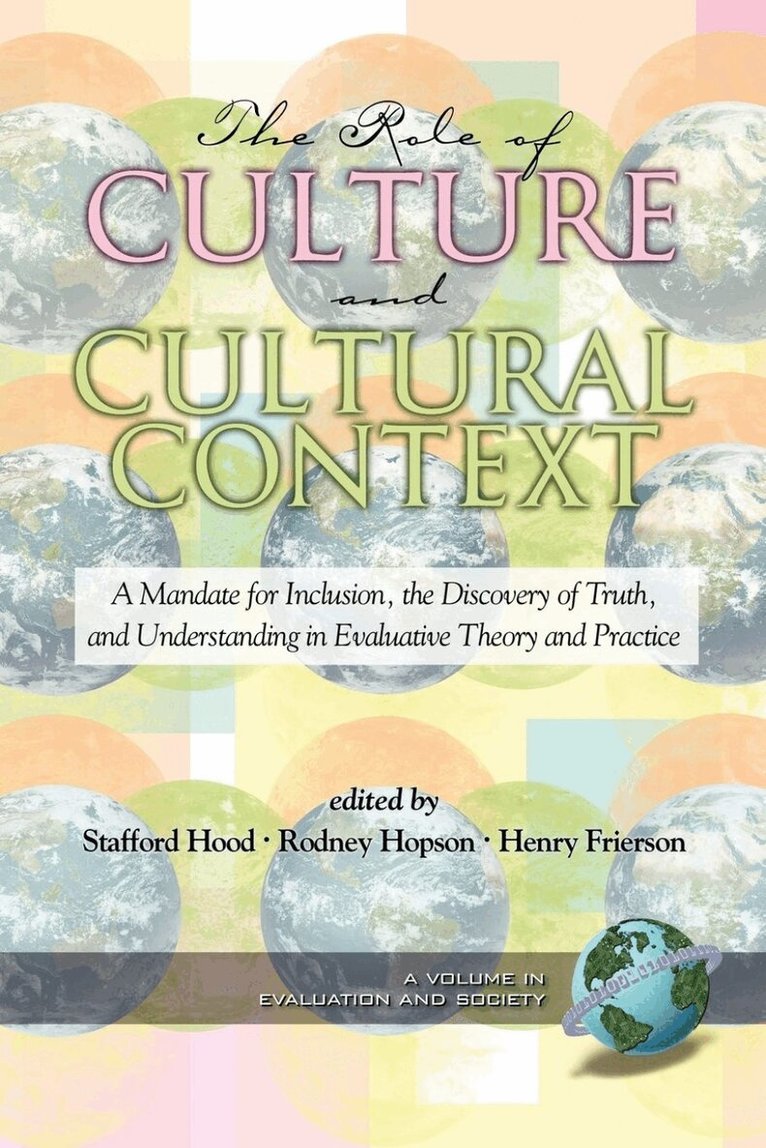
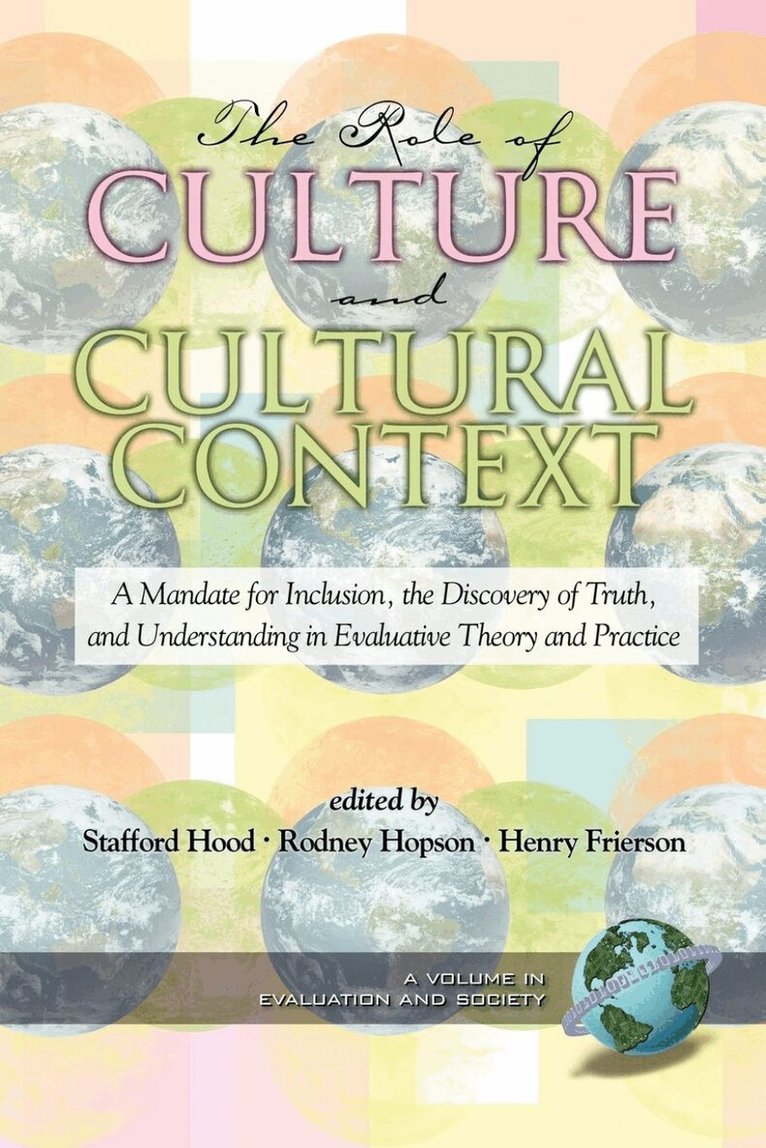
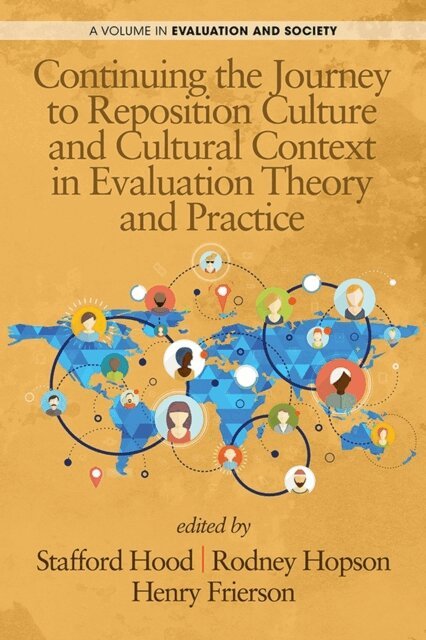
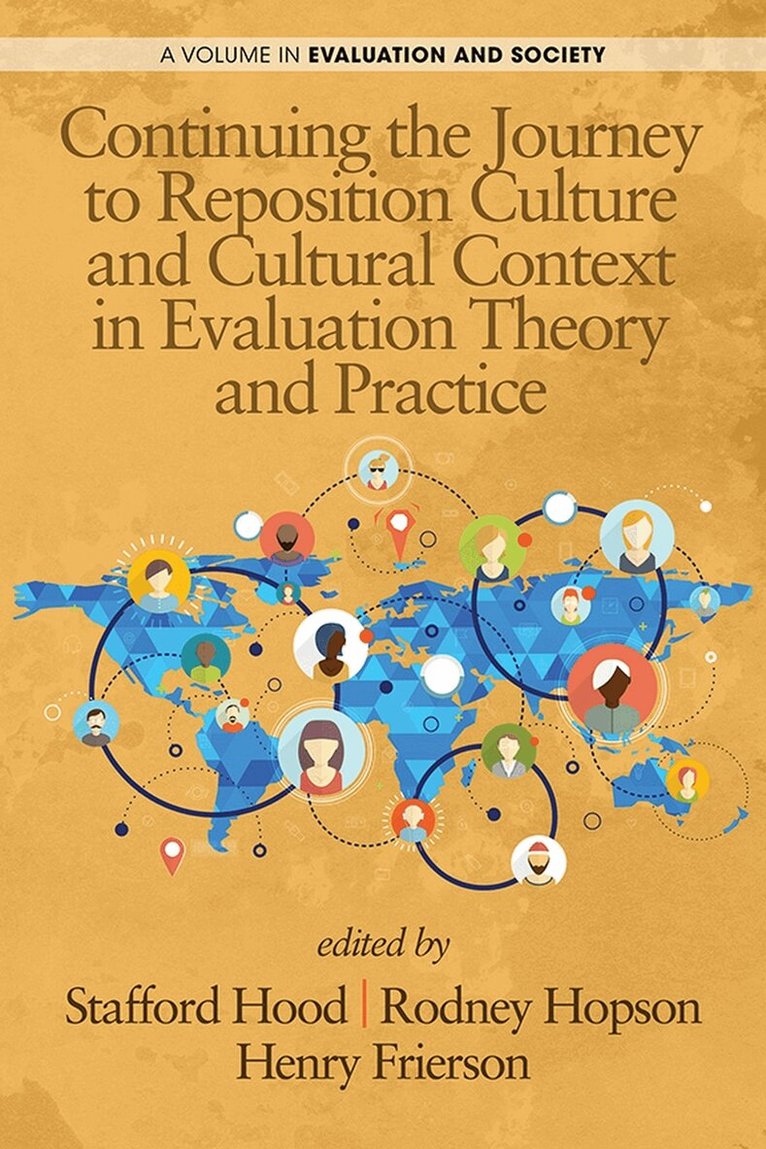
    Continuing the Journey to Reposition Culture and Cultural Context in Evaluation Theory and Practice

    AvStafford Hood,Rodney Hopson

    Inbunden, Engelska, 2014

    Del i serien Evaluation and Society

    1 170 kr

    Beställningsvara. Skickas inom 5-8 vardagar. Fri frakt över 249 kr.
    Beskrivning

    Racial, ethnic, linguistic, and cultural diversity has become of global importance in places where many never would have imagined. Increasing diversity in the U.S., Europe, Africa, New Zealand, and Asia strongly suggests that a homogeneity- based focus is rapidly becoming an historical artifact. This book highlights that culturally responsive evaluation (CRE) should no longer be viewed as a luxury or an option in our work as evaluators and this perspective requires a distinct shift from "simple" linear cause-effect models and reductionist thinking to include more holistic and culturally responsive approaches.This book expands on Culturally Responsive Evaluation, exploring theory and practice globally. It highlights indigenous perspectives from North America and New Zealand while examining immigrant and Roma experiences in Europe, emphasizing its growing international relevance.

    Produktinformation

    • Utgivningsdatum:2014-12-17
    • Mått:156 x 234 x 24 mm
    • Vikt:742 g
    • Format:Inbunden
    • Språk:Engelska
    • Serie:Evaluation and Society
    • Antal sidor:404
    • Förlag:Emerald Publishing Inc
    • ISBN:9781623969363

    Utforska kategorier

    • Pedagogisk teori och filosofi inom Psykologi och pedagogik
    • Sociologi inom Samhälle och politik
    • Filosofiska discipliner inom Filosofi och religion

    Mer om författaren

    Stafford Hood, University of Illinois, Urbana Champaign, USA.Rodney Hopson, George Mason University, USA.Henry Frierson, University of Florida, USA.

    Innehållsförteckning

    • Introduction: This Is Where We Continue to Stand, Stafford Hood, Rodney Hopson, and Henry Frierson.Section I. Cre Theoretical And Historical Legacies And Extensions.Chapter 1. Culturally Responsive Theory-Driven Evaluation, Katrina L. Bledsoe and Stewart I. Donaldson.Chapter 2. A Systems Approach to Culturally Responsive Evaluation Practice: Culturally Responsive Uses of the Systems Evaluation Protocol (SEP), Wanda D. Casillas and William M. Trochim.Chapter 3. Cultural Views of Validity: A Conversation, Joan LaFrance, Karen E. Kirkhart, and Richard Nichols.Chapter 4. An Analysis of Love My Children: Rose Butler Browne's Contributions to Culturally Responsive Evaluation, Pamela Frazier-Anderson and Tamara Bertrand Jones.Section II. Evaluators' Journeys Of Introspection And Self-Exploration.Chapter 5. Culture and Evaluation: From a Transcultural Belvedere, Jennifer C. Greene.Chapter 6. Culturally Responsive Evaluation as a Resource for Helpful-Help, Hazel Symonette.Chapter 7. Peeling Open the Kiwi: Reterritorializing (Pākehā/White) Evaluation in Aotearoa New Zealand, Rae Torrie, Mathea Roorda, Robin Peace, Mark Dalgety, and Robyn Bailey.Chapter 8. Beginning a Conversation About Spirituality in Māori and Pasifika Evaluation, Vivienne Kennedy, Fiona Cram, Kirimatao Paipa, Kataraina Pipi, Maria Baker, Laurie Porima, Pale Sauni and Clark Tuagalu.Chapter 9. Cultural Reactivity vs. Cultural Responsiveness: Addressing Macro Issues Starting With Micro Changes in Evaluation, Dominica McBride.Section III. Applications Of Cre In Global And Indigenous School Contexts.Chapter 10. Culture Changes, Irish Evaluation and Assessment Traditions Stay the Same? Exploring Peer- and Self-Assessment as a Means of Empowering Ethnic Minority Students, Joe O'Hara, Gerry McNamara, Kathy Harrison.Chapter 11. Implementing Culturally Sensitive Assessment Tools for the Inclusion Of Roma Children in Mainstream Schools, S. Mitakidou, E. Tressou, and P. Karagianni.Chapter 12. Evaluating Alch'i'ni Ba/For the Children: The Troubled Cultural Work of an Indigenous Teacher Education Project, Carolyne J. White and Guy Senese.Section IV. Claiming New Territories of Cre: Culturally Specific Methods, Approaches, and Ecologies.Chapter 13. A Transformative Framework for Culturally Responsive Evaluation, Donna M. Mertens and Heather Zimmerman.Chapter 14. Being Culturally Responsive Through Kaupapa Māori Evaluation, Fiona Cram, Vivienne Kennedy, Kirimatao Paipa, Kataraina Pipi, and Nan Wehipeihana.Chapter 15. Culturally Responsive Methods for Family Centered Evaluation, Kirimatao Paipa, Fiona Cram, Vivienne Kennedy, and Kataraina Pipi.Chapter 16. Culturally Responsive Indigenous Evaluation: A Practical Approach for Evaluating Indigenous Projects in Tribal Reservation Contexts, Nicole R. Bowman, Carolee Dodge Francis, and Monique Tyndall.Chapter 17. Partnering with Pacific Communities to Ground Evaluation in Local Culture and Context: Promises and Challenges, Joan Lafrance, Sharon Nelson-barber, Elizabeth D. Rechebei, and Janet Gordon.Chapter 18. Epilogue: Toward the Next Generation and New Possibilities of Culturally Responsive Evaluation, Stafford Hood, Rodney Hopson, and Henry Frierson.