E-bok, Engelska, 2015
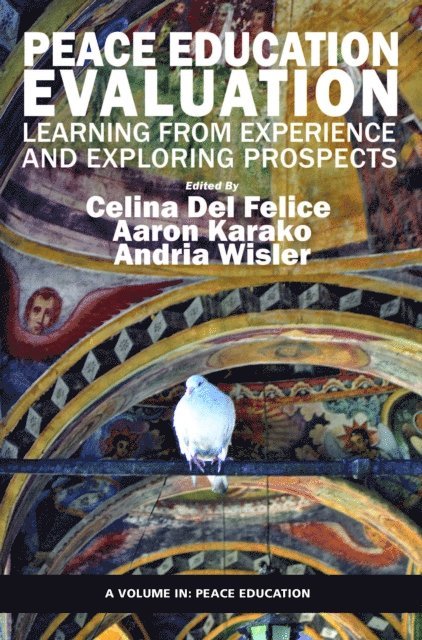
Peace Education Evaluation
Av Andria Wisler, Aaron Karako, Celina Del Felice
485 kr
Läs direkt i Bokus Reader – eller ladda ned till din enhet
Beskrivning
Practice and research of peace education has grown in the recent years as shown by a steadily increasing number of publications, programs, events, and funding mechanisms. The oft-cited point of departure for the peace education community is the belief in education as a valuable tool for decreasing the use of violence in conflict and for building cultures of positive peace hallmarked by just and equitable structures. Educators and organizations implementing peace education activities and programming, however, often lack the tools and capacities for evaluation and thus pay scant regard to this step in program management. Reasons for this inattention are related to the perceived urgency to prioritize new and more action in the context of scarce financial and human resources, notwithstanding violence or conflict; the lack of skills and time to indulge in a thorough evaluative strategy; and the absence of institutional incentives and support. Evaluation is often demand-driven by donors who emphasize accounting given the current context of international development assistance and budget cuts. Program evaluation is considered an added burden to already over-tasked programmers who are unaware of the incentives and of assessment techniques. Peace education practitioners are typically faced with forcing evaluation frameworks, techniques, and norms standardized for traditional education programs and venues. Together, these conditions create an unfavorable environment in which evaluation becomes under-valued, de-prioritized, and mythologized for its laboriousness.
This volume serves three inter-related objectives. First, it offers a critical reflection on theoretical and methodological issues regarding evaluation applied to peace education interventions and programming. The overarching questions of the nature of peace and the principles guiding peace education, as well as governing theories and assumptions of change, transformation, and complexity are explored. Second, the volume investigates existing quantitative, qualitative, and mixed methods evaluation practices of peace educators in order to identify what needs related to evaluation persist among practitioners. Promising practices are presented from peace education programming in different settings (formal and non-formal education), within various groups (e.g. children, youth, police, journalists) and among diverse cultural contexts. Finally, the volume proposes ideas of evaluation, novel techniques for experimentation, and creative adaptation of tools from related fields, in order to offer pragmatic and philosophical substance to peace educators’ “next moves” and inspire the agenda for continued exploration and innovation. The authors come from variety of fields including education, peace and conflict studies, educational evaluation, development studies, comparative education, economics, and psychology.
Produktinformation
- Utgivningsdatum: 2015-05-05
- Språk: Engelska
- Filformat: EPUB
- Kopieringsskydd: LCP
- ISBN: 9781623969752
- Förlag: Emerald Publishing Limited
Utforska kategorier
Betyg & recensioner
0 recensioner
Inga recensioner tillgängliga.