• Fri frakt över 249 kr
  • •
  • Snabba leveranser
  • •
  • Billiga böcker
Kundservice

Du är på sajten för privatpersoner.

Företag, bibliotek eller offentlig verksamhet?

Du handlar på classic.bokus.com, där alla dina funktioner finns intakta.
Till classic.bokus.com
Bokus logotyp. Gå till startsidan.
  • Erbjudanden
  • Nyheter
  • Student
  • Topplistor
  • Barn & ungdom
  • Bokus Play
  • E-böcker
  • Pocketböcker
  • Spel & pussel

10% rabatt på allt med kod: NYSTART10 →

Sidfot

Mina sidor

    Hjälp

    • Kundservice
    • Vanliga frågor och svar
    • Frakt och leverans
    • Retur vid ångerrätt
    • Reklamera vara
    • Betalning
    • Köpvillkor
    • Allmänna villkor
    • Information om webbplatsens tillgänglighet

    Om Bokus

    • Om oss
    • Pressrum
    • För studenter
    • För företag
    • För bibliotek och offentlig verksamhet
    • För leverantörer
    • Hållbarhet

    Populärt

    • Aktuella erbjudanden
    • Presentkort
    • Studentlitteratur
    • Nya böcker
    • Topplistor
    • Signerade böcker
    • Engelska böcker

    Inspiration

    • Boktips
    • BookTok
    • Populära bokserier
    • Barnbokskaraktärer
    • Populära författare
    Logotyp för Bokus
    Följ oss på Facebook (extern länk)Följ oss på Instagram (extern länk)Följ oss på YouTube (extern länk)Följ oss på TikTok (extern länk)
    bokus @ CookiesAnpassa cookiesIntegritetspolicyKöpvillkor
    Till Citymail hemsida (extern länk)Till Budbee hemsida (extern länk)Till Postnord hemsida (extern länk)Till Schenker hemsida (extern länk)Till Early Bird hemsida (extern länk)Till Walleys hemsida (extern länk)
    1. Filosofi och religion
    2. Filosofi
    3. Filosofiska discipliner

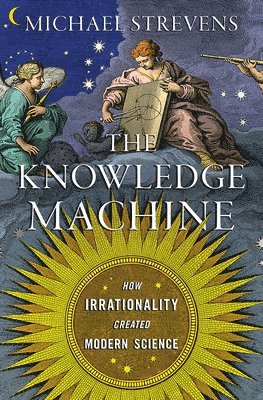
    Knowledge Machine

    How Irrationality Created Modern Science

    AvMichael Strevens

    Inbunden, Engelska, 2020

    278 kr

    Beställningsvara. Skickas inom 5-8 vardagar. Fri frakt över 249 kr.

    Fler format och utgåvor

    Häftad

    145 kr

    E-bok

    121 kr

    Häftad

    178 kr

    Beskrivning

    • Why is science so powerful?• Why did it take so long—two thousand years after the invention of philosophy and mathematics—for the human race to start using science to learn the secrets of the universe?In a groundbreaking work that blends science, philosophy, and history, leading philosopher of science Michael Strevens answers these challenging questions, showing how science came about only once thinkers stumbled upon the astonishing idea that scientific breakthroughs could be accomplished by breaking the rules of logical argument.Like such classic works as Karl Popper’s The Logic of Scientific Discovery and Thomas Kuhn’s The Structure of Scientific Revolutions, The Knowledge Machine grapples with the meaning and origins of science, using a plethora of vivid historical examples to demonstrate that scientists willfully ignore religion, theoretical beauty, and even philosophy to embrace a constricted code of argument whose very narrowness channels unprecedented energy into empirical observation and experimentation. Strevens calls this scientific code the iron rule of explanation, and reveals the way in which the rule, precisely because it is unreasonably close-minded, overcomes individual prejudices to lead humanity inexorably toward the secrets of nature.“With a mixture of philosophical and historical argument, and written in an engrossing style” (Alan Ryan), The Knowledge Machine provides captivating portraits of some of the greatest luminaries in science’s history, including Isaac Newton, the chief architect of modern science and its foundational theories of motion and gravitation; William Whewell, perhaps the greatest philosopher-scientist of the early nineteenth century; and Murray Gell-Mann, discoverer of the quark. Today, Strevens argues, in the face of threats from a changing climate and global pandemics, the idiosyncratic but highly effective scientific knowledge machine must be protected from politicians, commercial interests, and even scientists themselves who seek to open it up, to make it less narrow and more rational—and thus to undermine its devotedly empirical search for truth.Rich with illuminating and often delightfully quirky illustrations, The Knowledge Machine, written in a winningly accessible style that belies the import of its revisionist and groundbreaking concepts, radically reframes much of what we thought we knew about the origins of the modern world.

    Produktinformation

    • Utgivningsdatum:2020-10-13
    • Mått:163 x 244 x 33 mm
    • Vikt:591 g
    • Format:Inbunden
    • Språk:Engelska
    • Antal sidor:368
    • Förlag:W W Norton & Co Ltd
    • ISBN:9781631491375

    Utforska kategorier

    • Filosofiska discipliner inom Filosofi och religion
    • Naturvetenskapens historia inom Naturvetenskap och teknik
    • Naturvetenskapens filosofi inom Naturvetenskap och teknik

    Mer om författaren

    Michael Strevens, a 2017 Guggenheim Fellow, is a professor of philosophy at New York University. He was born in New Zealand and has been writing about philosophy of science for twenty-five years. He lives in New York.

    Recensioner i media

    "Riveting… Strevens promises his readers a better explanation of scientific progress than those given by his two illustrious predecessors, Karl Popper and Thomas Kuhn…[He] sustains his polemical fireworks with a steady succession of examples drawn from the history of science…Worth reading for the quality of Mr. Strevens’s prose alone, his crystal-clear, unfussy sentences, the crisp metaphors(comparing, say, an electron’s complex “superposition” in quantum mechanics to a cocktail mixed from many ingredients) and many excellent quips… As a hard-nosed, wonderfully timely plea for taking science seriously, for allowing scientists to do their work without interference, The Knowledge Machine is unparalleled."