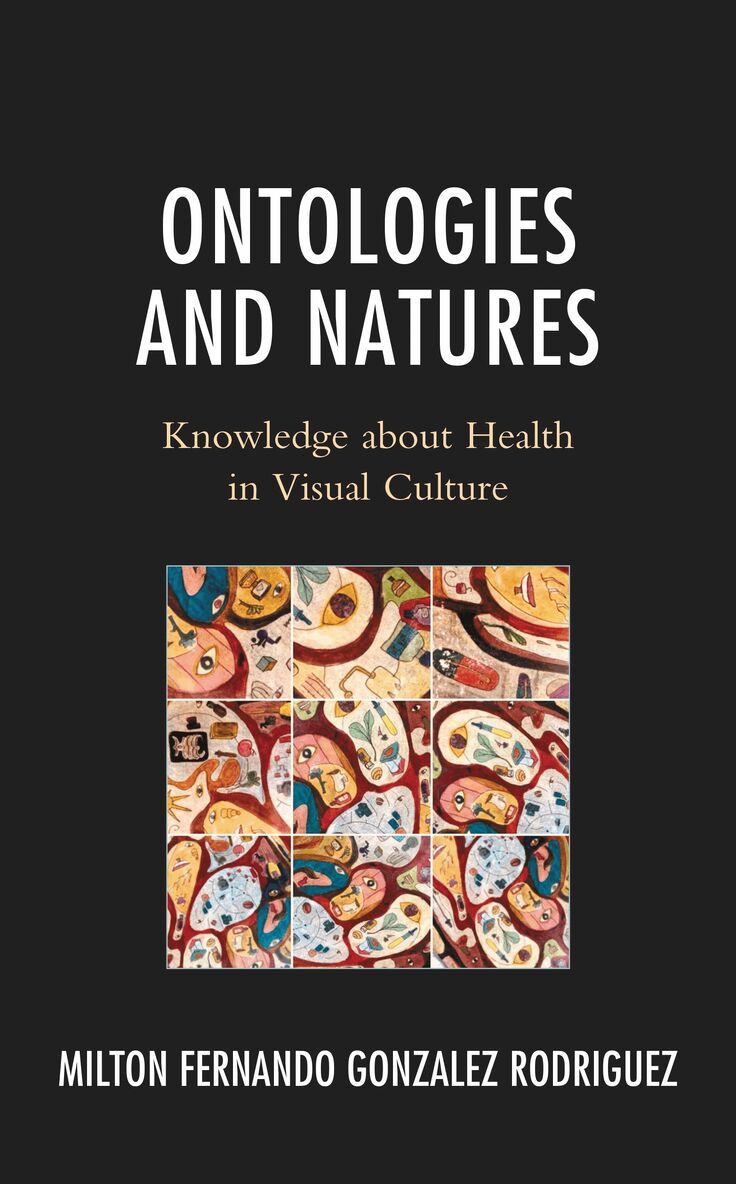
Ontologies and Natures
Knowledge about Health in Visual Culture
AvMilton Fernando Gonzalez Rodriguez
1 190 kr
Beställningsvara. Skickas inom 10-15 vardagar. Fri frakt över 249 kr.
Du är på sajten för privatpersoner.
AvMilton Fernando Gonzalez Rodriguez
1 190 kr
Beställningsvara. Skickas inom 10-15 vardagar. Fri frakt över 249 kr.
Fernando Gonzalez Rodriguez is a Marie Curie Fellow at KU Leuven. He is also a visiting scholar in the Department of History and Philosophy of Science at University of Cambridge and Leibniz Institute for Educational Media | Georg Eckert Institute (Leibniz Association).
Conceptions and practices of health enact cultural understandings of nature as much as they reflect the state of our knowledges of the natural world and our place within it. By showing how these knowledges are asserted, materialized, and performed through visual representations, Fernando Gonzalez Rodriguez brings forth the social and cultural encounters, tensions, hierarchies, and exclusions that underscore universalist discourses of health, suggesting that epistemic inclusivity may better be approached by embracing nature as an essentially unstable object of human knowledge.
Du är på sajten för privatpersoner.
AvMilton Fernando Gonzalez Rodriguez
1 190 kr
Beställningsvara. Skickas inom 10-15 vardagar. Fri frakt över 249 kr.
Fernando Gonzalez Rodriguez is a Marie Curie Fellow at KU Leuven. He is also a visiting scholar in the Department of History and Philosophy of Science at University of Cambridge and Leibniz Institute for Educational Media | Georg Eckert Institute (Leibniz Association).
Conceptions and practices of health enact cultural understandings of nature as much as they reflect the state of our knowledges of the natural world and our place within it. By showing how these knowledges are asserted, materialized, and performed through visual representations, Fernando Gonzalez Rodriguez brings forth the social and cultural encounters, tensions, hierarchies, and exclusions that underscore universalist discourses of health, suggesting that epistemic inclusivity may better be approached by embracing nature as an essentially unstable object of human knowledge.