• Fri frakt över 249 kr
  • •
  • Snabba leveranser
  • •
  • Billiga böcker
Kundservice

Du är på sajten för privatpersoner.

Företag, bibliotek eller offentlig verksamhet?

Du handlar på classic.bokus.com, där alla dina funktioner finns intakta.
Till classic.bokus.com
Bokus logotyp. Gå till startsidan.
  • Erbjudanden
  • Nyheter
  • Student
  • Topplistor
  • Barn & ungdom
  • Bokus Play
  • E-böcker
  • Pocketböcker
  • Spel & pussel

10% rabatt på allt med kod: NYSTART10 →

Sidfot

Mina sidor

    Hjälp

    • Kundservice
    • Vanliga frågor och svar
    • Frakt och leverans
    • Retur vid ångerrätt
    • Reklamera vara
    • Betalning
    • Köpvillkor
    • Allmänna villkor
    • Information om webbplatsens tillgänglighet

    Om Bokus

    • Om oss
    • Pressrum
    • För studenter
    • För företag
    • För bibliotek och offentlig verksamhet
    • För leverantörer
    • Hållbarhet

    Populärt

    • Aktuella erbjudanden
    • Presentkort
    • Studentlitteratur
    • Nya böcker
    • Topplistor
    • Signerade böcker
    • Engelska böcker

    Inspiration

    • Boktips
    • BookTok
    • Populära bokserier
    • Barnbokskaraktärer
    • Populära författare
    Logotyp för Bokus
    Följ oss på Facebook (extern länk)Följ oss på Instagram (extern länk)Följ oss på YouTube (extern länk)Följ oss på TikTok (extern länk)
    bokus @ CookiesAnpassa cookiesIntegritetspolicyKöpvillkor
    Till Citymail hemsida (extern länk)Till Budbee hemsida (extern länk)Till Postnord hemsida (extern länk)Till Schenker hemsida (extern länk)Till Early Bird hemsida (extern länk)Till Walleys hemsida (extern länk)
    1. Samhälle och politik
    2. Samhälle och kultur
    3. Sociala grupper och identitet
    4. Genusvetenskap

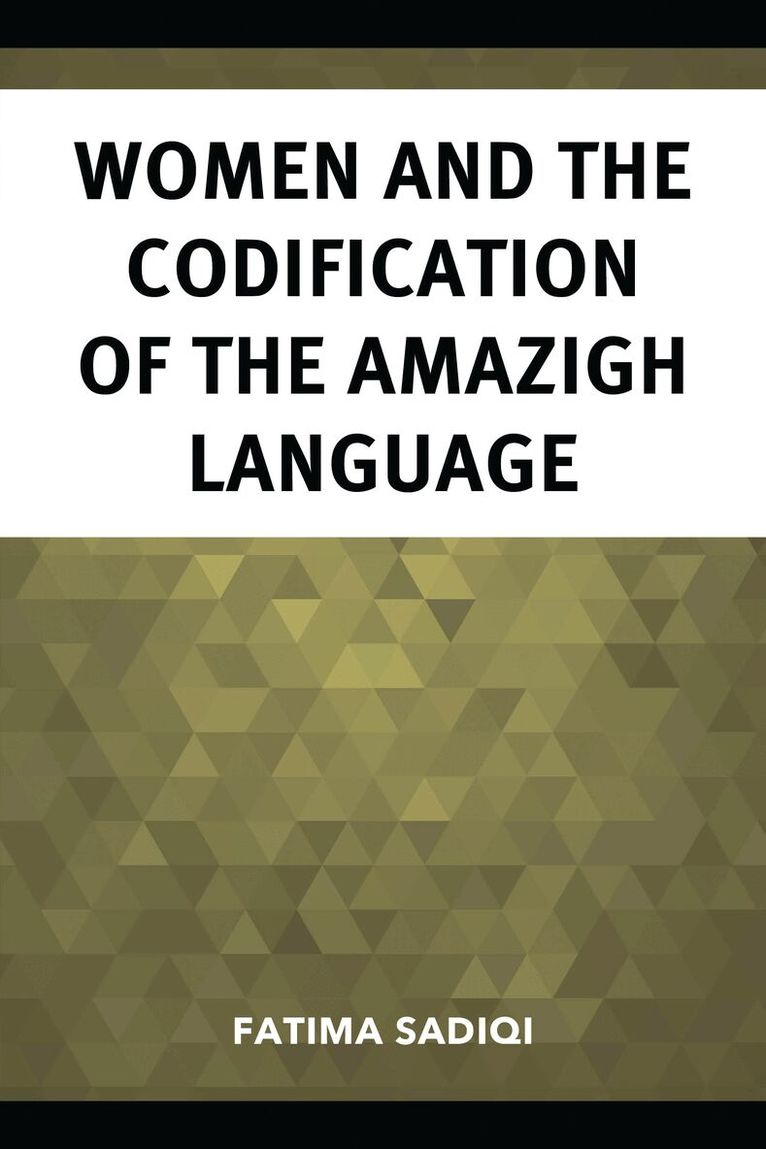
    Women and the Codification of the Amazigh Language

    AvFatima Sadiqi

    Inbunden, Engelska, 2024

    Del i serien After the Empire: The Francophone World and Postcolonial France

    1 186 kr

    Beställningsvara. Skickas inom 10-15 vardagar. Fri frakt över 249 kr.

    Beskrivning

    Often associated with the ‘rural’, the ‘exotic’ or the ‘folkloric’, Amazigh women’s ancestral art of weaving has not received much attention in Amazigh Studies. Drawing on primary sources, manuscripts, and printed texts, in libraries and archives, this book sheds new light on Amazigh women’s weaving practices, arguing that it was the ancestral rug designs that inspired the Amazigh alphabet Tifinagh. In doing so, the author reveals the active role women played in the process of codifying the Amazigh language. This book is of interest to scholars in Amazigh studies, women’s history, anthropology, and linguistics.

    Produktinformation

    • Utgivningsdatum:2024-08-22
    • Mått:161 x 236 x 19 mm
    • Vikt:440 g
    • Format:Inbunden
    • Språk:Engelska
    • Serie:After the Empire: The Francophone World and Postcolonial France
    • Antal sidor:170
    • Förlag:Bloomsbury Publishing Plc
    • ISBN:9781666917710

    Utforska kategorier

    • Genusvetenskap inom Samhälle och politik
    • Språkvetenskap och lingvistik inom Språk och ordböcker

    Mer om författaren

    Fatima Sadiqi is professor of linguistics and gender studies in affiliation with the University of Fez and Hamad Bin Khalifa University.

    Recensioner i media

    In this study, weaving is both a paradigm and a methodology. Through the act of weaving history, archeology, linguistics, and women studies, Sadiqi brings together these disciplines and makes them speak to each other to create a scholarly tapestry where women and North Africa are finally at the center of the work. For Sadiqi, women’s agency is central in the production of knowledge and in preserving and transmitting the Tifinagh alphabet which ensured the survival and vitality of the Amazigh culture, which has been based on a linguistic unity. This groundbreaking book will undoubtedly contribute to a reimagining of the history of North Africa, its culture, and the role of women within both.

    Innehållsförteckning

    • Chapter OneThe Amazigh People and Their Language: A Historical ContextChapter TwoAmazigh Women Between the Production of Culture and the Production of KnowledgeChapter ThreeThe Amazigh Alphabet TifinaghChapter FourAmazigh Women’s Rug Designs and Their MeaningsChapter FiveWomen’s Codification of the Amazigh LanguageChapter SixConclusions