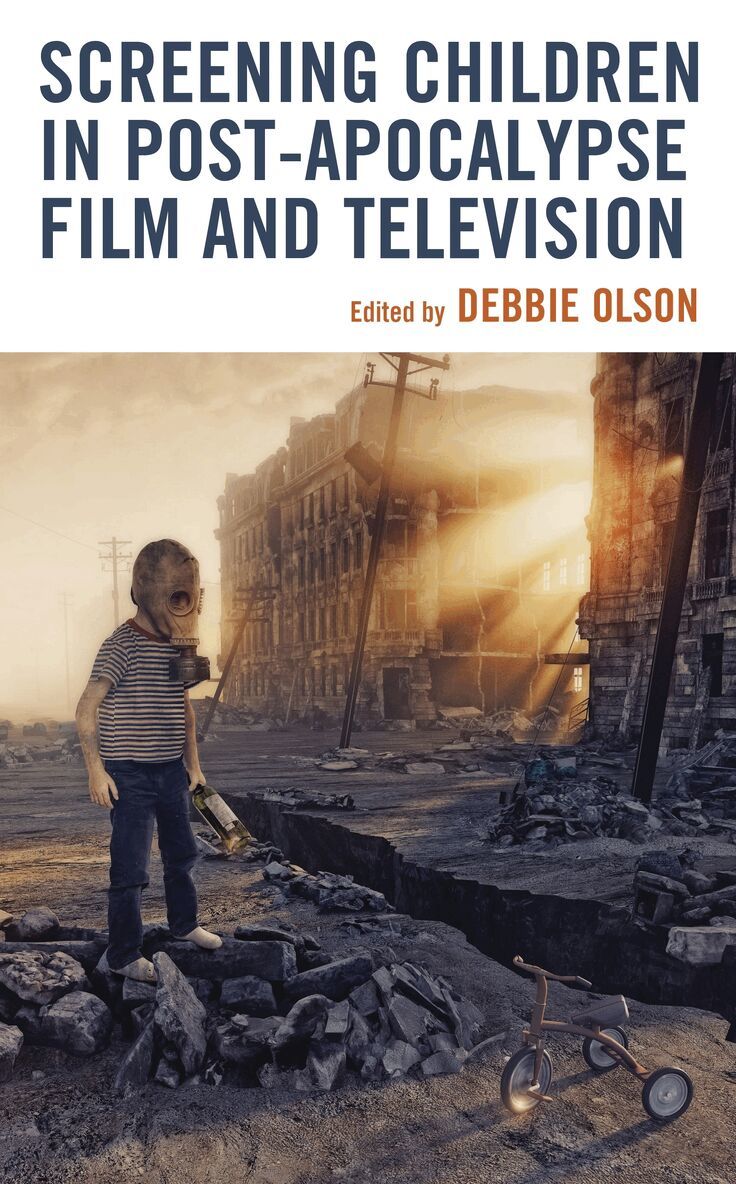
Screening Children in Post-apocalypse Film and Television
1 120 kr
Beställningsvara. Skickas inom 10-15 vardagar. Fri frakt över 249 kr.
Du är på sajten för privatpersoner.
1 120 kr
Beställningsvara. Skickas inom 10-15 vardagar. Fri frakt över 249 kr.
Debbie Olson is associate professor at Missouri Valley College.
The apocalyptic story that can't be told—that would not sell books or movies—is that humans are doomed and that, because of their greed and folly, will join the thousands of species that have already gone extinct. Thus, this collection, edited by Olson, searches for sources of hope in contemporary film. Can art point the way, or is the apocalyptic film merely a way of acknowledging collective fear while clinging to various fantasies of transcendence? Varieties of hope are the dominant theme of this volume, and that hope is literally embodied by children surviving disasters of nuclear war, global pandemics, environmental meltdown, etc. These nine rich essays explore the iconography of children: as religious icons, or under the protection of an anthropomorphic “Mother Nature,” or symbols of past cultural apocalypses due to colonialism and its ongoing effects, or even as an image of survival through evolution into a “post-human” existence. Especially good is Olson's closing essay in this collection, which posits children as symbols of the death of innocence. Recommended. Advanced undergraduates through faculty.
Charles Quist-Adade, De-Valera NYM Botchway, Tammy Hughes, Zethu Cakata, Awo Sarpong, Debbie Olson, Ivo Mhike, Komlan Agbedahin, Mawuloe Koffi Kodah, Mofeyisara Oluwatoyin Omobowale, Olukemi K. Amodu, Waganesh A. Zeleke, Richard Awubomu, Samuel Bewiadzi, Andrea Y. Adomako, Natalie Drozda, Charles Quist-Adade, Awo Sarpong, De-Valera NYM Botchway
Inbunden, 2019
751 kr
Du är på sajten för privatpersoner.
1 120 kr
Beställningsvara. Skickas inom 10-15 vardagar. Fri frakt över 249 kr.
Debbie Olson is associate professor at Missouri Valley College.
The apocalyptic story that can't be told—that would not sell books or movies—is that humans are doomed and that, because of their greed and folly, will join the thousands of species that have already gone extinct. Thus, this collection, edited by Olson, searches for sources of hope in contemporary film. Can art point the way, or is the apocalyptic film merely a way of acknowledging collective fear while clinging to various fantasies of transcendence? Varieties of hope are the dominant theme of this volume, and that hope is literally embodied by children surviving disasters of nuclear war, global pandemics, environmental meltdown, etc. These nine rich essays explore the iconography of children: as religious icons, or under the protection of an anthropomorphic “Mother Nature,” or symbols of past cultural apocalypses due to colonialism and its ongoing effects, or even as an image of survival through evolution into a “post-human” existence. Especially good is Olson's closing essay in this collection, which posits children as symbols of the death of innocence. Recommended. Advanced undergraduates through faculty.
Charles Quist-Adade, De-Valera NYM Botchway, Tammy Hughes, Zethu Cakata, Awo Sarpong, Debbie Olson, Ivo Mhike, Komlan Agbedahin, Mawuloe Koffi Kodah, Mofeyisara Oluwatoyin Omobowale, Olukemi K. Amodu, Waganesh A. Zeleke, Richard Awubomu, Samuel Bewiadzi, Andrea Y. Adomako, Natalie Drozda, Charles Quist-Adade, Awo Sarpong, De-Valera NYM Botchway
Inbunden, 2019
751 kr