• Fri frakt över 249 kr
  • •
  • Snabba leveranser
  • •
  • Billiga böcker
Kundservice

Du är på sajten för privatpersoner.

Företag, bibliotek eller offentlig verksamhet?

Du handlar på classic.bokus.com, där alla dina funktioner finns intakta.
Till classic.bokus.com
Bokus logotyp. Gå till startsidan.
  • Erbjudanden
  • Nyheter
  • Student
  • Topplistor
  • Barn & ungdom
  • Bokus Play
  • E-böcker
  • Pocketböcker
  • Spel & pussel

10% rabatt på allt med kod: NYSTART10 →

Sidfot

Mina sidor

    Hjälp

    • Kundservice
    • Vanliga frågor och svar
    • Frakt och leverans
    • Retur vid ångerrätt
    • Reklamera vara
    • Betalning
    • Köpvillkor
    • Allmänna villkor
    • Information om webbplatsens tillgänglighet

    Om Bokus

    • Om oss
    • Pressrum
    • För studenter
    • För företag
    • För bibliotek och offentlig verksamhet
    • För leverantörer
    • Hållbarhet

    Populärt

    • Aktuella erbjudanden
    • Presentkort
    • Studentlitteratur
    • Nya böcker
    • Topplistor
    • Signerade böcker
    • Engelska böcker

    Inspiration

    • Boktips
    • BookTok
    • Populära bokserier
    • Barnbokskaraktärer
    • Populära författare
    Logotyp för Bokus
    Följ oss på Facebook (extern länk)Följ oss på Instagram (extern länk)Följ oss på YouTube (extern länk)Följ oss på TikTok (extern länk)
    bokus @ CookiesAnpassa cookiesIntegritetspolicyKöpvillkor
    Till Citymail hemsida (extern länk)Till Budbee hemsida (extern länk)Till Postnord hemsida (extern länk)Till Schenker hemsida (extern länk)Till Early Bird hemsida (extern länk)Till Walleys hemsida (extern länk)
    1. Filosofi och religion
    2. Filosofi
    3. Filosofiska discipliner

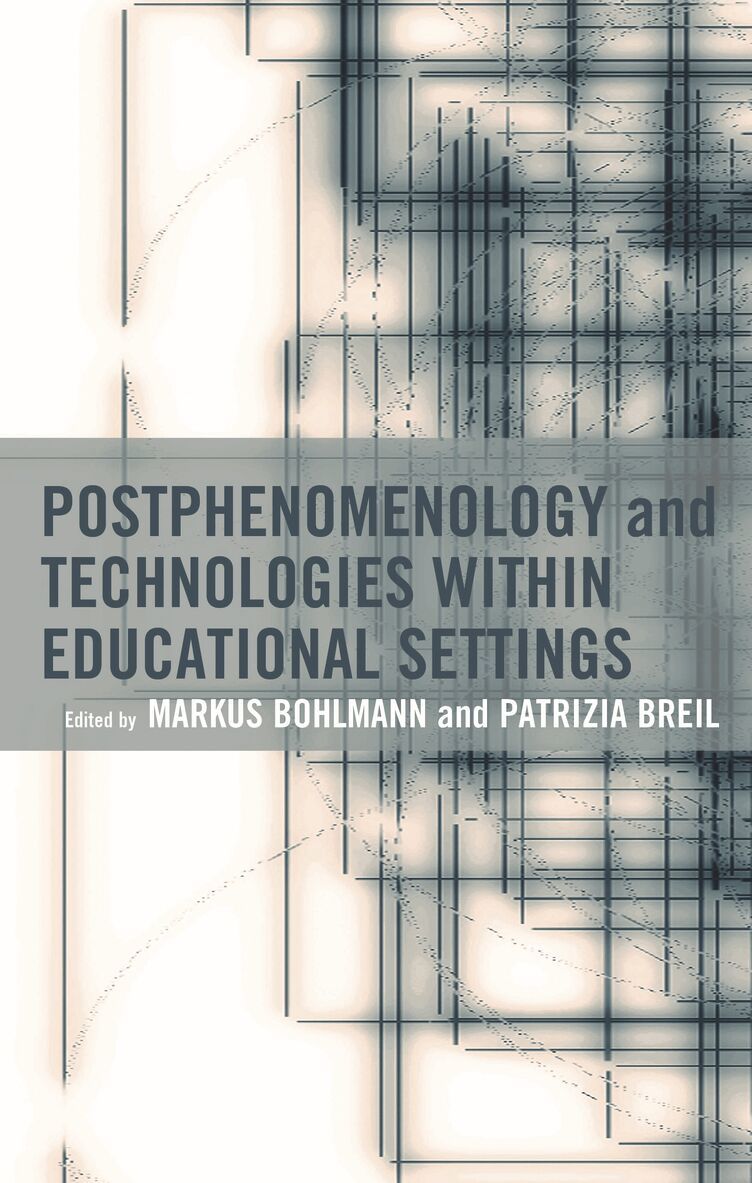
    Postphenomenology and Technologies within Educational Settings

    AvMarkus Bohlmann,Patrizia Breil

    Inbunden, Engelska, 2025

    Del i serien Postphenomenology and the Philosophy of Technology

    1 452 kr

    Beställningsvara. Skickas inom 10-15 vardagar. Fri frakt över 249 kr.

    Beskrivning

    Technologies such as tablets, plagiarism software, and learning videos are now an important part of teaching and learning around the world. The underlying human-technology relations that shape modern educational settings have a decisive influence on what education is and will be in the future.This volume applies the analytical tools of postphenomenology to the context of education. In three sections, the contributors present empirical evidence on the use of technology in schools, show conceptual convergences with current theories relevant to education and training, and challenge and reframe the technologically situated subject as the goal of education in relation to technology.This collection, edited by Markus Bohlmann and Patrizia Breil, opens up the research field of postphenomenology to the broad field of educational technologies. Postphenomenology and Technologies Within Educational Settings extends the scope of the philosophy of technology and further expands its repertoire of theories and analytical tools.

    Produktinformation

    • Utgivningsdatum:2025-01-22
    • Mått:152 x 229 x 27 mm
    • Vikt:690 g
    • Format:Inbunden
    • Språk:Engelska
    • Serie:Postphenomenology and the Philosophy of Technology
    • Antal sidor:390
    • Förlag:Bloomsbury Publishing Plc
    • ISBN:9781666939149

    Utforska kategorier

    • Filosofiska discipliner inom Filosofi och religion

    Mer om författaren

    Markus Bohlmann is postdoctoral researcher in the Department of Philosophy at ?Muenster University.Patrizia Breil is research assistant at the collaborative research center Virtual Lifeworlds at Ruhr University Bochum.

    Recensioner i media

    “This collection is a work of art that will undoubtedly become a seminal text and highly cited for many years to come. It is a call to action for human beings to be more attentive to the ways in which technologies mediate our relations with and in the world during a time in which this has never been more pressing given the rapid growth and power of big tech companies, artificial intelligence, social technology platforms, immersive technologies, and big data in educational technologies. Even more significantly, this work is a wake-up call for us to see the ways that educational technologies are not neutral, but rather constitute subject and world. It is our moral and ethical responsibility as human beings to exercise our freedoms in how technologies impact us. It is a critical time for education. Empowering human beings with freedom and agency has never been more important. Bohlmann and Breil’s timely collection has never been more deeply needed than at our present moment”

    Innehållsförteckning

    • Introductionby Markus Bohlmann and Patrizia BreilPart I: Empirical EvidenceChapter 1: “What To Do With Your Life and How To Spend Your Time?” A Critical Perspective on Life Concepts Mediated Through Popular (Educational) Videosby André Epp and Andreas StockChapter 2: A Note on the Materiality of Educational Frog Dissection by Robert RosenbergerChapter 3: Affordances as Solicitations: The Role of Technical Mediation in Academic Care by Kristy ForrestChapter 4: Mediated (Mis)Conduct: Turnitin as an Audience for Academic Work by Eliott RookeChapter 5: Equipping Tablets. In-Depth Interviews with Early Adopters on the Sedimentation of Human-Technology Relations in Schools by Markus Bohlmann and Martin WilmerChapter 6: Fugitive Pathways: Sensors, Lines, and Knots in the Academic Library by Lesley GourlayChapter 7: Leveling Up: A Postphenomneological Perspective on Gamification by Stacey IrwinChapter 8: Skype, Zoom, and the Zoombies: Reflections on Artistic Play, Malfunction, and the Traits of the Trade Offs by Annie KurzChapter 9: Let’s study together: A Postphenomenological Investigation of “Study with Me” Content in South Korea by Sou Hee YangPart II: Conceptual ConvergenceChapter 10: Ambiguous Relations. A Postphenomenological Reflection on Technological Multistability in Education by Patrizia BreilChapter 11: Freedom Through Restriction? Merleau-Ponty, Dewey, and Foucault on Habit-Formation by Jesper AagaardChapter 12: A Critical Examination of Teaching and Learning in Times of Algorithmic Reasoning by Dan MamlokChapter 13: A Postphenomenolical-Constructionist Assessment of AI in Education: Toward a Multi-Dimensional Democratic Education by Galit Wellner and Ilya LevinChapter 14: Diverging Ethical Concepts. Postphenomenological Analysis through the Lens of Japanese Culture by Tomoki Sakata Chapter 15: Taking Care for the School in Times of Zoom-Education. A Stieglerian Account by Joris VlieghePart III: Subject SubversionChapter 16: After Phenomenology? Digital Subjects and the Relevance of Experience by Anke RedeckerChapter 17: Asking Educational Questions about Technology by Håkon Jakobsen AaltvedtChapter 18: Speaking of Education’s Technologically Mediated Character(s) by Jan Peter BergenChapter 19: Rethinking Ihde’s Relations Pedagogically. On Learning and Becoming Who We Are in Relations to Things by Anne Pesch