• Fri frakt över 249 kr
  • •
  • Snabba leveranser
  • •
  • Billiga böcker
Kundservice

Du är på sajten för privatpersoner.

Företag, bibliotek eller offentlig verksamhet?

Du handlar på classic.bokus.com, där alla dina funktioner finns intakta.
Till classic.bokus.com
Bokus logotyp. Gå till startsidan.
  • Erbjudanden
  • Student
  • Topplistor
  • Barn & ungdom
  • Bokus Play
  • E-böcker
  • Ljudböcker
  • Pocketböcker
  • Spel och pussel

Pocketfynda! Hundratals böcker för 49 kr/st →

Sidfot

Mina sidor

    Hjälp

    • Kundservice
    • Vanliga frågor och svar
    • Frakt och leverans
    • Retur vid ångerrätt
    • Reklamera vara
    • Betalning
    • Köpvillkor
    • Allmänna villkor
    • Information om webbplatsens tillgänglighet

    Om Bokus

    • Om oss
    • Pressrum
    • För studenter
    • För företag
    • För bibliotek och offentlig verksamhet
    • För leverantörer
    • Hållbarhet

    Populärt

    • Aktuella erbjudanden
    • Presentkort
    • Studentlitteratur
    • Nya böcker
    • Topplistor
    • Signerade böcker
    • Engelska böcker

    Inspiration

    • Boktips
    • BookTok
    • Barnbokskaraktärer
    • Populära författare
    Logotyp för Bokus
    Följ oss på Facebook (extern länk)Följ oss på Instagram (extern länk)Följ oss på YouTube (extern länk)Följ oss på TikTok (extern länk)
    bokus @ CookiesAnpassa cookiesIntegritetspolicyKöpvillkor
    Till Citymail hemsida (extern länk)Till Budbee hemsida (extern länk)Till Postnord hemsida (extern länk)Till Schenker hemsida (extern länk)Till Early Bird hemsida (extern länk)Till Walleys hemsida (extern länk)
    1. Psykologi och pedagogik
    2. Pedagogik
    3. Skolväsen och utbildningssystem
    4. Läroplaner och kursplaner

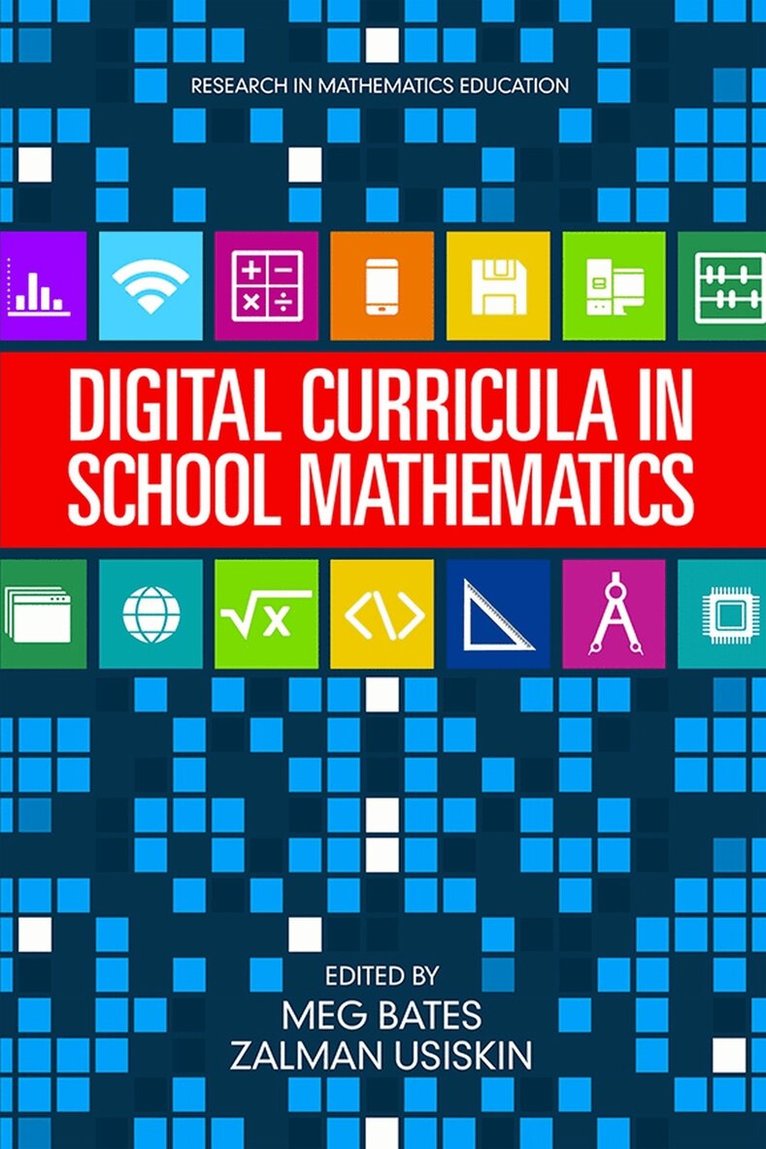
    Digital Curricula in School Mathematics

    AvMeg Bates,Zalman Usiskin

    Inbunden, Engelska, 2016

    Del i serien Research in Mathematics Education

    1 066 kr

    Beställningsvara. Skickas inom 5-8 vardagar. Fri frakt över 249 kr.

    Beskrivning

    The mathematics curriculum – what mathematics is taught, to whom it is taught, and when it is taught – is the bedrock to understanding what mathematics students can, could, and should learn. Today’s digital technology influences the mathematics curriculum in two quite different ways. One influence is on the delivery of mathematics through hardware such as desktops, laptops, and tablets. Another influence is on the doing of mathematics using software available on this hardware, but also available on the internet, calculators, or smart phones. These developments, rapidly increasing in their availability and decreasing in their cost, raise fundamental questions regarding a mathematics curriculum that has traditionally been focused on paper-and-pencil work and taught in many places as a set of rules to be practiced and learned. This volume presents the talks given at a conference held in 2014 at the University of Chicago, sponsored by the Center for the Study of Mathematics Curriculum. The speakers – experts from around the world and inside the USA – were asked to discuss one or more of the following topics: changes in the nature and creation of curricular materials available to students transformations in how students learn and how they demonstrate their learning rethinking the role of the teacher and how students and teachers interact within a classroom and across distances from each other The result is a set of articles that are interesting and captivating, and challenge us to examine how the learning of mathematics can and should be affected by today’s technology.

    Produktinformation

    • Utgivningsdatum:2016-02-11
    • Mått:156 x 234 x 19 mm
    • Vikt:647 g
    • Format:Inbunden
    • Språk:Engelska
    • Serie:Research in Mathematics Education
    • Antal sidor:336
    • Förlag:Emerald Publishing Inc
    • ISBN:9781681234120

    Utforska kategorier

    • Läroplaner och kursplaner inom Psykologi och pedagogik
    • Undervisning i specifika ämnen inom Psykologi och pedagogik

    Mer om författaren

    Meg Bates, The University of Chicago, USAZalman Usiskin, The University of Chicago, USADenisse R Thompson, University of South Florida, USAMary Ann Huntley, Cornell University, USA.Christine Suurtamm, University of Ottawa, USA.

    Innehållsförteckning

    • Preface.Chapter 1. Welcoming Remarks.Part I: Creating Digital Curriculum.Chapter 2. Designing Curriculum for Digital Middle Grades Mathematics: Personalized Learning Ecologies; Jere Confrey.Chapter 3. Developing and Implementing Smart Mathematics Textbooks in Korea: Issues and Challenges; Hee-chan Lew.Chapter 4. Technology-Enhanced Teaching/Learning at a New Level with Dynamic Mathematics as Implemented in the New Cabri; Jean-Marie Laborde.Chapter 5. The Re-Sourcing Movement in Mathematics Teaching: Some European Initiatives; Kenneth Ruthven.Chapter 6. Inquiry Curriculum and E-Textbooks: Technology Changes that Challenge the Representation of Mathematics Pedagogy; Michal Yerushalmy.Part II: Implementing Digital Curriculum.Chapter 7. Connections and Distinctions among Today's Digital Innovations and Yesterday's Innovative Curricula; Valerie L. Mills.Chapter 8. Technology to Support Mathematics Instruction: Examples from the Real World; Loretta J. Asay.Chapter 9. We Thought We Knew It All; Josephus Johnson.Chapter 10. Deeply Digital Curriculum for Deeply Digital Students; Brian Lemmen.Part III: Researching Digital Curriculum.Chapter 11. Analysis of Eight Digital Curriculum Programs; Jeffrey Choppin.Chapter 12. A Design Experiment of a Deeply Digital Instructional Unit and its Impact in High School Classrooms; Alden J. Edson.Chapter 13. Keeping an Eye on the Teacher in the Digital Curriculum Race; Janine Remillard.Chapter 14. New Starting Points for Number Sense Using TouchCounts; Nathalie Sinclair.Part IV: Broader Considerations About Digital Curriculum.Chapter 15. Digitally Enhanced Learning; Philip Daro.Chapter 16. Mathematics Standards and Curricula under the Influence of Digital Affordances — Different Notions, Meanings and Roles in Different Parts of the World; Mogens Niss.Chapter 17. Mathematics Curriculum, Assessment and Teaching for Living in the Digital World: Computational Tools in High Stakes Assessment; Kaye Stacey.Chapter 18. Mathematics Education is at a Major Turning Point; David Moursund.Chapter 19. Deeply Digital STEM Learning; Chad Dorsey.Chapter 20. Closing Remarks; Zalman Usiskin.