• Fri frakt över 249 kr
  • •
  • Snabba leveranser
  • •
  • Billiga böcker
Kundservice

Du är på sajten för privatpersoner.

Företag, bibliotek eller offentlig verksamhet?

Du handlar på classic.bokus.com, där alla dina funktioner finns intakta.
Till classic.bokus.com
Bokus logotyp. Gå till startsidan.
  • Erbjudanden
  • Nyheter
  • Student
  • Topplistor
  • Barn & ungdom
  • Bokus Play
  • E-böcker
  • Pocketböcker
  • Spel & pussel

10% studentrabatt med kod TERM26

Sidfot

Mina sidor

    Hjälp

    • Kundservice
    • Vanliga frågor och svar
    • Frakt och leverans
    • Retur vid ångerrätt
    • Reklamera vara
    • Betalning
    • Köpvillkor
    • Allmänna villkor
    • Information om webbplatsens tillgänglighet

    Om Bokus

    • Om oss
    • Pressrum
    • För studenter
    • För företag
    • För bibliotek och offentlig verksamhet
    • För leverantörer
    • Hållbarhet

    Populärt

    • Aktuella erbjudanden
    • Presentkort
    • Studentlitteratur
    • Nya böcker
    • Topplistor
    • Signerade böcker
    • Engelska böcker

    Inspiration

    • Boktips
    • BookTok
    • Populära bokserier
    • Barnbokskaraktärer
    • Populära författare
    Logotyp för Bokus
    Följ oss på Facebook (extern länk)Följ oss på Instagram (extern länk)Följ oss på YouTube (extern länk)Följ oss på TikTok (extern länk)
    bokus @ CookiesAnpassa cookiesIntegritetspolicyKöpvillkor
    Till Citymail hemsida (extern länk)Till Budbee hemsida (extern länk)Till Postnord hemsida (extern länk)Till Schenker hemsida (extern länk)Till Early Bird hemsida (extern länk)Till Walleys hemsida (extern länk)
    1. Samhälle och politik
    2. Politik och statsskick
    3. Statsskick och politiska processer

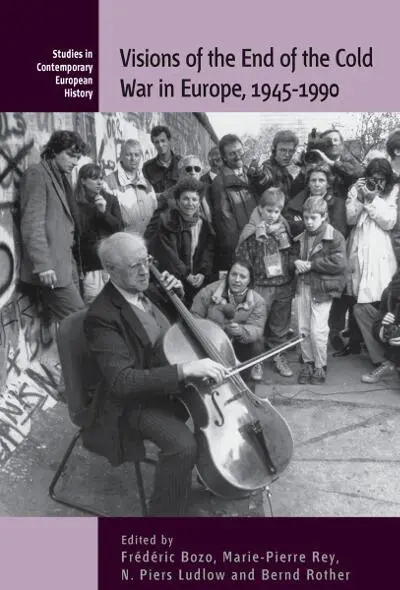
    Visions of the End of the Cold War in Europe, 1945-1990

    AvFrédéric Bozo,Marie-Pierre Rey

    Häftad, Engelska, 2014

    Del i serien Studies in Contemporary European History

    599 kr

    Beställningsvara. Skickas inom 5-8 vardagar. Fri frakt över 249 kr.

    Beskrivning

    Exploring the visions of the end of the Cold War that have been put forth since its inception until its actual ending, this volume brings to the fore the reflections, programmes, and strategies that were intended to call into question the bipolar system and replace it with alternative approaches or concepts. These visions were associated not only with prominent individuals, organized groups and civil societies, but were also connected to specific historical processes or events. They ranged from actual, thoroughly conceived programmes, to more blurred, utopian aspirations — or simply the belief that the Cold War had already, in effect, come to an end. Such visions reveal much about the contexts in which they were developed and shed light on crucial moments and phases of the Cold War.

    Produktinformation

    • Utgivningsdatum:2014-02-01
    • Mått:152 x 229 x 20 mm
    • Vikt:494 g
    • Format:Häftad
    • Språk:Engelska
    • Serie:Studies in Contemporary European History
    • Antal sidor:366
    • Förlag:Berghahn Books
    • ISBN:9781782383864

    Utforska kategorier

    • Statsskick och politiska processer inom Samhälle och politik
    • Kalla krig och ombudskrig inom Historia och arkeologi
    • Europas historia inom Historia och arkeologi

    Mer om författaren

    Frédéric Bozo is Professor of History and International Relations in the Department of European Studies at the Sorbonne (University of Paris III). His publications include Mitterrand, the End of the Cold War, and German Unification (2009) and Two Strategies for Europe: De Gaulle, the United States and the Atlantic Alliance (2001).

    Recensioner i media

    “[This] superb collection…[is] a unique and valuable contribution to the voluminous literature on the Cold War… Essential.”  ·  Choice“This is an excellent collection of twenty-one essays divided into seven sections on perceptions of how the Cold War would end in Europe. Though the essays were presented at a conference previously held at the Sorbonne, the superb editing and organization make this compendium far more than a collection of proceedings… a welcome addition to the literature on the Cold War. Its content speaks for itself. Students and scholars alike should find it useful, and it should be mandatory reading in courses dealing with the Cold War.” · The European Legacy“ [This volume] is a fascinating book which crosses the boundaries of diplomatic and intellectual history in provocative and thoughtful ways...The individual chapters are all exemplary studies in the history of ideas and the book is a thoroughly enjoyable, eye-opening read..."  ·  Contemporary European History“This edited collection does an excellent job of overcoming [an] historiographical lacuna. What is initially striking is just how comprehensive ...[and] just how pioneering and impressive a collection this is…[marked] by the masterly scholarship, outstanding multi-archival research and accessible chapters that serve to make up this edited book [that] deserves to sit on the bookshelves of academics and students alike”  ·  European History Quarterly“These essays give some interesting insight into the minds of their subjects but more importantly achieve the book’s objective of understanding more of the essence of the Cold War and its driving forces… Unlike many such volumes, this book is not merely a collection of different ideas held together loosely by a theme, but a carefully selected group of arguments structured using a combined chronological and thematic approach.”  ·  European Review of History—Revue européenne d’histoire“This collection succeeds in adding a new aspect to the numerous analyses of the end of the Cold War…This excellent volume brings together, for the first time, a rich and multi-layered panorama of ideas of an alternative world order.”  ·  H-Net“The book’s value lies in its multinational and archive-based perspective on individuals and groups who offered ideas on how to end the Cold War. Readers thus receive a panoramic view of the conflict. The book also points the way for future research on the “visions” of other countries, individuals, and institutions not covered here.”  ·  H-France“As this pioneering [volume] clearly and convincingly highlights, perceptions were important, as they influenced foreign policy objectives, international relations and personal chemistry between leaders, strategies for anti-Communist movements and civil society as well as the memory of the Cold War and historical assessments of its leading figures. That the work is able to achieve this through a daunting format that balances 21 separate entries by distinguished scholars in the fields of history, political science and international relations is itself remarkable. The editors must be applauded for organizing the contributions…into a cohesive, chronologically structured work that traces visions of the Cold War from “George Kennan’s Course” to President Ronald Reagan’s American exceptionalism in succinct chapters.”  ·  Reviews & Critical Commentary (Council for European Studies)“This is an excellent collection of articles on an extremely interesting subject. The multinational and multi-archival nature of the selections is very impressive, and it attests to the health and vitality of international relations research in today’s academy.  This is the type of book that should be examined by both policymakers and scholars, since it raises so many good and provocative questions about one of the most important events of our time, namely the end of the Cold War.”  ·  Thomas A. Schwartz, Vanderbilt University“This is an outstanding, well integrated volume that is not only excellent as a history of the Cold War, but focuses on an issue hitherto unexplored in the discussions on the Cold War. [It] is a very good read by some outstanding scholars."  ·  Michael Cox, London School of Economics"The editors have brought together an intriguing collection of essays. They explore visions of how the Cold War would end; the twist is that all of these visions were articulated before the actual end. The resulting essays shed light not only on the hopes and nightmares of participants, but also on the nature of the Cold War itself."  ·  Mary Elise Sarotte, University of Southern California

    Innehållsförteckning

    • PART I: CRYSTALLIZING THE COLD WARChapter 1. George Kennan's Course, 1947-49: A Gaullist before de GaulleJohn L. HarperChapter 2. The Bilderberg Group and the end of the Cold War: The Disengagement Debates of the 1950sThomas W. GijswijtPART II: STALIN'S DEATH AND AFTER: A MISSED OPPORTUNITY?Chapter 3. Moscow's Campaign Against the Cold War, 1945-1955Geoffrey RobertsChapter 4. Stalin's Death and Anglo-American Visions of Ending the Cold War, 1953Jaclyn StankeChapter 5. Soviet Intellectuals after Stalin's Death and Their Visions of the Cold War's EndVladislav ZubokPART III: ALTERNATIVE VISIONS OF THE 1960SChapter 6. Towards a New Concert of Europe: De Gaulle's Vision of a Post-Cold War EuropeGarret MartinChapter 7. Franz Josef Stauß and the End of the Cold WarRonald J. GranieriPART IV: A HELSINKI VISION?Chapter 8. A Very British Vision of Détente: The United Kingdom's Foreign Policy During the Helsinki Process, 1969-1975Martin D. BrownChapter 9. The EC Nine's Vision and Attempts At Ending the Cold WarAngela RomanoPART V: VISIONS AND DISSENT IN THE 1970SChapter 10. 'The Transformation of the Other Side': Willy Brandt's Ostpolitik and the Liberal Peace ConceptGottfried NiedhartChapter 11. Neither in One Bloc, Nor in the Other: Berlinguer's Vision of the End of the Cold WarLaura FasanaroChapter 12. Overcoming Bloc Division from Below: Jiří Hájek and the CSCE Appeal of Charter 77Christian DomnitzPART VI: VISION OR STATUS QUO IN THE 1970SChapter 13. Henry Kissinger: Vision or Status Quo?Jussi HanhimäkiChapter 14. Valéry Giscard d'Estaing and his Vision of the End of the Cold WarGeorges-Henri SoutouPART VII: EVOLUTIONARY VISIONS AND UNEXPECTED RESULTS IN THE 1980SChapter 15. Ending the Cold War, UnintentionallyGregory F. DomberChapter 16. Common Security as a Way to Overcome the (Second) Cold War? Willy Brandt's Strategy for Peace in the 1980sBernd RotherChapter 17. Which Socialism after the Cold War? Gorbachev's Vision and its Impact on the French LeftMarie-Pierre ReyChapter 18. Thatcher's Double Track Road to the End of the Cold War: The Irreconcilability of Liberalisation and PreservationIlaria PoggioliniChapter 19. Mitterand's Vision and the End of the Cold WarFréderic BozoChapter 20. Visions of Ending the Cold War: Triumphalism and US Soviet Policy in the 1980sBeth A. FischerChapter 21. The Power of Imagination: How Reagan's SDI Inadvertently Contributed to the End of the Cold WarMarilena GalaBibliography