• Fri frakt över 249 kr
  • •
  • Snabba leveranser
  • •
  • Billiga böcker
Kundservice

Du är på sajten för privatpersoner.

Företag, bibliotek eller offentlig verksamhet?

Du handlar på classic.bokus.com, där alla dina funktioner finns intakta.
Till classic.bokus.com
Bokus logotyp. Gå till startsidan.
  • Erbjudanden
  • Nyheter
  • Student
  • Topplistor
  • Barn & ungdom
  • Bokus Play
  • E-böcker
  • Pocketböcker
  • Spel & pussel

10% rabatt på allt med kod NYSTART10 →

Sidfot

Mina sidor

    Hjälp

    • Kundservice
    • Vanliga frågor och svar
    • Frakt och leverans
    • Retur vid ångerrätt
    • Reklamera vara
    • Betalning
    • Köpvillkor
    • Allmänna villkor
    • Information om webbplatsens tillgänglighet

    Om Bokus

    • Om oss
    • Pressrum
    • För studenter
    • För företag
    • För bibliotek och offentlig verksamhet
    • För leverantörer
    • Hållbarhet

    Populärt

    • Aktuella erbjudanden
    • Presentkort
    • Studentlitteratur
    • Nya böcker
    • Topplistor
    • Signerade böcker
    • Engelska böcker

    Inspiration

    • Boktips
    • BookTok
    • Populära bokserier
    • Barnbokskaraktärer
    • Populära författare
    Logotyp för Bokus
    Följ oss på Facebook (extern länk)Följ oss på Instagram (extern länk)Följ oss på YouTube (extern länk)Följ oss på TikTok (extern länk)
    bokus @ CookiesAnpassa cookiesIntegritetspolicyKöpvillkor
    Till Citymail hemsida (extern länk)Till Budbee hemsida (extern länk)Till Postnord hemsida (extern länk)Till Schenker hemsida (extern länk)Till Early Bird hemsida (extern länk)Till Walleys hemsida (extern länk)
    1. Naturvetenskap och teknik
    2. Matematik och naturvetenskap
    3. Matematik
    4. Matematisk statistik

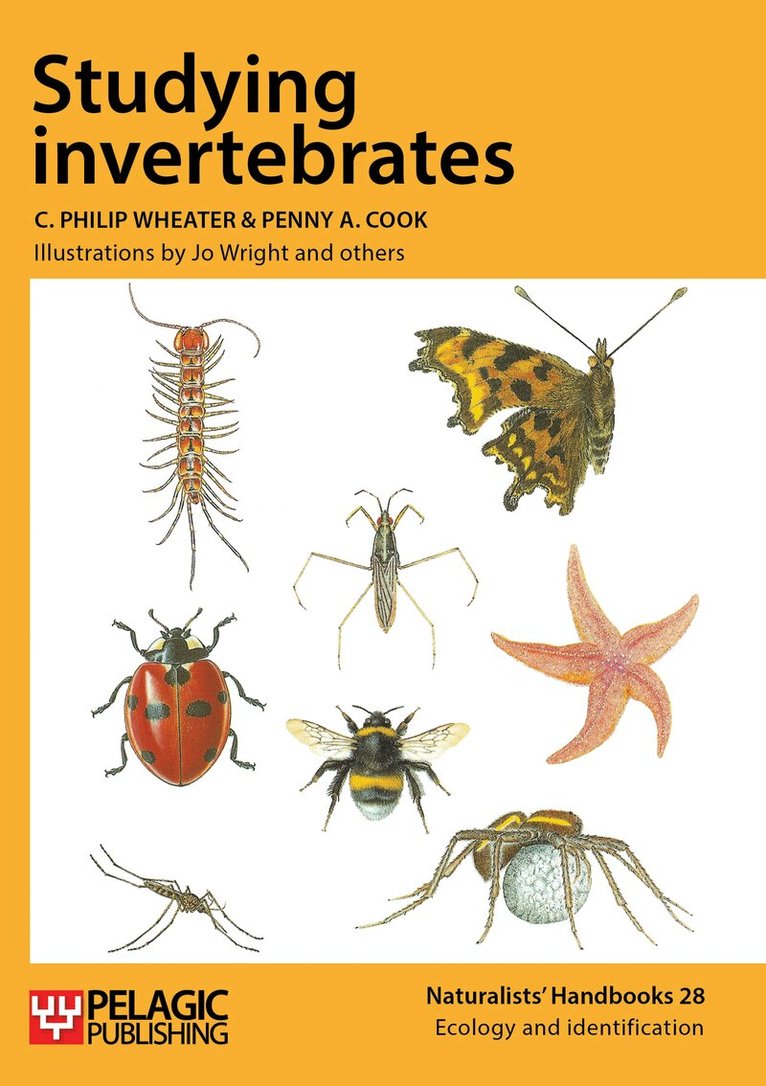
    Studying Invertebrates

    AvC. Philip Wheater,Penny A. Cook

    Häftad, Engelska, 2015

    Del 28 i serien Naturalists' Handbooks

    458 kr

    Beställningsvara. Skickas inom 5-8 vardagar. Fri frakt över 249 kr.

    Fler format och utgåvor

    Häftad

    Tillf. slut

    Beskrivning

    Studying invertebrates is a comprehensive guide to designing and carrying out ecological investigations, especially those involving sampling invertebrates. A highly practical guide to fieldwork, statistical testing and interpretation. The book introduces ways of designing and analysing experiments so that complex situations can be described and summarised, comparisons made, and interactions between organisms and their environment examined objectively.This digital reprint replaces ISBN 0-85546-313-9. First published in 2003.Editors’ prefaceThe books in this series are designed to encourage readers to undertake their own studies of natural history. Each one describes some relevant techniques, but they have not enough space to cover the substantial body of more generally applicable ideas and approaches that underlies the design and analysis of such field studies. By describing a selection of these general methods, Studying invertebrates aims to support those venturing into ecological fieldwork for the first time. The authors have plenty of experience in helping beginners to plan, carry out and interpret ecological surveys and experiments, and we hope this handbook will serve as a welcome companion and guide, especially for those who lack confidence in their knowledge of statistical and other methods.

    Produktinformation

    • Utgivningsdatum:2015-09-25
    • Mått:148 x 210 x 12 mm
    • Vikt:225 g
    • Format:Häftad
    • Språk:Engelska
    • Serie:Naturalists' Handbooks
    • Antal sidor:130
    • Förlag:Pelagic Publishing
    • Illustratör:Jo Wright
    • ISBN:9781784270827

    Utforska kategorier

    • Matematisk statistik inom Naturvetenskap och teknik
    • Zoologi inom Naturvetenskap och teknik
    • Djurböcker inom Djur och Natur

    Mer om författaren

    Philip Wheater is Dean of Faculty in the School of Science and the Environment, Manchester Metropolitan University. His interests include: ecology and management of human-influenced environments, especially urban systems; invertebrate conservation and management; access to, provision and assessment of environmental education; environmental monitoring, especially fieldwork and the use of statistics.

    Innehållsförteckning

    • Editors’ preface, dedication and acknowledgements.Designing an investigation: Designing and setting up experiments and surveys; Types of data; Sampling strategies; Selecting independent data points; Asking questions.Sampling invertebrates: Conducting fieldwork responsibly and safely; Surveying vegetation; Measuring environmental variables; Monitoring substrates such as sand and soil; Monitoring water; Measuring physical attributes of a habitat; Sampling invertebrates from water; Sampling invertebrates from substrates; Sampling invertebrates from rocky shores; Sampling surface active invertebrates; Sampling invertebrates living in and on plants; Sampling aerial insects; Marking invertebrates; Keeping live invertebrates; Killing and preserving invertebrates.Identifying invertebrates: Marine invertebrates; Freshwater invertebrates; Terrestrial invertebrates.Describing data: Examining frequencies; Finding the average value; Examining variation; Estimating the reliability of the sample mean; Estimating population sizes and densities; Identifying clumped, regular and random distributions; Examining similarities between communities.Statistical testing: Choosing a statistical test; Testing for differences between samples; Testing for relationships between variables; Testing for associations between frequency distributions.Presenting your results: Creating tables and graphs; Writing up work.Some useful addresses; Appendix I Calculating statistics; Mathematical glossary; II Statistical tables; References and further reading; Index.