• Fri frakt över 249 kr
  • •
  • Snabba leveranser
  • •
  • Billiga böcker
Kundservice

Du är på sajten för privatpersoner.

Företag, bibliotek eller offentlig verksamhet?

Du handlar på classic.bokus.com, där alla dina funktioner finns intakta.
Till classic.bokus.com
Bokus logotyp. Gå till startsidan.
  • Erbjudanden
  • Nyheter
  • Student
  • Topplistor
  • Barn & ungdom
  • Bokus Play
  • E-böcker
  • Pocketböcker
  • Spel & pussel

Må bättre, för mindre! Upp till 50% rabatt på hälsoböcker

Sidfot

Mina sidor

    Hjälp

    • Kundservice
    • Vanliga frågor och svar
    • Frakt och leverans
    • Retur vid ångerrätt
    • Reklamera vara
    • Betalning
    • Köpvillkor
    • Allmänna villkor
    • Information om webbplatsens tillgänglighet

    Om Bokus

    • Om oss
    • Pressrum
    • För studenter
    • För företag
    • För bibliotek och offentlig verksamhet
    • För leverantörer
    • Hållbarhet

    Populärt

    • Aktuella erbjudanden
    • Presentkort
    • Studentlitteratur
    • Nya böcker
    • Topplistor
    • Signerade böcker
    • Engelska böcker

    Inspiration

    • Boktips
    • BookTok
    • Populära bokserier
    • Barnbokskaraktärer
    • Populära författare
    Logotyp för Bokus
    Följ oss på Facebook (extern länk)Följ oss på Instagram (extern länk)Följ oss på YouTube (extern länk)Följ oss på TikTok (extern länk)
    bokus @ CookiesAnpassa cookiesIntegritetspolicyKöpvillkor
    Till Citymail hemsida (extern länk)Till Budbee hemsida (extern länk)Till Postnord hemsida (extern länk)Till Schenker hemsida (extern länk)Till Early Bird hemsida (extern länk)Till Walleys hemsida (extern länk)
    1. Historia och arkeologi
    2. Historia
    3. Europas historia

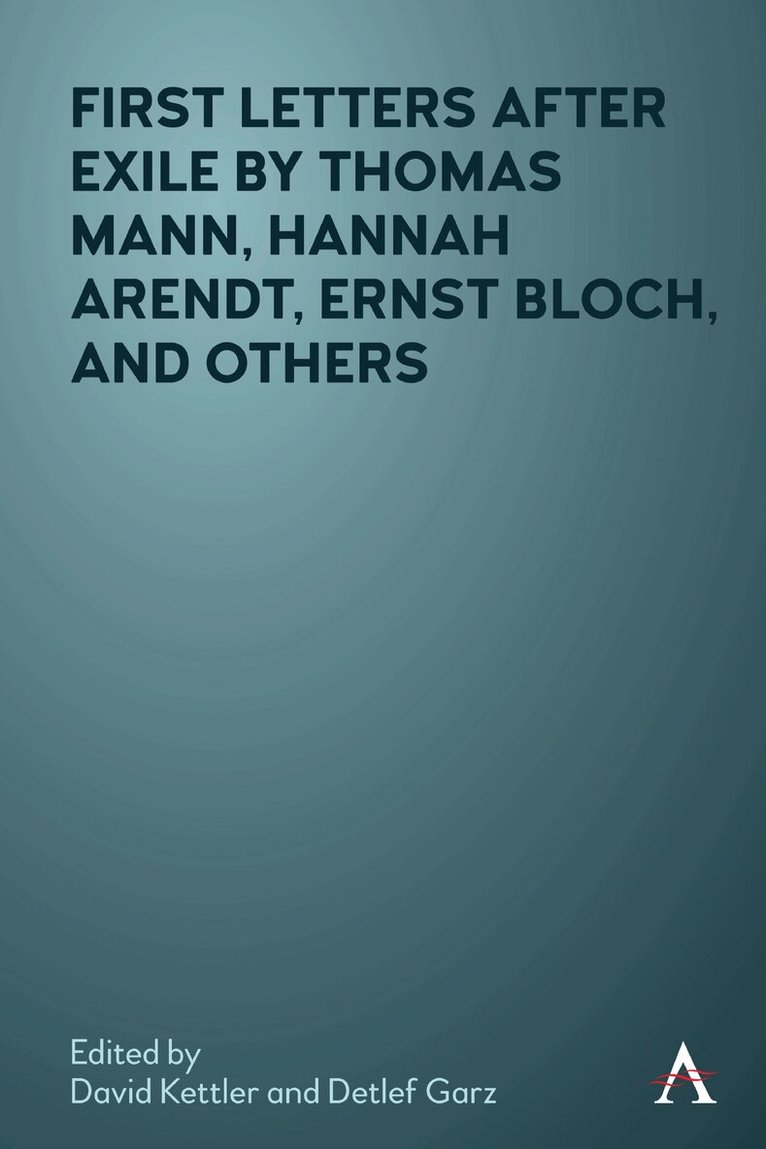
    First Letters After Exile by Thomas Mann, Hannah Arendt, Ernst Bloch, and Others

    AvDavid Kettler,Detlef Garz

    Inbunden, Engelska, 2021

    1 356 kr

    Beställningsvara. Skickas inom 5-8 vardagar. Fri frakt över 249 kr.

    Beskrivning

    In the study of the National Socialist State and its aftermath, two unusual aspects continue to occupy historians and social science commentators. First, a factor important enough to enter into the very definition of totalitarianism is the thoroughgoing mobilization, coercive if needed, of the population of writers, teachers, professors journalists and other intellectual workers, securing cooperation – or at the least passive concurrence – in the mass-inculcation of the population in the destructive Fascist ideology. Second is the central place of dissident members of these populations in the exile. Since webs of communications with others, the majority of whom had remained in Germany, had constituted their own memberships in the populations at issue, the question of their roles in the post-war era depended importantly on the ways and means by which they restored – or refused to restore – communications with those who had remained.

    Produktinformation

    • Utgivningsdatum:2021-03-10
    • Mått:153 x 229 x 26 mm
    • Vikt:454 g
    • Format:Inbunden
    • Språk:Engelska
    • Antal sidor:248
    • Förlag:Anthem Press
    • ISBN:9781785276712

    Utforska kategorier

    • Europas historia inom Historia och arkeologi
    • Biografier inom Biografier
    • Politik och statsskick inom Samhälle och politik

    Mer om författaren

    David Kettler is a student of social and political theory with a special interest in the intellectual generation at work in Germany between the wars and in exile. He is Professor Emeritus of both Trent University (Canada) and Bard College (USA).Detlef Garz is interested in social and educational theory and qualitative research with a focus on biographical development in Nazi Germany and beyond.

    Innehållsförteckning

    • Preface; Chapter 1. The “First Letters” Exile Project: Introduction, David Kettler; Chapter 2. “That I Will Return, My Friend, You Do Not Believe Yourself ”: Karl Wolfskehl – Exul Poeta, Detlef Garz; Chapter 3. “I Do Not Lift a Stone”: Thomas Mann’s “First Letter” to Walter von Molo, Leonore Krenzlin; Chapter 4. Faust Narrative and Impossibility Thesis: Thomas Mann’s Answer to Walter von Molo, Reinhard Mehring; Chapter 5. “That I Am Not Allowed for a Moment to Forget the Ocean of Blood”: Hans-Georg Gadamer and Leo Strauss in Their First Letters after 1946, Thomas Meyer; Chapter 6. Return into Exile: First Letters to and from Ernst Bloch, Moritz Mutter and Falko Schmieder; Chapter 7. A Postwar Encounter without Pathos: Otto Kirchheimer’s Critical Response to the New Germany, Peter Breiner; Chapter 8. An Exile’s Letter to Old Comrades in Cologne: Wilhelm Sollmann’s Critique of German Social Democracy and Conception of a New Party in Postwar Germany, Marjorie Lamberti; Chapter 9. First Letters: Arendt to Heidegger, Micha Brumlik; Chapter 10. Denazification and Postwar German Philosophy: The Marcuse/Heidegger Correspondence, Thomas Wheatland; Chapter 11. “It Would Be Perhaps a New Exile and Perhaps the Most Painful”: The Theme of Return in Oskar Maria Graf’s Letters to Hugo Hartung, Helga Schreckenberger; Chapter 12. Social Constellation of the Exile at the End of the Second World War and the Pragmatics of the “First Letters”: An Objective Hermeneutic Structural and Sequence Analysis, Ulrich Oevermann; Notes on Contributors; Index.