• Fri frakt över 249 kr
  • •
  • Snabba leveranser
  • •
  • Billiga böcker
Kundservice

Du är på sajten för privatpersoner.

Företag, bibliotek eller offentlig verksamhet?

Du handlar på classic.bokus.com, där alla dina funktioner finns intakta.
Till classic.bokus.com
Bokus logotyp. Gå till startsidan.
  • Erbjudanden
  • Nyheter
  • Student
  • Topplistor
  • Barn & ungdom
  • Bokus Play
  • E-böcker
  • Pocketböcker
  • Spel & pussel

10% rabatt på allt med kod: NYSTART10 →

Sidfot

Mina sidor

    Hjälp

    • Kundservice
    • Vanliga frågor och svar
    • Frakt och leverans
    • Retur vid ångerrätt
    • Reklamera vara
    • Betalning
    • Köpvillkor
    • Allmänna villkor
    • Information om webbplatsens tillgänglighet

    Om Bokus

    • Om oss
    • Pressrum
    • För studenter
    • För företag
    • För bibliotek och offentlig verksamhet
    • För leverantörer
    • Hållbarhet

    Populärt

    • Aktuella erbjudanden
    • Presentkort
    • Studentlitteratur
    • Nya böcker
    • Topplistor
    • Signerade böcker
    • Engelska böcker

    Inspiration

    • Boktips
    • BookTok
    • Populära bokserier
    • Barnbokskaraktärer
    • Populära författare
    Logotyp för Bokus
    Följ oss på Facebook (extern länk)Följ oss på Instagram (extern länk)Följ oss på YouTube (extern länk)Följ oss på TikTok (extern länk)
    bokus @ CookiesAnpassa cookiesIntegritetspolicyKöpvillkor
    Till Citymail hemsida (extern länk)Till Budbee hemsida (extern länk)Till Postnord hemsida (extern länk)Till Schenker hemsida (extern länk)Till Early Bird hemsida (extern länk)Till Walleys hemsida (extern länk)
    1. Samhälle och politik
    2. Samhälle och kultur
    3. Kultur och medier
    4. Kulturvetenskap

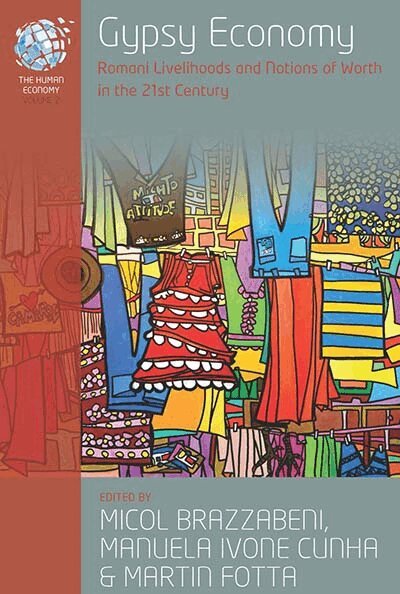
    Gypsy Economy

    Romani Livelihoods and Notions of Worth in the 21st Century

    AvMicol Brazzabeni,Manuela Ivone Cunha

    Häftad, Engelska, 2018

    Del i serien Human Economy

    511 kr

    Beställningsvara. Skickas inom 5-8 vardagar. Fri frakt över 249 kr.

    Beskrivning

    Economic arrangements of Romanies are complexly related to their social position. The authors of this volume explore these complexities, including how economic exchanges forge key social relationships of gender and ethnicity, how economic opportunities are constructed and seized, and how economic success and failure are transformed into attributes of social persons. They explore how, despite — or perhaps because of — their unstable and ambiguous position within the market economy, shared today with a growing number of people facing precarity and informalisation, Roma and Gypsy communities continuously re-create more or less viable economic strategies. The ethnographically based chapters share accounts of socially and economically vulnerable populations that face their situation with self-determination and creativity.

    Produktinformation

    • Utgivningsdatum:2018-02-19
    • Mått:152 x 229 x 15 mm
    • Vikt:399 g
    • Format:Häftad
    • Språk:Engelska
    • Serie:Human Economy
    • Antal sidor:272
    • Förlag:Berghahn Books
    • ISBN:9781785338229

    Utforska kategorier

    • Kulturvetenskap inom Samhälle och politik
    • Antropologi inom Samhälle och politik

    Mer om författaren

    Micol Brazzabeni is a Senior Associate Researcher at CRIA-IUL, Lisbon. She is the author of La Scuola di Carta (2008) and a co-editor of Etudes Tsiganes, Special Issue “Emotion and Place” (2012).

    Recensioner i media

    “It is apparent that flexible and creative responses such as those provided by different groups of Roma to their own life circumstances are becoming increasingly more relevant within the "globalized" and uncertain world that we inhabit. Analyses of Romani economic strategies that are presented in this volume shed light on the world of ‘alternative,’ ‘interstitial’ and ‘marginal’ economies and on their relationship with the dominant market and economy. For this reason, the volume's relevance goes beyond our interests in understanding Romanis as such. It represents an important step towards the comparative ambition of anthropological ethnography. Additionally, it highlights the relevance of understanding this minority that goes beyond our interest in the exotic and the other.” • La Revista Andaluza de Antropología“I specifically recommend this book to those who are interested in anthropology, ethnography, or in the everyday lives of Roma in general. However, those who are interested in unusual economic processes will find this volume interesting, too.” • Cornivus Journal of Sociology and Social Policy“The publication of Gypsy Economy comes precisely at a time when both academics and the general public need cogent analyses of Roma… This edited volume, then, is a very welcome contribution to the crisis of anti-Gypsyism… [It] is a testament to the diversity and adaptability of Roma labor practices, many of which are traditionally in the nonwage sphere… Gypsy Economy is extremely valuable both to Roma ethnography and to economic anthropological theory.” • American Ethnologist“Gypsy Economy is undoubtedly a strong contribution to the anthropology of economy outside the formal sector. … Based on extensive fieldwork each of the 11 chapters of the volume affords the reader an incisive analysis embedded in rich ethnographic details… a model for scholars eager to undertake comparative projects aligned with anthropology’s aspiration to generalizations about the human condition. It will appeal to students of Romani Studies as well as to a broader readership interested in economic practices outside formal economies.” • Analize: Journal of Gender and Feminist Studies“…there is an urgent need to promote this volume! Some of the findings – not least with regard to informal lending and ‘fixing-up money’ – should even find their echoes in policies that allow Roma to live their lives as they like. The volume definitely represents the kick-off of studies of whatever is meant by the ‘Gypsy economy,’ and no work that follows this topic – at least in the East European context – will be able to ignore this collection.” • Intersections, East European Journal of Society and Politics“This collection effectively captures the heterogeneity, dynamism, and humanity of Roma, their livelihoods, and their relationships within and outside their natal communities. Ethnographic fieldwork illuminates socioeconomic and moral particularities of each group, and the volume inspires a comparative analysis of economic practices as active responses to global systems of social exclusion…The book is also a long overdue, invaluable contribution to Romani studies in general, and to economic anthropology in particular.” • Journal of Anthropological Research“All in all, the edited volume is a valuable contribution to “Gypsy Studies” and beyond.” • Journal of Gypsy Studies“…an interesting and valuable contribution to the anthropology of economy outside the ‘white’ economic sector. This book sheds new light on the relation between the ideology of ‘reciprocal exchange’ and that of the market.” • Ada Engebrigtsen, Norwegian Social Research, NOVA“This is a fine ethnographic collection describing a huge diversity of cultural (and by this economic) Romani universes so easily represented by media and policy as one homogenous group – ‘the Roma’ . . . This book deserves a broad readership beyond academia.” • Elisabeth Tauber, Free University of Bolzano

    Innehållsförteckning

    • List of IllustrationsAcknowledgementsIntroductionMicol Brazzabeni, Manuela Ivone Cunha and Martin FottaChapter 1. Usury among the Slovak Roma: Notes on Relations between Lenders and Borrowers in a Segregated TaborisTomáš HrustičChapter 2. New Redistributors in Times of Insecurity: Different Types of Informal Lending in HungaryJudit DurstChapter 3. A Way of Life Flowing in the Interstices: Cigano Horse Dealers in Alentejo, PortugalSara Sama AcedoChapter 4. ‘Endured Labour’ and ‘Fixing Up’ Money: The Economic Strategies of Roma Migrants in Slovakia and the UKJan GrillChapter 5. ‘I Go for Iron’: Xoraxané Romá Collecting Scrap Metal in RomeMarco SolimeneChapter 6. ‘I’m Good but also Mad’: The Street Economy in a Poor Neighbourhood of BucharestGergő PulayChapter 7. The Mechanisms of Independence: Economic Ethics and the Domestic Mode of Production among Gabori Roma in TransylvaniaMartin OliveraChapter 8. Deceit and Efficacy: Fortune Telling among the Calon Gypsies in São Paulo, BrazilFlorencia FerrariChapter 9. Houses under Construction: Conspicuous Consumption and the Values of Youth among Romanian Cortorari GypsiesCătălina TesărChapter 10. Exchange, Shame and Strength among Calon of Bahia: A Values-Based AnalysisMartin FottaChapter 11. ‘Give and Don’t Keep Anything!’ Wealth, Hierarchy and Identity among the Gypsies of Two Small Towns in Andalusia, SpainNathalie ManriqueAfterwordKeith HartNotes on ContributorsIndex