• Fri frakt över 249 kr
  • •
  • Snabba leveranser
  • •
  • Billiga böcker
Kundservice

Du är på sajten för privatpersoner.

Företag, bibliotek eller offentlig verksamhet?

Du handlar på classic.bokus.com, där alla dina funktioner finns intakta.
Till classic.bokus.com
Bokus logotyp. Gå till startsidan.
  • Erbjudanden
  • Nyheter
  • Student
  • Topplistor
  • Barn & ungdom
  • Bokus Play
  • E-böcker
  • Pocketböcker
  • Spel & pussel

10% rabatt på allt med kod: NYSTART10 →

Sidfot

Mina sidor

    Hjälp

    • Kundservice
    • Vanliga frågor och svar
    • Frakt och leverans
    • Retur vid ångerrätt
    • Reklamera vara
    • Betalning
    • Köpvillkor
    • Allmänna villkor
    • Information om webbplatsens tillgänglighet

    Om Bokus

    • Om oss
    • Pressrum
    • För studenter
    • För företag
    • För bibliotek och offentlig verksamhet
    • För leverantörer
    • Hållbarhet

    Populärt

    • Aktuella erbjudanden
    • Presentkort
    • Studentlitteratur
    • Nya böcker
    • Topplistor
    • Signerade böcker
    • Engelska böcker

    Inspiration

    • Boktips
    • BookTok
    • Populära bokserier
    • Barnbokskaraktärer
    • Populära författare
    Logotyp för Bokus
    Följ oss på Facebook (extern länk)Följ oss på Instagram (extern länk)Följ oss på YouTube (extern länk)Följ oss på TikTok (extern länk)
    bokus @ CookiesAnpassa cookiesIntegritetspolicyKöpvillkor
    Till Citymail hemsida (extern länk)Till Budbee hemsida (extern länk)Till Postnord hemsida (extern länk)Till Schenker hemsida (extern länk)Till Early Bird hemsida (extern länk)Till Walleys hemsida (extern länk)
    1. Historia och arkeologi
    2. Historia
    3. Historia: särskilda händelser och ämnen
    4. Slaveri

    Slavery and Islam

    AvJonathan A.C. Brown

    Häftad, Engelska, 2020

    283 kr

    Skickas . Fri frakt över 249 kr.

    Fler format och utgåvor

    E-bok

    258 kr

    Beskrivning

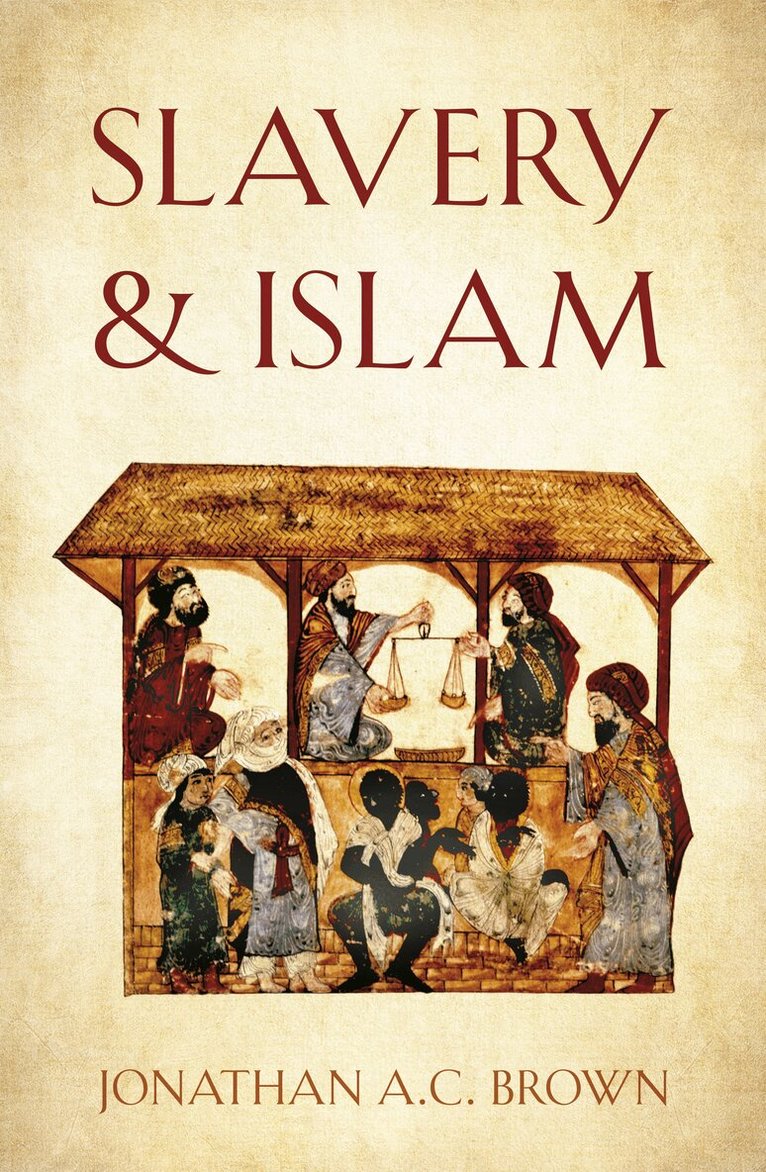
    What happens when authorities you venerate condone something you know is wrong?Every major religion and philosophy once condoned or approved of slavery, but in modern times nothing is seen as more evil. Americans confront this crisis of authority when they erect statues of Founding Fathers who slept with their slaves. And Muslims faced it when ISIS revived sex slavery, justifying it with verses from the Quran and the practice of Muhammad.Exploring the moral and ultimately theological problem of slavery, Jonathan A.C. Brown traces how the Christian, Jewish and Islamic traditions have tried to reconcile modern moral certainties with the infallibility of God’s message. He lays out how Islam viewed slavery in theory, and the reality of how it was practiced across Islamic civilization. Finally, Brown carefully examines arguments put forward by Muslims for the abolition of slavery.

    Produktinformation

    • Utgivningsdatum:2020-10-01
    • Mått:146 x 225 x 33 mm
    • Vikt:518 g
    • Format:Häftad
    • Språk:Engelska
    • Antal sidor:448
    • Förlag:Oneworld Publications
    • ISBN:9781786078391

    Utforska kategorier

    • Slaveri inom Historia och arkeologi
    • Rättssystem inom Juridik
    • Sociala grupper och identitet inom Samhälle och politik

    Mer om författaren

    Jonathan A.C. Brown is Professor and Alwaleed bin Talal Chair of Islamic Civilization in the School of Foreign Service at Georgetown University. He is the author of Slavery & Islam, Misquoting Muhammad and Hadith: Muhammad’s Legacy in the Medieval and Modern World, all of which are published by Oneworld. He lives in Virginia.

    Recensioner i media

    ‘Slavery & Islam hints at some of the great questions that are still outstanding in this field.’

    Innehållsförteckning

    • PrefaceAcknowledgmentsNotes on transliteration, dates and citation Introduction: Can We Talk About Slavery?What I Argue in this BookApology for Slavery?Power and the Study of SlaveryBlackness, Whiteness and Slavery 1 Does ‘Slavery’ Exist? The Problem of DefinitionThe Main ArgumentDefinition: A Creative ProcessDefinition to Discourse: A Political ProcessDefining \ˈslā-v(ə-)rē\: We Know It When We See ItDefining Slavery as Status or a ConditionSlavery as UnfreedomSlavery as Human PropertyPatterson & Natal AlienationSlavery as Distinction: The Lowest Rung & MarginalitySlavery as Coercion & Exploitation under the Threat of ViolenceThe Problem with Modern-Day SlaverySlavery & Islam – A Very Political QuestionConclusion: Of Course, Slavery ExistsThe Proper Terms for Speaking about ‘Slavery’ 2 Slavery in the ShariahWhat Islam Says about Slavery – Ideals and RealitySlavery in the Quran & SunnaInheriting the Near East – Roman, Jewish and Near Eastern Laws versus IslamIslam’s Reform of SlaveryBasic Principles of Riqq in the ShariahThe Ambiguities of Slavery in the ShariahRiqq & Rights in the ShariahReligious PracticeFreedom of MovementSocial and Political RolesMarriage and Family LifeRight to PropertyRights to Life and Physical ProtectionSummary: Law and Ethics 3 Slavery in Islamic CivilizationWhat is Islamic Civilization?Is there ‘Islamic Slavery’?The Shariah & Islamic SlaveryMuslims Enslaving MuslimsThe Classic Slavery ZoneConsuming People & ‘Ascending Miscegenation’Slave PopulationsRoutes of the Muslim Slave TradeBlackness and Slavery in Islamic CivilizationThe Roles and Experiences of Slaves in Islamic CivilizationThe Slave as Uprooted Person and CommodityThe Slave as Domestic Labor . . . Even Trusted Member of a HouseholdSlave as Sexual PartnerSlave as Saint, Scholar or PoetSlave as Elite Administrator & CourtesanSlave as Soldier – When Soldiers often RuledSlave as Rebel 4 The Slavery ConundrumNo Squaring the Circle: The American/Islamic Slavery ConundrumSlavery is EvilThe Intrinsic Wrongs of SlaveryReligions and SlaveryMinimizing the Unminimizable or Historicizing the UnhistoricizableSlavery is Slavery: The Problem of Labeling ‘Slavery’ with One Moral JudgmentThe Moral Wrongness of Slavery as UnfreedomThe Moral Wrongness of Slavery as Owning Human PropertyThe Moral Wrongness of Slavery as InequalityThe Moral Wrongness of Slavery as the Threat of ViolenceThe Bald Man Fallacy and the Wrongness of SlaveryWhen Slavery is ‘Not that Bad’: The Problem with Conditions vs. Formal CategoriesDo Some People Deserve to be Enslaved?Or, Is Freedom a Human Right?The Past as Moral Authority: Can We Part with the Past?The Natural Law Tradition and SlaveryCritics of Slavery and the Call for AbolitionThe Consequences of Moral ProgressMuslim Efforts to Salvage the Past 5 Abolishing Slavery in IslamIs Abolition Indigenous to Islam or Not?Islam as Emancipatory Force – An Alternative HistoryAbolishing Slavery . . . For Whom? Concentric Circles of Abolition‘The Lawgiver Looks Expectantly Towards Freedom’ – Abolition as an Aim of the ShariahDoubling Down – Progressive Islam & the Axiomatic Evil of SlaveryProhibited by the Ruler but Not by God: The Crucial Matter of Taqyid al-MubahIf You Can’t Do it Right, You Can’t Do it at All – Prohibiting Riqq Poorly DoneSame Shariah, Diff erent Conditions – The Obsolescence or Unfavorability of SlaverySlavery: A Moot Point & Bad PRDefending Slavery in Islam 6 The Prophet & ISIS: Evaluating Muslim AbolitionDo Muslim Approaches to Abolition Pass Moral Muster?A Consensus on AbolitionCould Slavery in Islam ever be Unabolished?Abolition vs. ISISThis Author’s Opinion 7 Concubines and Consent: Can We Solve the Moral Problem of Slavery?Species of Moral ChangeMoral Disgust at Slavery TodayConclusion & Crisis: Concubinage and ConsentConsent and ConcubinesDisbelief is Unproductive Appendix 1 – A Slave Saint of BasraAppendix 2 – Enlightenment Thinkers on SlaveryAppendix 3 – Did the 1926 Muslim World Congress Condemn Slavery?Appendix 4 – Was Māriya the Wife or Concubine of the Prophet?Appendix 5 – Was Freedom a Human Right in the Shariah?Appendix 6 – Enslavement of Apostate Muslims or Muslims Declared to be Unbelievers Select BibliographyNotesIndex