• Fri frakt över 249 kr
  • •
  • Snabba leveranser
  • •
  • Billiga böcker
Kundservice

Du är på sajten för privatpersoner.

Företag, bibliotek eller offentlig verksamhet?

Du handlar på classic.bokus.com, där alla dina funktioner finns intakta.
Till classic.bokus.com
Bokus logotyp. Gå till startsidan.
  • Erbjudanden
  • Nyheter
  • Student
  • Topplistor
  • Barn & ungdom
  • Bokus Play
  • E-böcker
  • Pocketböcker
  • Spel & pussel

10% rabatt på allt med kod NYSTART10 →

Sidfot

Mina sidor

    Hjälp

    • Kundservice
    • Vanliga frågor och svar
    • Frakt och leverans
    • Retur vid ångerrätt
    • Reklamera vara
    • Betalning
    • Köpvillkor
    • Allmänna villkor
    • Information om webbplatsens tillgänglighet

    Om Bokus

    • Om oss
    • Pressrum
    • För studenter
    • För företag
    • För bibliotek och offentlig verksamhet
    • För leverantörer
    • Hållbarhet

    Populärt

    • Aktuella erbjudanden
    • Presentkort
    • Studentlitteratur
    • Nya böcker
    • Topplistor
    • Signerade böcker
    • Engelska böcker

    Inspiration

    • Boktips
    • BookTok
    • Populära bokserier
    • Barnbokskaraktärer
    • Populära författare
    Logotyp för Bokus
    Följ oss på Facebook (extern länk)Följ oss på Instagram (extern länk)Följ oss på YouTube (extern länk)Följ oss på TikTok (extern länk)
    bokus @ CookiesAnpassa cookiesIntegritetspolicyKöpvillkor
    Till Citymail hemsida (extern länk)Till Budbee hemsida (extern länk)Till Postnord hemsida (extern länk)Till Schenker hemsida (extern länk)Till Early Bird hemsida (extern länk)Till Walleys hemsida (extern länk)
    1. Samhälle och politik
    2. Samhälle och kultur
    3. Kultur och medier
    4. Referensverk och tvärvetenskap

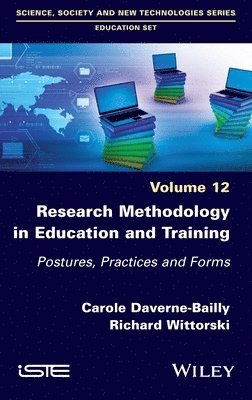
    Research Methodology in Education and Training

    Postures, Practices and Forms, Volume 12

    AvCarole Daverne-Bailly,Richard Wittorski

    Inbunden, Engelska, 2022

    1 672 kr

    Beställningsvara. Skickas inom 5-8 vardagar. Fri frakt över 249 kr.

    Beskrivning

    This book is a methodological guide intended for those who wish to better understand how to conduct research in the education and training sciences. It is organized into three main parts. The first part deals with postures, emphasizing the idea that engaging in a research process involves taking a different stance from that of a social or professional actor. For example, this may require converting a professional or social question into a research question or reflecting on the use of a social vocabulary in research.The second part concerns practices, that is, how research is conducted: the definition of a research question based on findings, theoretical exploration and problematization, the production of empirical information and its analysis and restitution.The third and final part concludes by focusing on the diversity of research forms; not only research cultures specific to disciplinary fields and approaches, such as action research, collaborative research or research training, but also the design choices in terms of multi-, inter- or trans-disciplinarily.

    Produktinformation

    • Utgivningsdatum:2022-11-09
    • Mått:10 x 10 x 10 mm
    • Vikt:454 g
    • Format:Inbunden
    • Språk:Engelska
    • Antal sidor:192
    • Förlag:ISTE Ltd and John Wiley & Sons Inc
    • ISBN:9781786307477

    Utforska kategorier

    • Referensverk och tvärvetenskap inom Samhälle och politik
    • Pedagogik inom Psykologi och pedagogik
    • Lärarutbildning inom Psykologi och pedagogik

    Mer om författaren

    Carole Daverne-Bailly is a senior lecturer and accredited to supervise research (HDR) at the University of Rouen Normandy. She is also a member of CIRNEF (Centre interdisciplinaire de Recherche Normand en Education et Formation), France.Richard Wittorski is a full professor at the University of Rouen Normandy and a director at CIRNEF, France.

    Innehållsförteckning

    • Introduction viiChapter 1 Positions: Some Specificities of a Research Approach Compared to a Professional Approach 11.1 A difference in position between that of the social or professional actor and that of the researcher 11.2 The challenge of research is to move from a social/professional question to a research question 51.3 The challenge of research is also to focus on common-sense concepts 61.4 The issue of the epistemological choices made by the researcher and the implications 8Chapter 2 Practices: Conducting a Research Project and Data Security Issues 112.1 Introduction: the research context 112.2 Scientific approach and methods in the social sciences 132.3 From research topic to problem statement 152.3.1 The initial question 152.3.2 The exploratory approach 162.3.3 Problem statement 182.4 Design of the survey protocol 192.4.1 Survey field and participants 202.4.2 Negotiating the survey and field access with the Local Education Authority and management teams: a project to be defended 212.4.3 General Data Protection Regulation on personal data and documents produced 222.5 The construction of data collection instruments 352.5.1 Constructing the questionnaire 352.5.2 Composing the interview guide 452.6 Data collection 482.6.1 Time in the field 482.6.2 Administering the questionnaires 512.6.3 Administering interviews 532.6.4 GDPR, tasks and constraints 552.7 Data processing 572.7.1 Clean up the database 572.7.2 Transcribing 622.8 Data analysis 632.8.1 Analyzing questionnaires 642.8.2 Interview analysis 882.9 Dissemination and publication of results 972.9.1 Group dossier 972.9.2 Reports, conferences and research articles 104Chapter 3 Forms: Research Cultures, Diversity of Forms and Interdisciplinary Issues 1113.1 Recognizing different research “cultures” 1113.2 External research, engaged research, collaborative research, action research and related issues 1143.3 Mono-, pluri-, inter- and transdisciplinary research and related issues 1193.4 Communication and valorization of research (its outcomes and methodological steps) 1223.5 Pursuing a doctorate 1243.6 Careers in research and higher education 127Conclusion 133Appendix 1 Questionnaire 137Appendix 2 Interview Guide 153Appendix 3 Quiz 157References 169Index 173