• Fri frakt över 249 kr
  • •
  • Snabba leveranser
  • •
  • Billiga böcker
Kundservice

Du är på sajten för privatpersoner.

Företag, bibliotek eller offentlig verksamhet?

Du handlar på classic.bokus.com, där alla dina funktioner finns intakta.
Till classic.bokus.com
Bokus logotyp. Gå till startsidan.
  • Erbjudanden
  • Nyheter
  • Student
  • Topplistor
  • Barn & ungdom
  • Bokus Play
  • E-böcker
  • Pocketböcker
  • Spel & pussel

10% rabatt på allt med kod: NYSTART10 →

Sidfot

Mina sidor

    Hjälp

    • Kundservice
    • Vanliga frågor och svar
    • Frakt och leverans
    • Retur vid ångerrätt
    • Reklamera vara
    • Betalning
    • Köpvillkor
    • Allmänna villkor
    • Information om webbplatsens tillgänglighet

    Om Bokus

    • Om oss
    • Pressrum
    • För studenter
    • För företag
    • För bibliotek och offentlig verksamhet
    • För leverantörer
    • Hållbarhet

    Populärt

    • Aktuella erbjudanden
    • Presentkort
    • Studentlitteratur
    • Nya böcker
    • Topplistor
    • Signerade böcker
    • Engelska böcker

    Inspiration

    • Boktips
    • BookTok
    • Populära bokserier
    • Barnbokskaraktärer
    • Populära författare
    Logotyp för Bokus
    Följ oss på Facebook (extern länk)Följ oss på Instagram (extern länk)Följ oss på YouTube (extern länk)Följ oss på TikTok (extern länk)
    bokus @ CookiesAnpassa cookiesIntegritetspolicyKöpvillkor
    Till Citymail hemsida (extern länk)Till Budbee hemsida (extern länk)Till Postnord hemsida (extern länk)Till Schenker hemsida (extern länk)Till Early Bird hemsida (extern länk)Till Walleys hemsida (extern länk)
    1. Filosofi och religion
    2. Filosofi
    3. Filosofiska discipliner

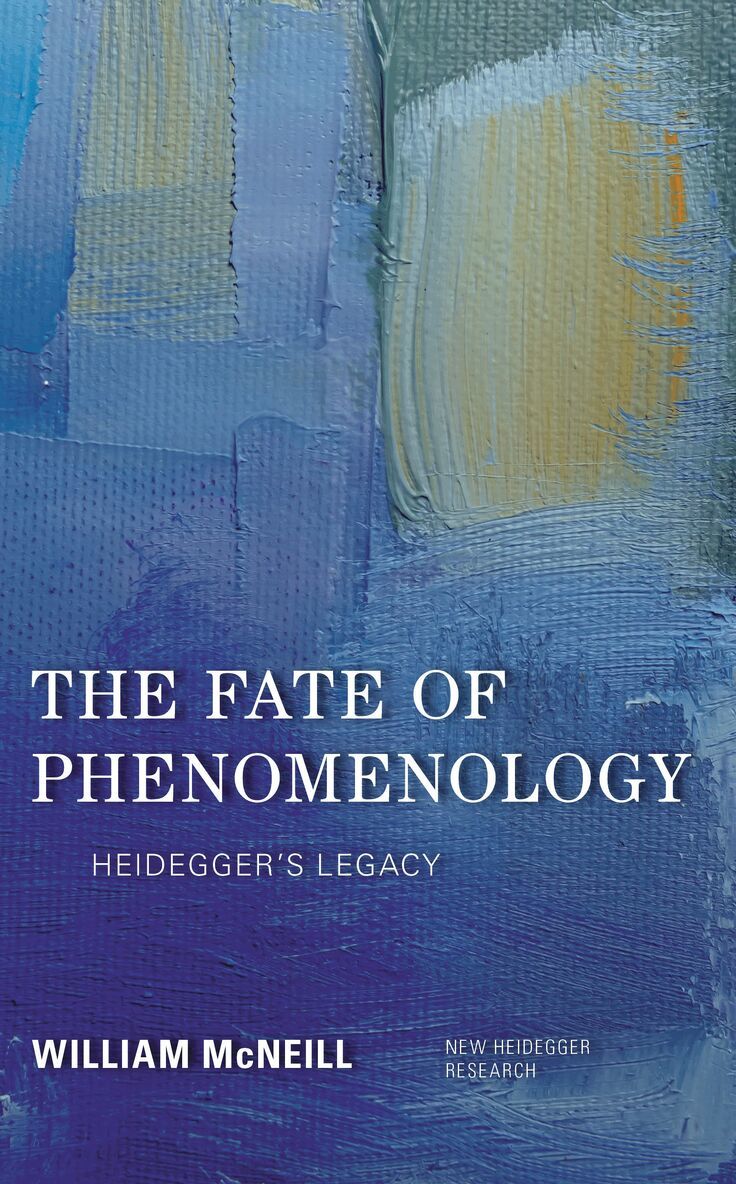
    Fate of Phenomenology

    Heidegger's Legacy

    AvWilliam McNeill,Richard Polt

    Inbunden, Engelska, 2020

    Del i serien New Heidegger Research

    1 533 kr

    Beställningsvara. Skickas inom 10-15 vardagar. Fri frakt över 249 kr.

    Fler format och utgåvor

    Häftad

    534 kr

    Beskrivning

    It can be easily argued that the radical nature and challenge of Heidegger’s thinking is grounded in his early embrace of the phenomenological method as providing an access to concrete lived experience (or “factical life,” as he called it) beyond the imposition of theoretical constructs such as “subject” and “object,” “mind” and “body.” Yet shortly after the publication of his groundbreaking work Being and Time, Heidegger appeared to abandon phenomenology as the method of philosophy. Why? Heidegger was conspicuously quiet on this issue. Here, William McNeill examines the question of the fate of phenomenology in Heidegger’s thinking and its transformation into a “thinking of Being” that regards its task as that of “letting be.” The relation between phenomenology and “letting be,” McNeill argues, is by no means a straightforward one. It poses the question of whether, and to what extent, Heidegger’s thought of his middle and late periods still needs phenomenology in order to accomplish its task—and if so, what kind of phenomenology. What becomes of phenomenology in the course of Heidegger’s thinking?

    Produktinformation

    • Utgivningsdatum:2020-07-22
    • Mått:161 x 227 x 19 mm
    • Vikt:435 g
    • Format:Inbunden
    • Språk:Engelska
    • Serie:New Heidegger Research
    • Antal sidor:168
    • Förlag:Bloomsbury Publishing PLC
    • ISBN:9781786608901

    Utforska kategorier

    • Filosofiska discipliner inom Filosofi och religion

    Mer om författaren

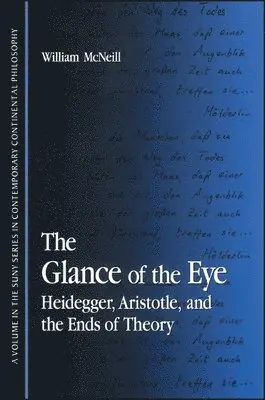
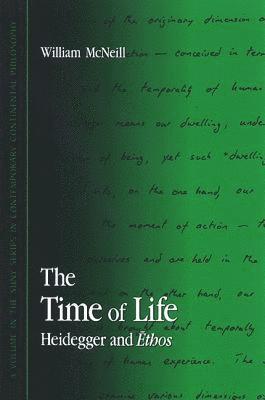
    William McNeill is professor of philosophy at DePaul University. He is the author of The Glance of the Eye: Heidegger, Aristotle, and the Ends of Theory and The Time of Life: Heidegger and Ethosand has translated several of Heidegger’s works into English.

    Recensioner i media

    The storm around Heidegger's legacy rages on unabated. At stake is the fate of philosophy and its power to influence the fate of a world seized by the enigmatic essence of technology. In this remarkable intervention, McNeill (DePaul Univ.) chronicles Heidegger's role in bringing philosophy to an end by twisting phenomenology (philosophy's last word) free from Husserl's effort to establish a rigorous philosophical science. Heidegger radicalized phenomenology's critique of science and technology by stepping back into a more elemental engagement with Dasein's "being-in-the-world." Phenomenology persisted as Heidegger's watchword for the dismantling of metaphysics' delusory notions of originary ground and signaled the need to affirm and await a still unthinkable origin. McNeill tracks Heidegger's alternating proximity to and distance from the word phenomenology as a way of questioning whether Dasein's quasi-transcendental experience of a world was anything but error and affirming the need "to let Being be," to step back into a pre-phenomenological poetic thinking. To survive in a nocturnal clearing, confronted by phenomenality's concealed essence, demands phenomenophasis, Heidegger's last word for preserving the remnants of Dasein's world through words that name the unnamable that lies beyond and before ontological difference. Summing Up: Essential. Graduate students, researchers, faculty.

    Innehållsförteckning

    • Introduction / 1. From Phenomenology to Letting Be / 2. A Question of Method? The Crisis of Phenomenology and 'The Origin of the Work of Art' / 3. The Phenomenology of Being and the Matter of Concealment / 4. Phenomenophasis: The Last Word of Phenomenology? / Conclusion / Bibliography / Index