Inbunden, Engelska, 2019
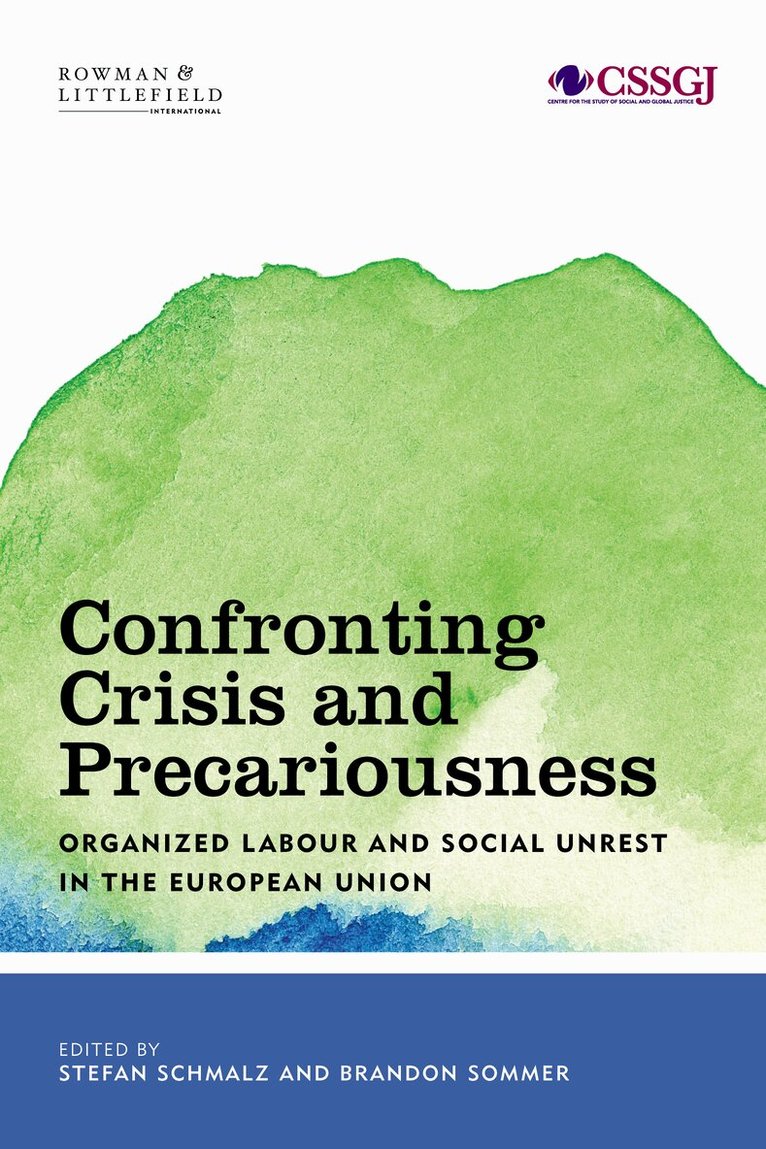
Confronting Crisis and Precariousness
Organised Labour and Social Unrest in the European Union
Av Stefan Schmalz, Brandon Sommer
Del i serien Studies in Social and Global Justice
1696 kr
Beställningsvara. Skickas inom 10-15 vardagar. Fri frakt över 249 kr.
Beskrivning
Produktinformation
- Utgivningsdatum: 2019-07-24
- Mått: 159 x 251 x 22 mm
- Vikt: 567 g
- Format: Inbunden
- Språk: Engelska
- Serie: Studies in Social and Global Justice
- Antal sidor: 246
- Förlag: Bloomsbury Publishing PLC
- ISBN: 9781786610478
Utforska kategorier
Mer om författaren
Stefan Schmalz is Associate Professor at the Institute of Sociology at the Friedrich-Schiller University of Jena, Germany. Brandon Sommer is Researcher at the International Institute of Social Studies in The Hague.
Recensioner i media
This ambitious comparative project addresses the weakening position of labor unions in the EU since the economic crisis of 2008. Editors Schmalz (University of Jena, Germany) and Sommer (International Institute of Social Studies, the Hague) bring together various viewpoints revealing the levels of precariousness of organized labor from southern Europe to the more established northern EU member states. In the south particularly, the neoliberal economic restructuring (codified by the Single European Act in 1987) combined with economic recession 20 years later to foment union resistance to austerity policies and social unrest, yielding new social movements. Ultimately, trade unions have yet to formulate a coherent response to this new normal in Europe, and the outlook remains gloomy. Even in Germany, where the situation is less grim for unions, labor struggles have become more fragmented, leading to the emergence of nascent "social-movement-like strategies." However, in southern states mobilization-platform unionism has developed in conjunction with social protest. The diverse case studies present an antagonistic situation in the southern states that may spread to the North, as the EU has been unable to create common labor policies.Summing Up: Recommended. Upper-division undergraduates through faculty; professionals.
Betyg & recensioner
0 recensioner
Inga recensioner tillgängliga.