• Fri frakt över 249 kr
  • •
  • Snabba leveranser
  • •
  • Billiga böcker
Kundservice

Du är på sajten för privatpersoner.

Företag, bibliotek eller offentlig verksamhet?

Du handlar på classic.bokus.com, där alla dina funktioner finns intakta.
Till classic.bokus.com
Bokus logotyp. Gå till startsidan.
  • Erbjudanden
  • Nyheter
  • Student
  • Topplistor
  • Barn & ungdom
  • Bokus Play
  • E-böcker
  • Pocketböcker
  • Spel & pussel

10% rabatt på allt med kod: NYSTART10 →

Sidfot

Mina sidor

    Hjälp

    • Kundservice
    • Vanliga frågor och svar
    • Frakt och leverans
    • Retur vid ångerrätt
    • Reklamera vara
    • Betalning
    • Köpvillkor
    • Allmänna villkor
    • Information om webbplatsens tillgänglighet

    Om Bokus

    • Om oss
    • Pressrum
    • För studenter
    • För företag
    • För bibliotek och offentlig verksamhet
    • För leverantörer
    • Hållbarhet

    Populärt

    • Aktuella erbjudanden
    • Presentkort
    • Studentlitteratur
    • Nya böcker
    • Topplistor
    • Signerade böcker
    • Engelska böcker

    Inspiration

    • Boktips
    • BookTok
    • Populära bokserier
    • Barnbokskaraktärer
    • Populära författare
    Logotyp för Bokus
    Följ oss på Facebook (extern länk)Följ oss på Instagram (extern länk)Följ oss på YouTube (extern länk)Följ oss på TikTok (extern länk)
    bokus @ CookiesAnpassa cookiesIntegritetspolicyKöpvillkor
    Till Citymail hemsida (extern länk)Till Budbee hemsida (extern länk)Till Postnord hemsida (extern länk)Till Schenker hemsida (extern länk)Till Early Bird hemsida (extern länk)Till Walleys hemsida (extern länk)
    1. Samhälle och politik
    2. Politik och statsskick
    3. Statsskick och politiska processer

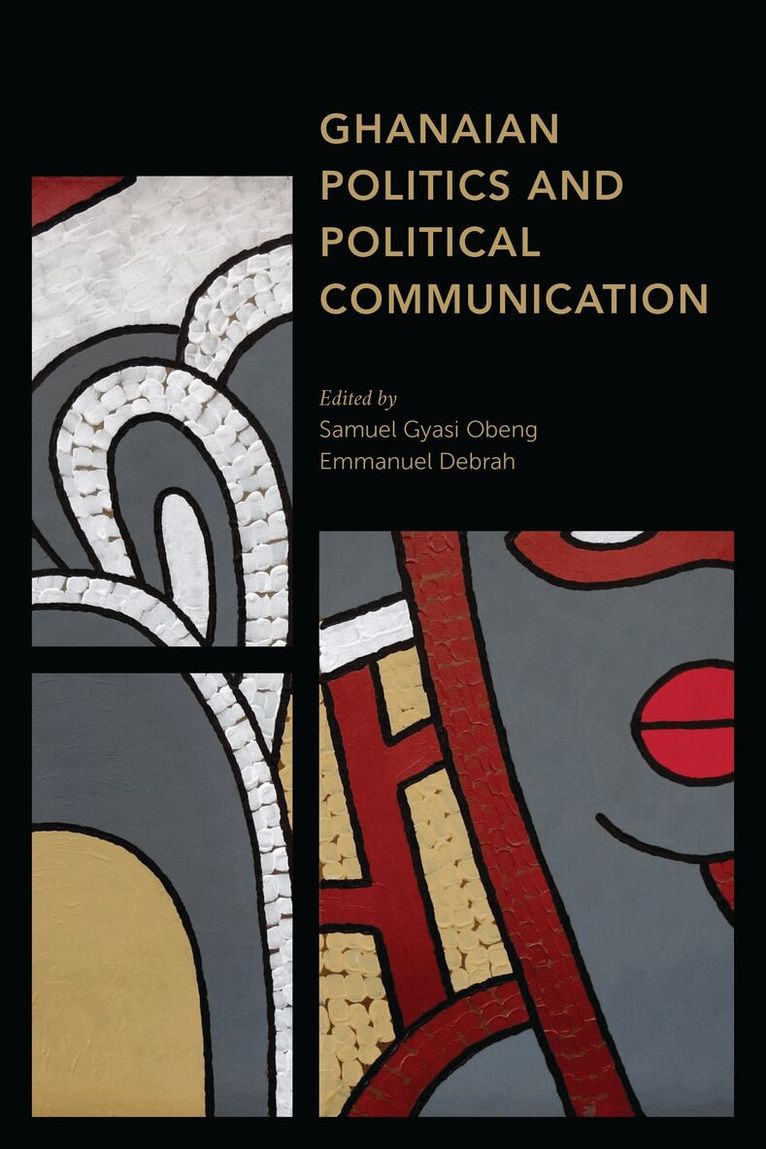
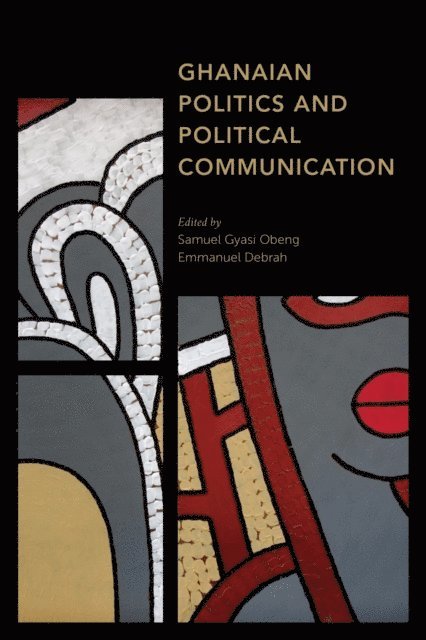
    Ghanaian Politics and Political Communication

    AvSamuel Gyasi Obeng,Emmanuel Debrah

    Inbunden, Engelska, 2019

    Del i serien Africa: Past, Present & Prospects

    1 672 kr

    Beställningsvara. Skickas inom 10-15 vardagar. Fri frakt över 249 kr.

    Beskrivning

    Working from multidisciplinary and interdisciplinary perspectives (especially, from the social sciences, media studies discourse analysis, text grammar, folklore, performing arts and linguistics), the authors of the volume investigate and illuminate pertinent issues on democratization, elections and electioneering campaigns and the constitution of order in an African context. The strategies through which political actors and the media speak about important policy issues such as healthcare, infrastructure, education, and finance during presidential sessional addresses and political campaigning are also elucidated. The extent of political ecologies’ impact on general elections, on policy issues, and on split-ticket voting (especially what causes it to happen and its impact on who gets elected and the consequent impact on party unity or disintegration) are also given scholarly attention. Also elucidated are is the entwinning of language, power, liberty, ideology and representation and issues deemed politically nerve wrecking and capable of entrapping political actors and causing the citizenry to either lose confidence in them or even call for their resignation.

    Produktinformation

    • Utgivningsdatum:2019-08-23
    • Mått:160 x 241 x 29 mm
    • Vikt:640 g
    • Format:Inbunden
    • Språk:Engelska
    • Serie:Africa: Past, Present & Prospects
    • Antal sidor:312
    • Förlag:Bloomsbury Publishing PLC
    • ISBN:9781786613691

    Utforska kategorier

    • Statsskick och politiska processer inom Samhälle och politik
    • Politisk aktivism inom Samhälle och politik
    • Val och folkomröstningar inom Samhälle och politik

    Mer om författaren

    Samuel Gyasi Obeng is Professor of Linguistics at Indiana University-Bloomington (USA). He is also an affiliated faculty in the School of Global and International Studies and a faculty of Indiana University’s Honors Program. Emmanuel Debrah is Associate Professor in the Department of Political Science and Director of the Legon Center for International Affairs and Diplomacy at the University of Ghana. He specializes in electoral and party politics, local government and decentralization, public policy, and democratic governance.

    Recensioner i media

    For nearly 30 years, control over Ghanaian politics has alternated more or less regularly between the New Patriotic Party and the National Democratic Congress. This contrasts with the country’s prior history as an independent country. (Earlier Ghana experienced numerous military coups and a few years of single-party rule between 1957 and the establishment of the Fourth Republic in 1993.) The 18 contributors to this valuable book provide detailed discussions of Ghana's transition to democracy. Essays reveal that voters are influenced more by socioeconomic factors than by ethnicity or religion, and that education plays an important role. Though party leaders speak in the former colonial language and their platforms are published primarily in English, political communication at the popular level occurs in vernaculars. Who are the most significant interlocutors? The answer to that question varies widely, and it depends on the audience being addressed. Numerous tables, occasional statistical analyses, detailed chapter-by-chapter end notes, quotations from parliamentary debates, and side-by-side English translations of party tracts add to the scholarly value of this collection.Summing Up: Recommended. Upper-division undergraduates through faculty.

    Innehållsförteckning

    • ProloguePreface and AcknowledgmentsDedicationChapter 1. IntroductionSamuel Gyasi Obeng and Emmanuel DebrahPART ONE: GHANAIAN POLITICSChapter 2. Ghana’s Political Environment and the 2016 General ElectionEmmanuel Debrah, University of GhanaChapter 3. Election Campaign in Ghana’s 2016 National ElectionsSeidu Alidu, University of GhanaChapter 4. Communicating with the Electorate in the 2016 Elections: Did the Political Parties and their Candidates Lean on the Issues?Richard Asante, University of GhanaChapter 5.(Mis)Coordination: Why Would Ghanaian Political Actors and Political Parties Encourage Split-Ticket Voting?Samuel Darkwa, University of West VirginiaChapter 6. Are Members of Parliament in Ghana Responsive to their Constituents in Policy Making? Evidence from the National Health Insurance Scheme Hassan Wahab, University of GhanaPART TWO: GHANAIAN POLITICAL COMMUNICATIONChapter 7. When Government Is Unaware It Is IncommunicadoMargaret I. Amoakohene and Kwasi Ansu-Kyeremeh, University of GhanaChapter 8. Pragmatic Analysis of First Person Pronoun Deixes in President Nana Akuffo Addo’s 2018 State of the Nation’s Address (SONA)Kofi Agyekum, University of GhanaChapter 9. Discursive Construction of the Representative Claim in UK and Ghanaian Parliamentary DiscourseKwabena Sarfo Sarfo-Kantankah, University of Cape CoastChapter 10. How Much Communication is in Ghanaian Presidents’ State of the Nation Addresses?Margaret I. Amoakohene, University of GhanaChapter 11. Power, Domination and Manipulation in Students’ Parliamentary Discourse in Ghanaian UniversityDora F. Edu-Buandoh and Nancy Boahemaa Nkansah, University of Cape CoastChapter 12. The Role of Music in Ghanaian Political CommunicationKofi Agyekum, Joshua Alfred Amuah and Hilarius Mawutor Wuaku, University of GhanaChapter 13. President Akufo-Addo’s Address to the Nation on the US-Ghana Military Co-operation Agreement: A Political Communicative Functional and Framing Analytic ApproachEtse Sikanku, Frank Kofi Boadi, Halisa Aziz and Nana Kwame Osei Fordjour, University of GhanaChapter 14. Language and Liberty in the Ghanaian Political Ecology: A Brief OverviewSamuel Obeng, Indiana UniversityEpilogueAuthor Information