• Fri frakt över 249 kr
  • •
  • Snabba leveranser
  • •
  • Billiga böcker
Kundservice

Du är på sajten för privatpersoner.

Företag, bibliotek eller offentlig verksamhet?

Du handlar på classic.bokus.com, där alla dina funktioner finns intakta.
Till classic.bokus.com
Bokus logotyp. Gå till startsidan.
  • Erbjudanden
  • Nyheter
  • Student
  • Topplistor
  • Barn & ungdom
  • Bokus Play
  • E-böcker
  • Pocketböcker
  • Spel & pussel

10% rabatt på allt med kod: NYSTART10 →

Sidfot

Mina sidor

    Hjälp

    • Kundservice
    • Vanliga frågor och svar
    • Frakt och leverans
    • Retur vid ångerrätt
    • Reklamera vara
    • Betalning
    • Köpvillkor
    • Allmänna villkor
    • Information om webbplatsens tillgänglighet

    Om Bokus

    • Om oss
    • Pressrum
    • För studenter
    • För företag
    • För bibliotek och offentlig verksamhet
    • För leverantörer
    • Hållbarhet

    Populärt

    • Aktuella erbjudanden
    • Presentkort
    • Studentlitteratur
    • Nya böcker
    • Topplistor
    • Signerade böcker
    • Engelska böcker

    Inspiration

    • Boktips
    • BookTok
    • Populära bokserier
    • Barnbokskaraktärer
    • Populära författare
    Logotyp för Bokus
    Följ oss på Facebook (extern länk)Följ oss på Instagram (extern länk)Följ oss på YouTube (extern länk)Följ oss på TikTok (extern länk)
    bokus @ CookiesAnpassa cookiesIntegritetspolicyKöpvillkor
    Till Citymail hemsida (extern länk)Till Budbee hemsida (extern länk)Till Postnord hemsida (extern länk)Till Schenker hemsida (extern länk)Till Early Bird hemsida (extern länk)Till Walleys hemsida (extern länk)
    1. Samhälle och politik
    2. Samhälle och kultur
    3. Kultur och medier
    4. Medievetenskap

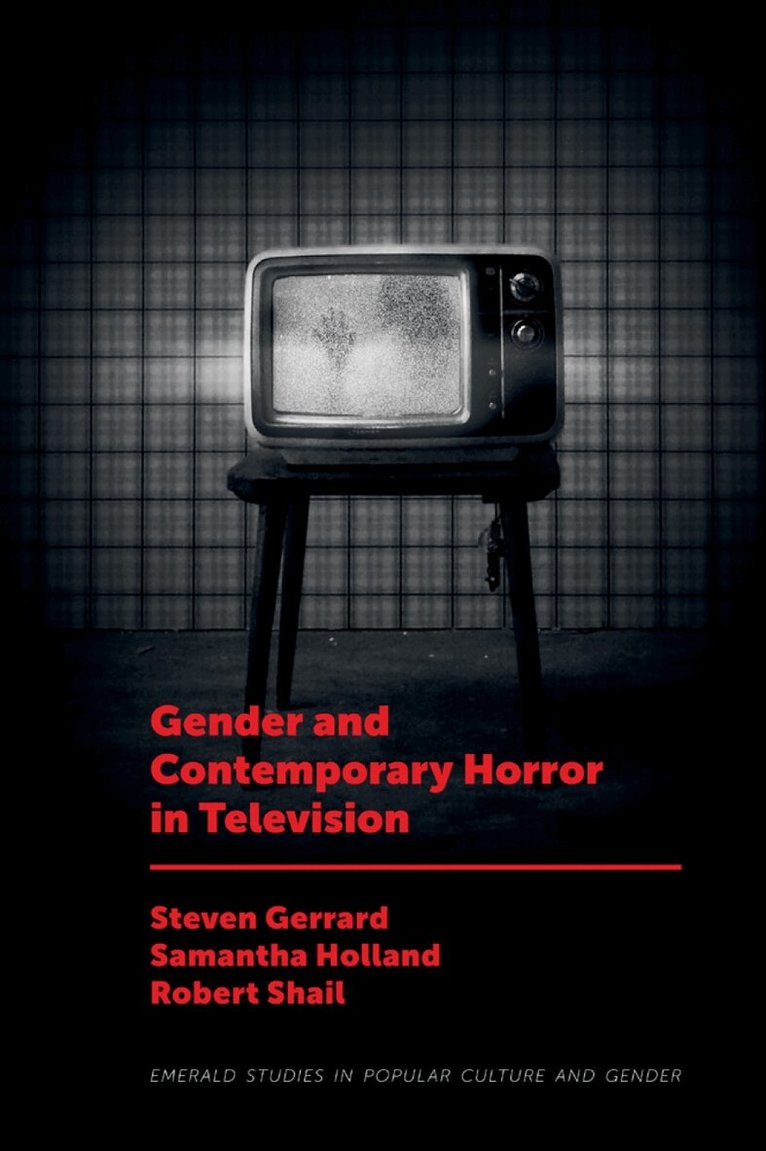
    Gender and Contemporary Horror in Television

    AvSteven Gerrard,Samantha Holland

    Inbunden, Engelska, 2019

    Del i serien Emerald Studies in Popular Culture and Gender

    1 006 kr

    Beställningsvara. Skickas inom 5-8 vardagar. Fri frakt över 249 kr.

    Beskrivning

    The successful return of horror to our television screens in the post-millennial years, and across a multi-media range of platforms, demonstrates that this previously moribund genre is once again vibrant, challenging and long-lasting. The traditional TV audience of the past would have watched very few horror TV shows, because not many were made. But that has changed. Programme makers have tapped into their public's insatiable need - in these days of terrorism, violence and mayhem - to provide programmes that have high production values, engaging storylines, and plenty of frights and gore.  Horror TV offers a safety-valve for its audience, one that enables them to enter into it from the safety of their armchairs. The era of instant access, streaming, downloading and binge-watching whole seasons over a weekend, where fandom has blossomed into a cultural force, clearly shows horror as a vital part of today's TV scheduling.This edited collection investigates the rising popularity of horror-television through deconstructing the gender roles within them via series of case studies including such programmes as Hannibal, American Horror Story, The Walking Dead, Penny Dreadful, Supernatural, The Exorcist and Bates Motel. By using a series of case studies and employing theoretical modes of close analysis, each chapter demonstrates how and why these TV shows are important in reflecting the changing gender roles within modern society.

    Produktinformation

    • Utgivningsdatum:2019-03-13
    • Mått:152 x 229 x 18 mm
    • Vikt:495 g
    • Format:Inbunden
    • Språk:Engelska
    • Serie:Emerald Studies in Popular Culture and Gender
    • Antal sidor:264
    • Förlag:Emerald Publishing Limited
    • ISBN:9781787691049

    Utforska kategorier

    • Medievetenskap inom Samhälle och politik
    • Genusvetenskap inom Samhälle och politik
    • Television inom Kultur

    Mer om författaren

    Steven Gerrard is Reader of Film at Northern Film School, Leeds Beckett University, UK. He has written two monographs: one celebrating all things naughty but nice in the Carry On films, and another investigating the Modern British Horror Film. Samantha Holland is Senior Research Fellow at Leeds Beckett University, UK. Her publications include Pole Dancing, Empowerment & Embodiment and Modern Vintage Homes & Leisure Lives: Ghosts & Glamour. She is currently writing a book about Wonder Woman. Robert Shail is Professor of Film and Director of Research in the School of Film, Music and Performing Arts at Leeds Beckett University, UK. He is widely published on postwar British cinema, masculinity in film, and more recently on children's media. In 2016, he was awarded a Leverhulme Fellowship for his study of the Children's Film Foundation.

    Recensioner i media

    Contributed by film and media studies and other scholars from Europe, Australia, and the US, the 17 essays in this volume examine gender roles in horror television through the idea of the monstrous. They consider how female characters have been presented in various ways, such as the gendering and sexualization of female "monsters," how older actresses are represented through their characters, and how women are seen as heroine, victim, and "monster," in The Hunger, American Horror Story, Z Nation, Doctor Who, Masters of Horror, Penny Dreadful, and slasher television series; masculinity and the traditional hero in Hannibal, Dead Set, The Vampire Diaries, and Supernatural; and monsters as Other, with discussion of how American Horror Story was received by female audiences in Greece, the role of the house and the home in Supernatural and iZombie, gender and the narrative arcs of characters in The Walking Dead, and gender in Bates Motel.

    Innehållsförteckning

    • Introduction; Steven Gerrard Part One: The Monstrous Feminine1. 'She's that kind of a woman': Tracing the gender and sexual politics of the female vampire via The Hunger and American Horror Story: Hotel; Chloe Benson2. 'Is this a chick thing now?': The feminism of Z NATION between Quality and Trash TV; Nadine Dannenberg3. Weeping Angels: Doctor Who's (De)Monstrous Feminine; Khara Lukancic4. The Representation of Older Women in Twenty-First Century Horror: An Analysis of Characters Played by Jessica Lange in American Horror Story; Natasha Parcei5. 'She was not like I thought': The Woman as a Strange Being in Masters of Horror; Erika Moreno Tiburcio6. The Monster Within: Lily in Penny Dreadful; Kylie Boon7. Final Girls and Female Serial Killers: A Review of the Slasher Television Series from a Gender Perspective; Víctor Hernández-SantaolallaPart Two: The Monstrous Masculine 8. 'Is Hannibal in love with me?' Gender changes in the Television series Hannibal; Clare Smith9. 'I'm pissed off, and I'm angry, and we need your permission to kill someone': Frustrated Masculinities in Charlie Brooker's Dead Set; Lauren Stephenson10. The Problematic Relationship with Sympathetic Vampires in the TV series The Vampire Diaries; Fernando Canet11. So Many Chick Flick Moments: Dean Winchester's Centrifugal Evolution; Susan Cosby RonnenbergPart Three: The Monstrous Other12. Depictions of Gender, Homes and Families in the TV version of The Exorcist; Samantha Holland13. How iZombie Rethinks the Zombie Paradigm; Dahlia Schweitzer14. Damaged Survivors in the Walking Dead. Gender and the Narrative Arcs of Carol and Daryl as Protectors and Nurturers; Marta F. Suarez15. 'Some normal apple-pie life': Gendering Home in Supernatural; Jessica George16. Female Audiences' Reception of American Horror Story in Greece; Despina Chronaki and Liza Tsaliki17. 'Mother, I've really had enough of this! You can't just leave me alone in this abyss where I can't find you!' Norman/Norma and Bates Motel; Steven GerrardConclusion; Steven Gerrard