Hans Holbein
The Artist in a Changing World
209 kr
Skickas . Fri frakt över 249 kr.
Du är på sajten för privatpersoner.
209 kr
Skickas . Fri frakt över 249 kr.
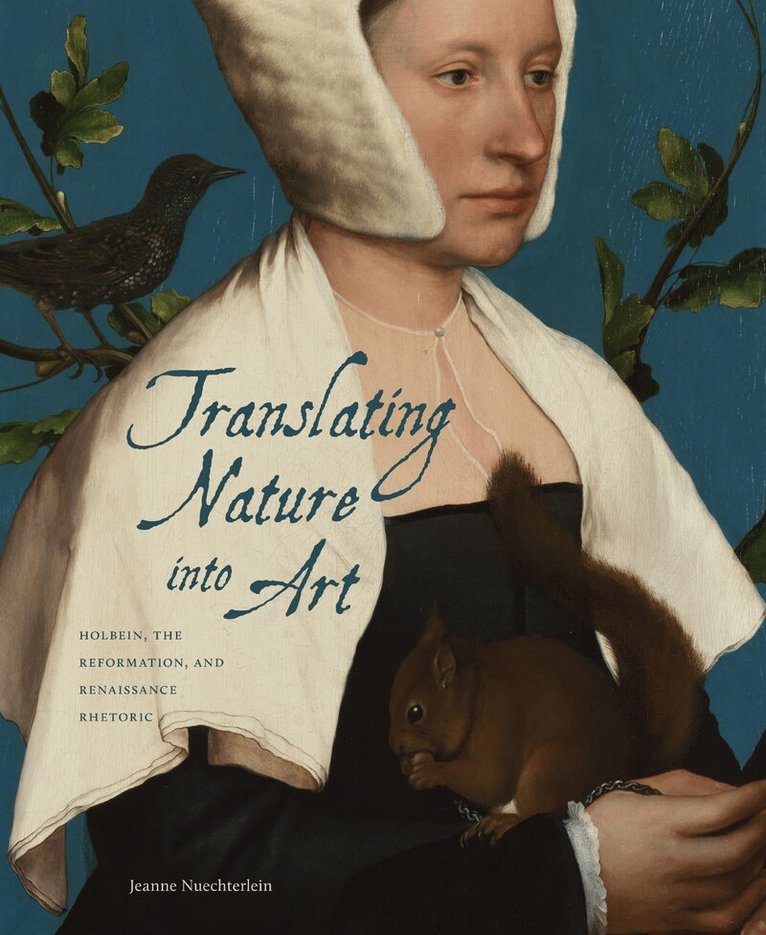
Jeanne Nuechterlein is Professor in the Department of History of Art at the University of York. She is the author of Translating Nature into Art: Holbein, the Reformation, and Renaissance Rhetoric (2011) and Deputy Editor of the journal Art History.
Hans Holbein: The Artist in a Changing World is not a biography. Instead, Nuechterlein offers a compelling thematic account of Holbein’s creative life that emphasises the steadiness of his artistic gaze as he navigated three decades of extraordinary political, religious and intellectual turbulence. - History TodayThis is a very fine book about a puzzling artist. Page by page, sentence by sentence, Jeanne Nuechterlein brings the reader in and up close to the art. The author’s care and clarity in addressing the making of art is a match for Holbein’s art and skill. One learns a lot. It is a rare pleasure to find oneself right there as the artist makes an image. The compact trim size and design of the book are enabling. - The Key ReporterHans Holbein (c. 1497/98–1543) has generated plenty of scholarship in the form of catalogues of paintings, drawings and prints as well as serious exhibition catalogues and scholarly monographs. But he has never received an affordable, authoritative, yet brief introduction that stands on those firm foundations, often partial, costly, and/or out of print. Now, in its commendable “Renaissance Lives” series, Reaktion Books has published a splendid new survey by a truly authoritative Holbein expert, Jeanne Nuechterlein . . . Despite this volume’s brevity, it contains much new knowledge – especially about Holbein’s own scientific knowledge. - Historians of Netherlandish Art ReviewsJeanne Nuechterlein presents the first modern overview of Holbein’s entire achievement and examines his responses to major changes in contemporary belief systems – Renaissance humanism, the Protestant Reformation and new scientific and geographical discoveries – all explained with admirable clarity. Analysing Holbein’s work across Germany, Switzerland and England, from tiny woodcuts and metalcuts to full-size altarpieces, she brilliantly brings into focus not only Holbein’s extraordinary creative responses to change but also the people for whom and with whom he worked, illuminating Northern European art and society at a crucial turning point. - Dr Susan Foister, Deputy Director and Curator at the National Gallery, LondonThis compact monograph on Hans Holbein the Younger lucidly presents the wide range of his production and social and professional circles . . . Nuechterlein clarifies the relationships between designer, cutter, and publisher, a welcome inclusion since the division of labor among these participants in illustrated books is often overlooked. When Holbein moved to London, he found that his recommendation from Erasmus to Sir Thomas More led him to specialize in portraits of the English aristocracy but also those of more modest means. To meet the various economic levels of his clientele, Holbein adjusted his costs, working on a larger or smaller scale, with precious or less costly materials. These portraits and those of Henry VIII and his court are not only precise depictions of their features, but also insightful renditions of their individual personalities. Recommended. - Choice
Du är på sajten för privatpersoner.
209 kr
Skickas . Fri frakt över 249 kr.
Jeanne Nuechterlein is Professor in the Department of History of Art at the University of York. She is the author of Translating Nature into Art: Holbein, the Reformation, and Renaissance Rhetoric (2011) and Deputy Editor of the journal Art History.
Hans Holbein: The Artist in a Changing World is not a biography. Instead, Nuechterlein offers a compelling thematic account of Holbein’s creative life that emphasises the steadiness of his artistic gaze as he navigated three decades of extraordinary political, religious and intellectual turbulence. - History TodayThis is a very fine book about a puzzling artist. Page by page, sentence by sentence, Jeanne Nuechterlein brings the reader in and up close to the art. The author’s care and clarity in addressing the making of art is a match for Holbein’s art and skill. One learns a lot. It is a rare pleasure to find oneself right there as the artist makes an image. The compact trim size and design of the book are enabling. - The Key ReporterHans Holbein (c. 1497/98–1543) has generated plenty of scholarship in the form of catalogues of paintings, drawings and prints as well as serious exhibition catalogues and scholarly monographs. But he has never received an affordable, authoritative, yet brief introduction that stands on those firm foundations, often partial, costly, and/or out of print. Now, in its commendable “Renaissance Lives” series, Reaktion Books has published a splendid new survey by a truly authoritative Holbein expert, Jeanne Nuechterlein . . . Despite this volume’s brevity, it contains much new knowledge – especially about Holbein’s own scientific knowledge. - Historians of Netherlandish Art ReviewsJeanne Nuechterlein presents the first modern overview of Holbein’s entire achievement and examines his responses to major changes in contemporary belief systems – Renaissance humanism, the Protestant Reformation and new scientific and geographical discoveries – all explained with admirable clarity. Analysing Holbein’s work across Germany, Switzerland and England, from tiny woodcuts and metalcuts to full-size altarpieces, she brilliantly brings into focus not only Holbein’s extraordinary creative responses to change but also the people for whom and with whom he worked, illuminating Northern European art and society at a crucial turning point. - Dr Susan Foister, Deputy Director and Curator at the National Gallery, LondonThis compact monograph on Hans Holbein the Younger lucidly presents the wide range of his production and social and professional circles . . . Nuechterlein clarifies the relationships between designer, cutter, and publisher, a welcome inclusion since the division of labor among these participants in illustrated books is often overlooked. When Holbein moved to London, he found that his recommendation from Erasmus to Sir Thomas More led him to specialize in portraits of the English aristocracy but also those of more modest means. To meet the various economic levels of his clientele, Holbein adjusted his costs, working on a larger or smaller scale, with precious or less costly materials. These portraits and those of Henry VIII and his court are not only precise depictions of their features, but also insightful renditions of their individual personalities. Recommended. - Choice
Du är på sajten för privatpersoner.
209 kr
Skickas . Fri frakt över 249 kr.
Jeanne Nuechterlein is Professor in the Department of History of Art at the University of York. She is the author of Translating Nature into Art: Holbein, the Reformation, and Renaissance Rhetoric (2011) and Deputy Editor of the journal Art History.
Hans Holbein: The Artist in a Changing World is not a biography. Instead, Nuechterlein offers a compelling thematic account of Holbein’s creative life that emphasises the steadiness of his artistic gaze as he navigated three decades of extraordinary political, religious and intellectual turbulence. - History TodayThis is a very fine book about a puzzling artist. Page by page, sentence by sentence, Jeanne Nuechterlein brings the reader in and up close to the art. The author’s care and clarity in addressing the making of art is a match for Holbein’s art and skill. One learns a lot. It is a rare pleasure to find oneself right there as the artist makes an image. The compact trim size and design of the book are enabling. - The Key ReporterHans Holbein (c. 1497/98–1543) has generated plenty of scholarship in the form of catalogues of paintings, drawings and prints as well as serious exhibition catalogues and scholarly monographs. But he has never received an affordable, authoritative, yet brief introduction that stands on those firm foundations, often partial, costly, and/or out of print. Now, in its commendable “Renaissance Lives” series, Reaktion Books has published a splendid new survey by a truly authoritative Holbein expert, Jeanne Nuechterlein . . . Despite this volume’s brevity, it contains much new knowledge – especially about Holbein’s own scientific knowledge. - Historians of Netherlandish Art ReviewsJeanne Nuechterlein presents the first modern overview of Holbein’s entire achievement and examines his responses to major changes in contemporary belief systems – Renaissance humanism, the Protestant Reformation and new scientific and geographical discoveries – all explained with admirable clarity. Analysing Holbein’s work across Germany, Switzerland and England, from tiny woodcuts and metalcuts to full-size altarpieces, she brilliantly brings into focus not only Holbein’s extraordinary creative responses to change but also the people for whom and with whom he worked, illuminating Northern European art and society at a crucial turning point. - Dr Susan Foister, Deputy Director and Curator at the National Gallery, LondonThis compact monograph on Hans Holbein the Younger lucidly presents the wide range of his production and social and professional circles . . . Nuechterlein clarifies the relationships between designer, cutter, and publisher, a welcome inclusion since the division of labor among these participants in illustrated books is often overlooked. When Holbein moved to London, he found that his recommendation from Erasmus to Sir Thomas More led him to specialize in portraits of the English aristocracy but also those of more modest means. To meet the various economic levels of his clientele, Holbein adjusted his costs, working on a larger or smaller scale, with precious or less costly materials. These portraits and those of Henry VIII and his court are not only precise depictions of their features, but also insightful renditions of their individual personalities. Recommended. - Choice