• Fri frakt över 249 kr
  • •
  • Snabba leveranser
  • •
  • Billiga böcker
Kundservice

Du är på sajten för privatpersoner.

Företag, bibliotek eller offentlig verksamhet?

Du handlar på classic.bokus.com, där alla dina funktioner finns intakta.
Till classic.bokus.com
Bokus logotyp. Gå till startsidan.
  • Erbjudanden
  • Student
  • Topplistor
  • Barn & ungdom
  • Bokus Play
  • E-böcker
  • Ljudböcker
  • Pocketböcker
  • Spel och pussel

5% studentrabatt – använd koden KURSBOK27 →

Sidfot

Mina sidor

    Hjälp

    • Kundservice
    • Vanliga frågor och svar
    • Frakt och leverans
    • Retur vid ångerrätt
    • Reklamera vara
    • Betalning
    • Köpvillkor
    • Allmänna villkor
    • Information om webbplatsens tillgänglighet

    Om Bokus

    • Om oss
    • Pressrum
    • För studenter
    • För företag
    • För bibliotek och offentlig verksamhet
    • För leverantörer
    • Hållbarhet

    Populärt

    • Aktuella erbjudanden
    • Presentkort
    • Studentlitteratur
    • Nya böcker
    • Topplistor
    • Signerade böcker
    • Engelska böcker

    Inspiration

    • Boktips
    • BookTok
    • Barnbokskaraktärer
    • Populära författare
    Logotyp för Bokus
    Följ oss på Facebook (extern länk)Följ oss på Instagram (extern länk)Följ oss på YouTube (extern länk)Följ oss på TikTok (extern länk)
    bokus @ CookiesAnpassa cookiesIntegritetspolicyKöpvillkor
    Till Citymail hemsida (extern länk)Till Budbee hemsida (extern länk)Till Postnord hemsida (extern länk)Till Schenker hemsida (extern länk)Till Early Bird hemsida (extern länk)Till Walleys hemsida (extern länk)
    1. Historia och arkeologi
    2. Arkeologi
    3. Arkeologiska perioder och områden

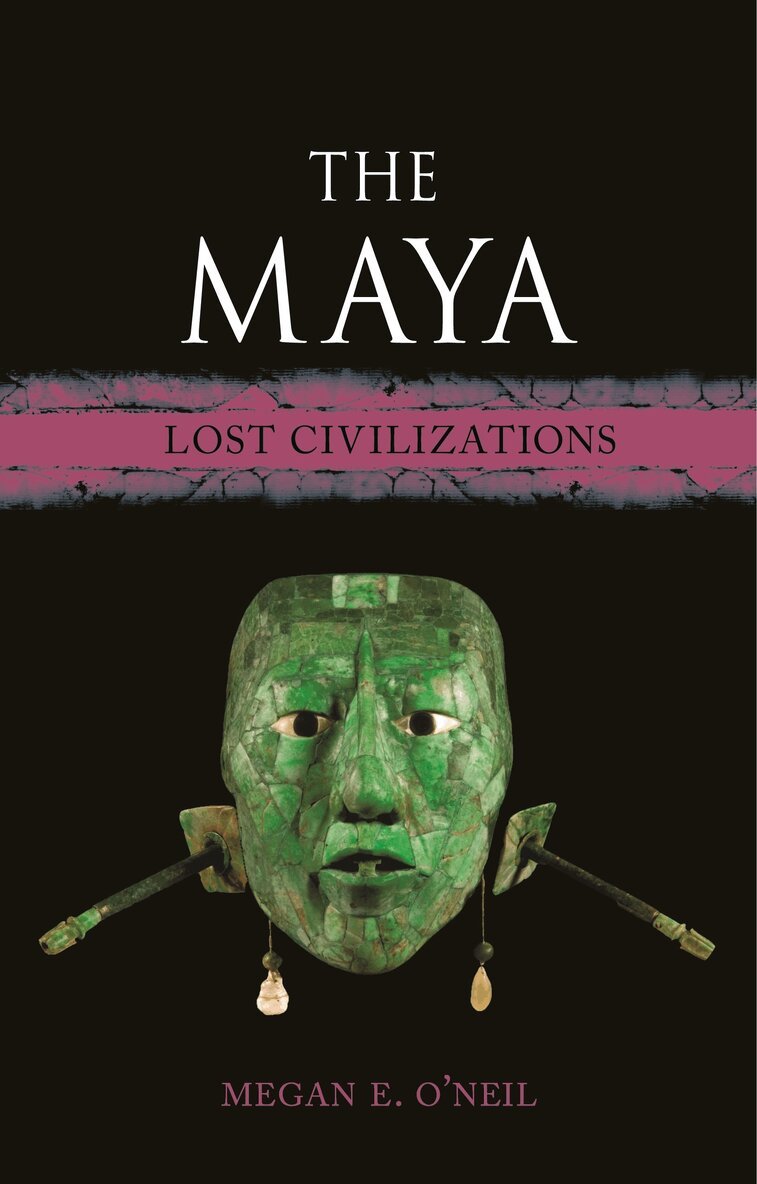
    Maya

    Lost Civilizations

    AvMegan E. O’Neil

    Inbunden, Engelska, 2022

    Del 15 i serien Lost Civilizations

    218 kr

    Skickas . Fri frakt över 249 kr.

    Beskrivning

    The Maya reveals how this ancient civilization – its buildings, ideas, objects and identities – has been perceived, portrayed and exploited over five hundred years in the Americas, Europe and beyond. Megan E. O’Neil summarizes ancient Maya art and history from the Preclassic period to the Spanish invasion, as well as the history of engagement with the ancient Maya, from Spanish invaders in the sixteenth century to later explorers and archaeologists. Taking in scientific literature, visual arts, architecture, world’s fairs and Indigenous activism, she looks at the decipherment of Maya inscriptions, Maya museum exhibitions and artists’ responses, and contemporary Maya people’s engagements with their ancestral past, to explore the history and legacy of this fascinating culture.

    Produktinformation

    • Utgivningsdatum:2022-05-02
    • Mått:149 x 223 x 22 mm
    • Vikt:708 g
    • Format:Inbunden
    • Språk:Engelska
    • Serie:Lost Civilizations
    • Antal sidor:296
    • Förlag:Reaktion Books
    • ISBN:9781789145502

    Utforska kategorier

    • Arkeologiska perioder och områden inom Historia och arkeologi
    • Amerikas historia inom Historia och arkeologi

    Mer om författaren

    Megan E. O’Neil is Assistant Professor of Art History at Emory University and the author or co-author of numerous publications, including Maya Art and Architecture (2014).

    Recensioner i media

    "Synthesizing the growing scholarship . . . into a very readable narrative, O’Neil has inverted the typical format of survey texts . . . that tend to focus almost entirely on the ancient cultures themselves and only briefly address more recent engagements with them . . . in detailing the developments of Maya scholarship from the earliest explorers through the most recent advances in archaeology, epigraphy, and ethnography, O’Neil demonstrates the inseparability of modern approaches to and understandings of the past from economic, political, and ideological considerations in the present." - Andrew Finegold, Latin American and Latinx Visual Culture"Megan O’Neil, one of the leading art historians of the Maya, has created an essential introduction to this important civilization from deep time to the present. She grounds her new perspective on the role of colonialism and portrayals in popular culture, reframing narratives about the Maya being “lost” and “discovered”." - James Doyle, Director of the Matson Museum of Anthropology and Associate Research Professor, Penn State University"This beautifully illustrated and meticulously researched book is a wholly new, contextual study of the Maya people of Mexico and Central America. It is a groundbreaking study for several reasons. First, it does not end with the fall of the Postclassic Maya in the sixteenth century, but continues to trace Maya culture and society’s continuous evolution through the colonial period and into the present day. Additionally, it presents a richly detailed panorama of the ways that scholarly and popular audiences in Latin America and beyond have sought to collect, display, remix, and decipher the ancient Maya since the nineteenth century. The result is a thought-provoking study of how our understandings of this ancient civilization have evolved dramatically over time, and are still being constructed today." - Ellen Hoobler, William B. Ziff, Jr, Associate Curator of the Art of the Americas, Walters Art Museum"More than any other introduction to the Maya, O'Neil's book draws together the fascinating story of the emergence and flowering of Maya civilization with the long history of scholarly attempts to reconstruct and understand that civilization. It is written with verve and grace, but also with a profound respect for the Maya alive today and the scholars who came before." - Rex Koontz, Professor of Art History, University of Houston, and Consulting Curator of the Art of the Indigenous Americas, Museum of Fine Arts, Houston"Readable and full of new ideas, this is a powerful – and distinctive – book on the Maya. Engaged at every step with Maya visual culture, this is also a book of history, anthropology and the Maya today, one that makes strong connections between the artistic efforts of the first millennium CE and life and practice in the 20th and 21st centuries." - Mary Miller, Director, Getty Research Institute