• Fri frakt över 249 kr
  • •
  • Snabba leveranser
  • •
  • Billiga böcker
Kundservice

Du är på sajten för privatpersoner.

Företag, bibliotek eller offentlig verksamhet?

Du handlar på classic.bokus.com, där alla dina funktioner finns intakta.
Till classic.bokus.com
Bokus logotyp. Gå till startsidan.
  • Erbjudanden
  • Nyheter
  • Student
  • Topplistor
  • Barn & ungdom
  • Bokus Play
  • E-böcker
  • Pocketböcker
  • Spel & pussel

10% rabatt på allt med kod: NYSTART10 →

Sidfot

Mina sidor

    Hjälp

    • Kundservice
    • Vanliga frågor och svar
    • Frakt och leverans
    • Retur vid ångerrätt
    • Reklamera vara
    • Betalning
    • Köpvillkor
    • Allmänna villkor
    • Information om webbplatsens tillgänglighet

    Om Bokus

    • Om oss
    • Pressrum
    • För studenter
    • För företag
    • För bibliotek och offentlig verksamhet
    • För leverantörer
    • Hållbarhet

    Populärt

    • Aktuella erbjudanden
    • Presentkort
    • Studentlitteratur
    • Nya böcker
    • Topplistor
    • Signerade böcker
    • Engelska böcker

    Inspiration

    • Boktips
    • BookTok
    • Populära bokserier
    • Barnbokskaraktärer
    • Populära författare
    Logotyp för Bokus
    Följ oss på Facebook (extern länk)Följ oss på Instagram (extern länk)Följ oss på YouTube (extern länk)Följ oss på TikTok (extern länk)
    bokus @ CookiesAnpassa cookiesIntegritetspolicyKöpvillkor
    Till Citymail hemsida (extern länk)Till Budbee hemsida (extern länk)Till Postnord hemsida (extern länk)Till Schenker hemsida (extern länk)Till Early Bird hemsida (extern länk)Till Walleys hemsida (extern länk)
    1. Samhälle och politik
    2. Sociologi och antropologi
    3. Antropologi

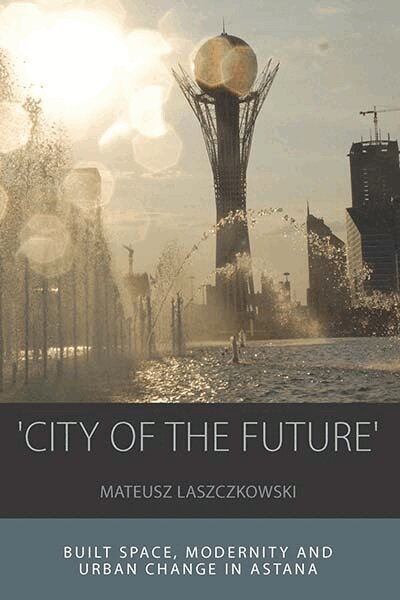
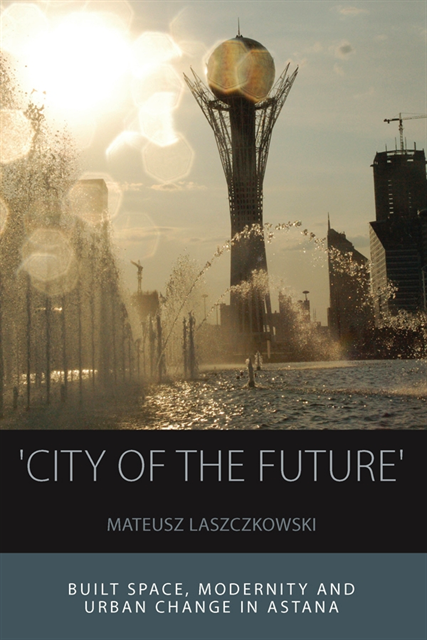
    'City of the Future'

    Built Space, Modernity and Urban Change in Astana

    AvMateusz Laszczkowski

    Häftad, Engelska, 2018

    Del i serien Integration and Conflict Studies

    511 kr

    Beställningsvara. Skickas inom 5-8 vardagar. Fri frakt över 249 kr.

    Fler format och utgåvor

    Inbunden

    1 861 kr

    E-bok

    315 kr

    Beskrivning

    Astana, the capital city of the post-Soviet Kazakhstan, has often been admired for the design and planning of its futuristic cityscape. This anthropological study of the development of the city focuses on every-day practices, official ideologies and representations alongside the memories and dreams of the city’s longstanding residents and recent migrants. Critically examining a range of approaches to place and space in anthropology, geography and other disciplines, the book argues for an understanding of space as inextricably material-and-imaginary, and unceasingly dynamic – allowing for a plurality of incompatible pasts and futures materialized in spatial form.

    Produktinformation

    • Utgivningsdatum:2018-10-07
    • Mått:152 x 229 x 13 mm
    • Vikt:326 g
    • Format:Häftad
    • Språk:Engelska
    • Serie:Integration and Conflict Studies
    • Antal sidor:220
    • Förlag:Berghahn Books
    • ISBN:9781789200751

    Utforska kategorier

    • Antropologi inom Samhälle och politik
    • Sociala grupper och identitet inom Samhälle och politik

    Mer om författaren

    Mateusz Laszczkowski is Assistant Professor at the Institute of Ethnology and Cultural Anthropology, at the University of Warsaw, Poland. In 2007-2012 he conducted his doctoral research at the Max Planck Institute for Social Anthropology in Halle/Saale, Germany.

    Recensioner i media

    “This book truly epitomizes twenty-first century scholarship in the social sciences. From this standpoint, despite its primary focus on a Central Asian society, it can be considered a useful reference for Europeanists in the broader sense, especially those involved in post-communist studies. As a matter of fact, the book was written in English by a Polish researcher, in a German institution, with European funding, drawing on extensive fieldwork in Kazakhstan…[It] opens stimulating debates in many field…The reader is caught in the midst of fascinating stories and compelling arguments. The structure allows us to grasp multiple times, plural spaces, thus numerous modernities.” • EuropeNow“Laszczkowski offers a rich and dynamic picture of migration, identification, alienation and change behind seemingly straight lines of plans, streets and buildings.” • Allegra lab“The book can serve as the perfect companion to post-graduate studies in many fields, because its methodology is brilliant, clear, transparent, and utterly reflexive. No doubt it will become a major reference text on many syllabi to come.” • Central Asian Affairs“City of the Future represents a particularly remarkable achievement not only in its sophisticated consideration of [its] sources and the fascinating dialogues into which it brings them, but equally in how Laszczkowski skillfully grounds them within the open-ended ambivalences that his sharp ethnographic eye brings to light with impressive lucidity… the book could come in handy as a clear, concise, and critical ethnographic exposition of crucial theoretical debates and indispensable literature that would no doubt serve well in advanced undergraduate as well as graduate courses in urban anthropology.” • Slavic Review“Drawing upon the case of Astana, which remains unfamiliar to many scholars, this book makes a valuable contribution to the study of urban transformation and power in the post-Soviet countries and beyond. Despite the city representing an example of phenomena often too broad in scale to be empirically analysed, having numerous inter-subjective and experiential qualities, the book skilfully carves out the multiplicity and complexity of time- and space-making relationships. Furthermore, it introduces numerous new perspectives that should be elaborated upon by future research.” • Europe-Asia Studies“In many ways, Laszczkowski’s observations affirm existing work, and indeed his book does a marvelous job engaging some rather complex theories in accessible terms. Yet, his ideas on spatiality are also highly original, and deserve a wide readership… Coupled with its excellent theoretical framing and wide-ranging fieldwork, [this book] is set to become a must-read not only for anthropologists, but also for any social scientist or humanities scholar concerned with how the contested notion of modernity can reach into the very pores of the urban metropolis.” • International Social Science Review“‘City of the Future’ is the first of its kind. As a long-awaited comprehensive account of the rise of Astana… it is a remarkably thoughtful and thought-provoking book. Laszczkowski is a skilled ethnographer and he recounts his rich and insightful research in a style that captivates and challenges readers to think outside the box.” • Natalie Koch, University of Syracuse

    Innehållsförteckning

    • List of Maps, Figures and TablesAcknowledgmentsNote on Transliteration and TranslationIntroduction: Pathways into the ‘City of the Future’Astana, Kazakhstan and the Global Lives of Modernist UrbanismAnthropology’s SpaceSpace and TimeTheorizing the City AnthropologicallyFieldwork in the ‘City of the Future’Chapter 1. Materializing the Future: Images and PracticesDeconstruction, ReconstructionThe Cityscape of the FutureBecoming ‘Contemporary’The Roots of Disenchantment, and Its LimitsChapter 2. Performing Urbanity: Migrants, the City and Collective IdentificationIdentities beyond RepresentationUrbanity and Rurality in KazakhstanMigration to AstanaMigrants’ StoriesKumano: A Pioneer Settles DownKirill and Gisele: Love on the MoveBakytgul: Caught Up in DeferralsAynura: The Girl Who Played the AccordionMadiyar: The Struggling SouthernerEmbodying IdentityChapter 3. Tselinograd: The Past in the ‘City of the Future’Building TselinogradNostalgia and Spatial IntimacyWalking in TselinogradTselinograd’s GloryChapter 4. Celebration and the City: Belonging in Public SpaceWhat Is Public Space?The Setting: City SquaresPublic Holiday Celebrations...in Late-Soviet Tselinograd...in AstanaWhose Celebration, Whose City?Public Space ReopenedChapter 5. Fixing the Courtyard: Mundane Place-MakingShifting FrameworksMaterial Place-Making in the DvorDigression: Things Make a DifferenceThe KSK TakeoverChapter 6. Playing with the City: ‘Encounter’ in AstanaWhat is ‘Encounter’?Game Types‘Encounter’ as PlayPlay or Politics: Carnival, Stiob and ‘Encounter’‘Encounter’s Creativity'Creasing SpaceConclusionReferencesIndex