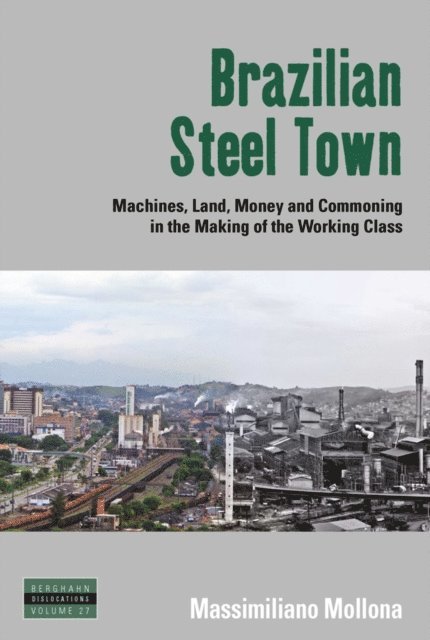
Brazilian Steel Town
Machines, Land, Money and Commoning in the Making of the Working Class
1 861 kr
Beställningsvara. Skickas inom 5-8 vardagar. Fri frakt över 249 kr.
Du är på sajten för privatpersoner.
1 861 kr
Beställningsvara. Skickas inom 5-8 vardagar. Fri frakt över 249 kr.
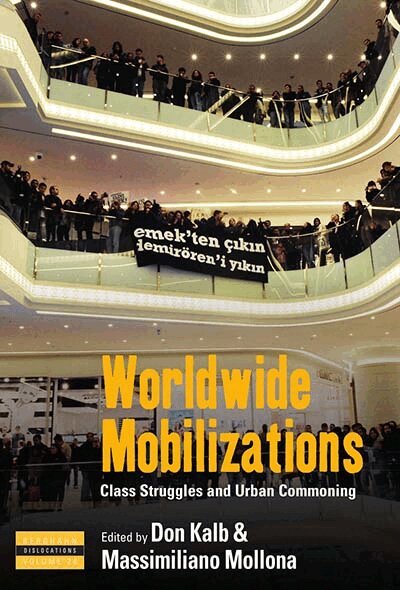
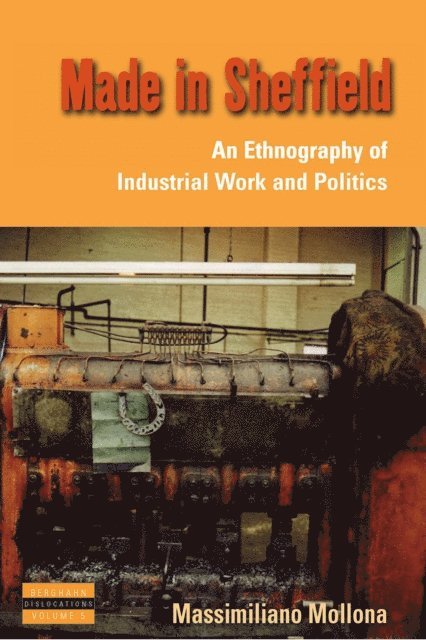
Massimiliano Mollona is Senior Lecturer at Goldsmiths College, London, where he teaches Economic and Political Anthropology and Art and Anthropology. Among his publications are Made in Sheffield, an Ethnography of Industrial Work and Politics (2009, Berghahn) and with Don Kalb, Worldwide Mobilizations : Class Struggles and Urban Commoning (2018, Berghahn).
“The book offers an interesting history of the intricate and antagonistic dance of capital, labour, and citizenry in this Brazilian steel town.” • JRAI (Journal of the Royal Anthropological Institute)“Mollona offers an exemplary and multi-scalar analysis of capital, class, and the state…this book deserves to be read and debated by anthropologists, geographers, and other scholars of Latin America.” • Exertions“Brazilian Steel Town is a lyrical description of Latin America’s largest integrated steel mill – an ethnography of its flexible workplace that traces the precariatization of a working class, embedded in a turbulent history of state ownership and privatization, all tied into the context of national politics and world capitalism. Ethnography at its best and most visionary.” • Michael Burawoy, University of California, Berkeley.“Based on an outstanding ethnographic work, Brazilian Steel Town presents an accurate and complex picture of the Brazilian working-class experience in its multiple dimensions including of the social relations at the factory level and in the city of Volta Redonda. The book is an original and sensitive account of the development of capitalism in the country.” • José Ricardo Ramalho, Universidade Federal do Rio de Janeiro (UFRJ).“This is an excellent book…The case of Volta Redonda presented here, I believe, will be of interest to many engaged in the study of labour, heavy industries, and global capitalism at this current moment in time.” • Elisabeth Schober, University of Oslo“This is an impressive book that is ethnographically rich, insightful and theoretically rigorous. It addresses important questions on the transformations of industry, workers, livelihoods and states in developing nations during different periods of global economic restructuring and particularly under the imperatives of the financialization of economies and polities.” • Winnie Lem, Trent University
Du är på sajten för privatpersoner.
1 861 kr
Beställningsvara. Skickas inom 5-8 vardagar. Fri frakt över 249 kr.
Massimiliano Mollona is Senior Lecturer at Goldsmiths College, London, where he teaches Economic and Political Anthropology and Art and Anthropology. Among his publications are Made in Sheffield, an Ethnography of Industrial Work and Politics (2009, Berghahn) and with Don Kalb, Worldwide Mobilizations : Class Struggles and Urban Commoning (2018, Berghahn).
“The book offers an interesting history of the intricate and antagonistic dance of capital, labour, and citizenry in this Brazilian steel town.” • JRAI (Journal of the Royal Anthropological Institute)“Mollona offers an exemplary and multi-scalar analysis of capital, class, and the state…this book deserves to be read and debated by anthropologists, geographers, and other scholars of Latin America.” • Exertions“Brazilian Steel Town is a lyrical description of Latin America’s largest integrated steel mill – an ethnography of its flexible workplace that traces the precariatization of a working class, embedded in a turbulent history of state ownership and privatization, all tied into the context of national politics and world capitalism. Ethnography at its best and most visionary.” • Michael Burawoy, University of California, Berkeley.“Based on an outstanding ethnographic work, Brazilian Steel Town presents an accurate and complex picture of the Brazilian working-class experience in its multiple dimensions including of the social relations at the factory level and in the city of Volta Redonda. The book is an original and sensitive account of the development of capitalism in the country.” • José Ricardo Ramalho, Universidade Federal do Rio de Janeiro (UFRJ).“This is an excellent book…The case of Volta Redonda presented here, I believe, will be of interest to many engaged in the study of labour, heavy industries, and global capitalism at this current moment in time.” • Elisabeth Schober, University of Oslo“This is an impressive book that is ethnographically rich, insightful and theoretically rigorous. It addresses important questions on the transformations of industry, workers, livelihoods and states in developing nations during different periods of global economic restructuring and particularly under the imperatives of the financialization of economies and polities.” • Winnie Lem, Trent University