• Fri frakt över 249 kr
  • •
  • Snabba leveranser
  • •
  • Billiga böcker
Kundservice

Du är på sajten för privatpersoner.

Företag, bibliotek eller offentlig verksamhet?

Du handlar på classic.bokus.com, där alla dina funktioner finns intakta.
Till classic.bokus.com
Bokus logotyp. Gå till startsidan.
  • Erbjudanden
  • Nyheter
  • Student
  • Topplistor
  • Barn & ungdom
  • Bokus Play
  • E-böcker
  • Pocketböcker
  • Spel & pussel

10% rabatt på allt med kod: NYSTART10 →

Sidfot

Mina sidor

    Hjälp

    • Kundservice
    • Vanliga frågor och svar
    • Frakt och leverans
    • Retur vid ångerrätt
    • Reklamera vara
    • Betalning
    • Köpvillkor
    • Allmänna villkor
    • Information om webbplatsens tillgänglighet

    Om Bokus

    • Om oss
    • Pressrum
    • För studenter
    • För företag
    • För bibliotek och offentlig verksamhet
    • För leverantörer
    • Hållbarhet

    Populärt

    • Aktuella erbjudanden
    • Presentkort
    • Studentlitteratur
    • Nya böcker
    • Topplistor
    • Signerade böcker
    • Engelska böcker

    Inspiration

    • Boktips
    • BookTok
    • Populära bokserier
    • Barnbokskaraktärer
    • Populära författare
    Logotyp för Bokus
    Följ oss på Facebook (extern länk)Följ oss på Instagram (extern länk)Följ oss på YouTube (extern länk)Följ oss på TikTok (extern länk)
    bokus @ CookiesAnpassa cookiesIntegritetspolicyKöpvillkor
    Till Citymail hemsida (extern länk)Till Budbee hemsida (extern länk)Till Postnord hemsida (extern länk)Till Schenker hemsida (extern länk)Till Early Bird hemsida (extern länk)Till Walleys hemsida (extern länk)
    1. Historia och arkeologi
    2. Historia
    3. Militärhistoria
    4. Andra världskriget

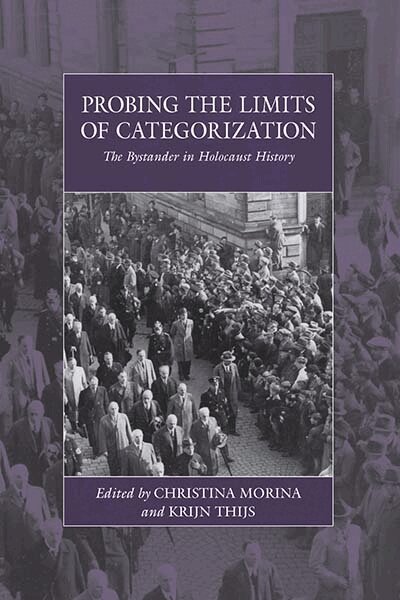
    Probing the Limits of Categorization

    The Bystander in Holocaust History

    AvChristina Morina,Krijn Thijs

    Häftad, Engelska, 2020

    Del i serien War and Genocide

    599 kr

    Beställningsvara. Skickas inom 5-8 vardagar. Fri frakt över 249 kr.

    Beskrivning

    Of the three categories that Raul Hilberg developed in his analysis of the Holocaust—perpetrators, victims, and bystanders—it is the last that is the broadest and most difficult to pinpoint. Described by Hilberg as those who were “once a part of this history,” bystanders present unique challenges for those seeking to understand the decisions, attitudes, and self-understanding of historical actors who were neither obviously the instigators nor the targets of Nazi crimes. Combining historiographical, conceptual, and empirical perspectives on the bystander, the case studies in this book provide powerful insights into the complex social processes that accompany state-sponsored genocidal violence.

    Produktinformation

    • Utgivningsdatum:2020-12-07
    • Mått:152 x 229 x 25 mm
    • Vikt:556 g
    • Format:Häftad
    • Språk:Engelska
    • Serie:War and Genocide
    • Antal sidor:382
    • Förlag:Berghahn Books
    • ISBN:9781789208115

    Utforska kategorier

    • Andra världskriget inom Historia och arkeologi
    • Förintelsen inom Historia och arkeologi
    • Historia inom Historia och arkeologi

    Mer om författaren

    Christina Morina is Professor of Contemporary History at the University of Bielefeld. From 2015 to 2019, she was DAAD Visiting Assistant Professor at the Duitsland Instituut Amsterdam. She has also worked as lecturer at the University of Jena and was a research fellow at the Jena Center 20th Century History. Her dissertation Legacies of Stalingrad: Remembering the Eastern Front War in Germany since 1945 appeared in 2011. Since then, she has published a number of books and articles on modern German and European political-intellectual history and memory culture, among them Die Erfindung des Marxismus. Wie eine Idee die Welt eroberte (2017, forthcoming in English in 2022), and Zur rechten Zeit. Wider die Rückkehr des Nationalismus (2019, with N. Frei, F. Maubach and M. Tändler).

    Recensioner i media

    “Although not all Central and Eastern European countries are discussed in this work…the volume offers great insight into the bystander position and how it can be interpreted in different societies, cultures, and historical situations… This pioneering excellent book should encourage new – hopefully, transnational comparative – studies and contribute to further develop Bystander Studies as new field of Holocaust and Genocide Studies.” • Journal of Contemporary History“Scholars interested in the conceptual and research methodological approaches to bystanders will find great sources of research inspiration in a number of chapters… This rich, multidimensional book makes a significant contribution to our understanding of the limits and difficulties of categorising bystanders. It advances the field and, crucially, provides a roadmap for future research into this complex, unsettling figure, not just during the Holocaust, but also beyond.” • BMGN Low Countries Historical Review“This collection stands as an extraordinary and incisive contribution to understanding the processes of extreme violence. Probing the Limits of Categorization is an important book that promises to provoke fruitful discussion.” • Peter Fritzsche, University of Illinois and author of An Iron Wind: Europe under Hitler“With its disciplinarily diverse contributions, this book offers a captivating and discerning overview of the ‘bystander’ in recent Holocaust studies, rethinking questions that have intrigued historians of the Holocaust for decades. This volume is a thought-provoking and important contribution to the field.” • Caroline Mezger, Center for Holocaust Studies, Institute for Contemporary History

    Innehållsförteckning

    • List of IllustrationsIntroduction: Probing the Limits of CategorizationChristina Morina and Krijn ThijsPART I: APPROACHESChapter 1. Bystanders: Catchall Concept, Alluring Alibi or Crucial Clue?Mary FulbrookChapter 2. Raul Hilberg and His “Discovery” of the BystanderRené SchlottChapter 3. Bystanders as Visual Subjects: Onlookers, Spectators, Observers, and Gawkers in Occupied PolandRoma SendykaChapter 4. “I Am Not, What I Am.”: A Typological Approach to Individual (In)Action in the HolocaustTimothy WilliamsChapter 5. The Many Shades of Bystanding: On Social Dilemmas and Passive ParticipationFroukje DemantChapter 6. The Dutch Bystander as Non-Jew and Implicated SubjectRemco Ensel and Evelien GansSECTION II: HISTORYChapter 7. Photographing BystandersChristoph KreutzmüllerChapter 8. The Imperative to Act: Jews, Neighbors, and the Dynamics of Persecution in Nazi Germany, 1933–1945Christina MorinaChapter 9. Martin Heidegger’s Nazi ConscienceAdam KnowlesChapter 10. Natura Abhorret Vacuum: Polish “Bystanders” and the Implementation of the “Final Solution”          Jan GrabowskiChapter 11. Defiant Danes and Indifferent Dutch?: Popular Convictions and Deportation Rates in the Netherlands and Denmark, 1940–1945          Bart van der BoomChapter 12. The Notion of Social Reactivity: The French Case, 1942–1944Jacques SemelinSECTION III: MEMORYChapter 13. Ordinary, Ignorant and Noninvolved?: The Figure of the Bystander in Dutch Research and ControversyKrijn ThijsChapter 14. Hidden in Plain View: Remembering and Forgetting the Bystanders of the Holocaust on (West) German TelevisionWulf KansteinerChapter 15. Stand by Your Man: (Self-)Representations of SS Wives after 1945Susanne C. KnittelChapter 16. “Bystanders” in Exhibitions at the United States Holocaust Memorial MuseumSusan BachrachEpilogue I: A Brief Plea for the Historicization of the BystanderNorbert FreiEpilogue II: Saving the BystanderIdo de HaanIndex