• Fri frakt över 249 kr
  • •
  • Snabba leveranser
  • •
  • Billiga böcker
Kundservice

Du är på sajten för privatpersoner.

Företag, bibliotek eller offentlig verksamhet?

Du handlar på classic.bokus.com, där alla dina funktioner finns intakta.
Till classic.bokus.com
Bokus logotyp. Gå till startsidan.
  • Erbjudanden
  • Nyheter
  • Student
  • Topplistor
  • Barn & ungdom
  • Bokus Play
  • E-böcker
  • Pocketböcker
  • Spel & pussel

10% rabatt på allt med kod: NYSTART10 →

Sidfot

Mina sidor

    Hjälp

    • Kundservice
    • Vanliga frågor och svar
    • Frakt och leverans
    • Retur vid ångerrätt
    • Reklamera vara
    • Betalning
    • Köpvillkor
    • Allmänna villkor
    • Information om webbplatsens tillgänglighet

    Om Bokus

    • Om oss
    • Pressrum
    • För studenter
    • För företag
    • För bibliotek och offentlig verksamhet
    • För leverantörer
    • Hållbarhet

    Populärt

    • Aktuella erbjudanden
    • Presentkort
    • Studentlitteratur
    • Nya böcker
    • Topplistor
    • Signerade böcker
    • Engelska böcker

    Inspiration

    • Boktips
    • BookTok
    • Populära bokserier
    • Barnbokskaraktärer
    • Populära författare
    Logotyp för Bokus
    Följ oss på Facebook (extern länk)Följ oss på Instagram (extern länk)Följ oss på YouTube (extern länk)Följ oss på TikTok (extern länk)
    bokus @ CookiesAnpassa cookiesIntegritetspolicyKöpvillkor
    Till Citymail hemsida (extern länk)Till Budbee hemsida (extern länk)Till Postnord hemsida (extern länk)Till Schenker hemsida (extern länk)Till Early Bird hemsida (extern länk)Till Walleys hemsida (extern länk)
    1. Kultur
    2. Musikböcker
    3. Musik: stilar och genrer

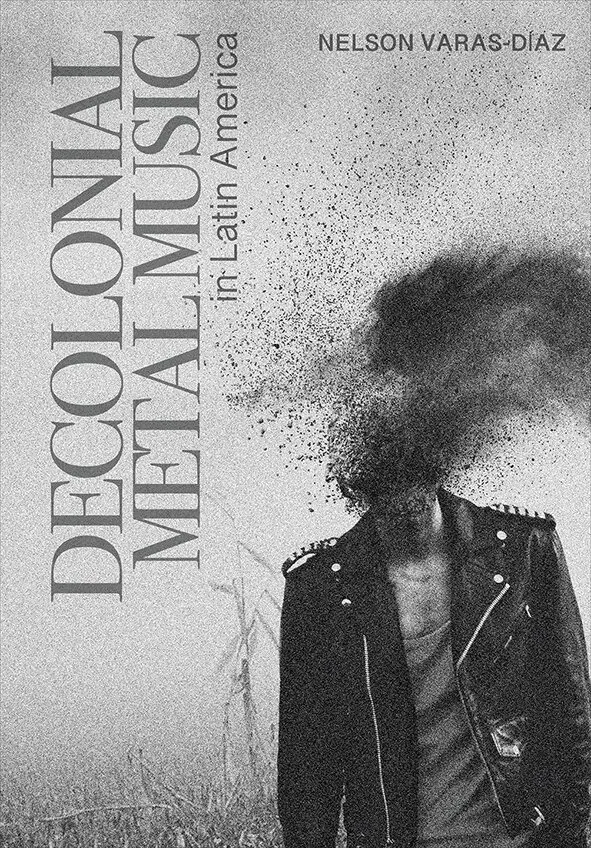
    Decolonial Metal Music in Latin America

    AvNelson Varas-Díaz

    Inbunden, Engelska, 2021

    Del i serien Advances in Metal Music and Culture

    1 315 kr

    Beställningsvara. Skickas inom 5-8 vardagar. Fri frakt över 249 kr.

    Fler format och utgåvor

    E-bok

    975 kr

    E-bok

    975 kr

    Beskrivning

    The long-lasting effects of colonialism are still present throughout Latin America. Racism, political persecution, ethnic extermination and extreme capitalism are some salient examples. This new book explores how heavy metal music in the region has been used to critically challenge the historical legacy of colonialism and its present-day manifestations.Through extensive ethnographic research in Puerto Rico, Cuba, Dominican Republic, Mexico, Guatemala, Colombia, Peru, Chile and Argentina, Varas-Díaz documents how metal music listeners and musicians engage in ‘extreme decolonial dialogues’ as a strategy to challenge past and ongoing forms of oppression. This allows readers to see metal music in a different light and as a call for justice in Latin America.Heavy metal related scholarship has made strides in the past decade. Many books have aimed to explain its origins, uses and the social meanings ascribed to the music in a variety of contexts. For the most part, these have neglected to address the region of Latin America as an area of study.It represents a historical and sociological journey in Latin American heavy metal music through rich ethnographic engagements with performers, fans and scholars of music. Its central premise is the dialogic relationship amongst deep histories of coloniality, systematic oppression, entrenched inequalities and the expressive forms generated by ‘decolonial metal music’. The book also provides an exemplary and potentially iconic model of ethnomusicology and the anthropology of music.  Most previous work on metal music in Latin America has relied on theoretical frameworks developed in the Global North, and is therefore limited in understanding the region through its particular history and experiences. There is no scholarship of heavy metal scholarship in the Latin American region that achieves the depth or breadth of analysis represented by this book. It provides a roadmap and a model for this emerging mode of musical analysis, by demonstrating how decolonial metal scholarship can be achieved. Academic readership for the book will come from multiple disciplines including cultural studies, musicology, ethnomusicology, sociology, anthropology, cultural geography, history and Latin American studies. It will be of interest to music studies programmes, as well as for methods courses on structurally informed social research. The book will also be of interest to those outside academic settings – accessibly written, with its concise reviews of historical and political-economic contexts, and its vivid storytelling, it will be of interest to consumers of the metal musical genre.

    Produktinformation

    • Utgivningsdatum:2021-08-17
    • Mått:170 x 244 x 16 mm
    • Vikt:621 g
    • Format:Inbunden
    • Språk:Engelska
    • Serie:Advances in Metal Music and Culture
    • Antal sidor:256
    • Förlag:Intellect
    • ISBN:9781789383935

    Utforska kategorier

    • Musik: stilar och genrer inom Kultur

    Mer om författaren

    Dr Nelson Varas-Díaz is a professor of social-community psychology at Florida International University’s Department of Global and Sociocultural Studies. His work related to metal music addresses issues of community formation, linkages between culture and music, and metal music as a decolonial strategy in Latin America.

    Recensioner i media

    'As heavy metal is diversifying within a music culture in which active fan participation is crucial in cementing its longevity, these books are not just an excellent read for casual metal fans, but important for present and future heavy music scholars. [...] These books demonstrate not just how the music is produced and performed within non-Western countries, but also how the genre and culture serve to strengthen the global heavy music community.'Reviewed alongside Living Metal

    Innehållsförteckning

    • Preface Chapter 1Metal music’s decolonial role in Latin America Chapter 2Colonialism is still here / Metal is still here – Puerto Rico Chapter 3The experience and sound of ethnic extermination – Peru Chapter 4Dictatorship/resistance/inspiration – Chile Chapter 5Social movements and hybrid sounds – Mexico Chapter 6Decolonizing space and culture amidst revolutionary entanglements – Cuba Chapter 7Navigating racism, classism, and complex airwaves – Dominican Republic Chapter 8Restoring memory and surviving violence – Colombia Chapter 9Education for the very few – Guatemala Chapter 10An elusive word? Aguante as a decolonial reflection – Argentina