• Fri frakt över 249 kr
  • •
  • Snabba leveranser
  • •
  • Billiga böcker
Kundservice

Du är på sajten för privatpersoner.

Företag, bibliotek eller offentlig verksamhet?

Du handlar på classic.bokus.com, där alla dina funktioner finns intakta.
Till classic.bokus.com
Bokus logotyp. Gå till startsidan.
  • Erbjudanden
  • Nyheter
  • Student
  • Topplistor
  • Barn & ungdom
  • Bokus Play
  • E-böcker
  • Pocketböcker
  • Spel & pussel

10% rabatt på allt med kod: NYSTART10 →

Sidfot

Mina sidor

    Hjälp

    • Kundservice
    • Vanliga frågor och svar
    • Frakt och leverans
    • Retur vid ångerrätt
    • Reklamera vara
    • Betalning
    • Köpvillkor
    • Allmänna villkor
    • Information om webbplatsens tillgänglighet

    Om Bokus

    • Om oss
    • Pressrum
    • För studenter
    • För företag
    • För bibliotek och offentlig verksamhet
    • För leverantörer
    • Hållbarhet

    Populärt

    • Aktuella erbjudanden
    • Presentkort
    • Studentlitteratur
    • Nya böcker
    • Topplistor
    • Signerade böcker
    • Engelska böcker

    Inspiration

    • Boktips
    • BookTok
    • Populära bokserier
    • Barnbokskaraktärer
    • Populära författare
    Logotyp för Bokus
    Följ oss på Facebook (extern länk)Följ oss på Instagram (extern länk)Följ oss på YouTube (extern länk)Följ oss på TikTok (extern länk)
    bokus @ CookiesAnpassa cookiesIntegritetspolicyKöpvillkor
    Till Citymail hemsida (extern länk)Till Budbee hemsida (extern länk)Till Postnord hemsida (extern länk)Till Schenker hemsida (extern länk)Till Early Bird hemsida (extern länk)Till Walleys hemsida (extern länk)
    1. Samhälle och politik
    2. Samhälle och kultur
    3. Kultur och medier
    4. Medievetenskap

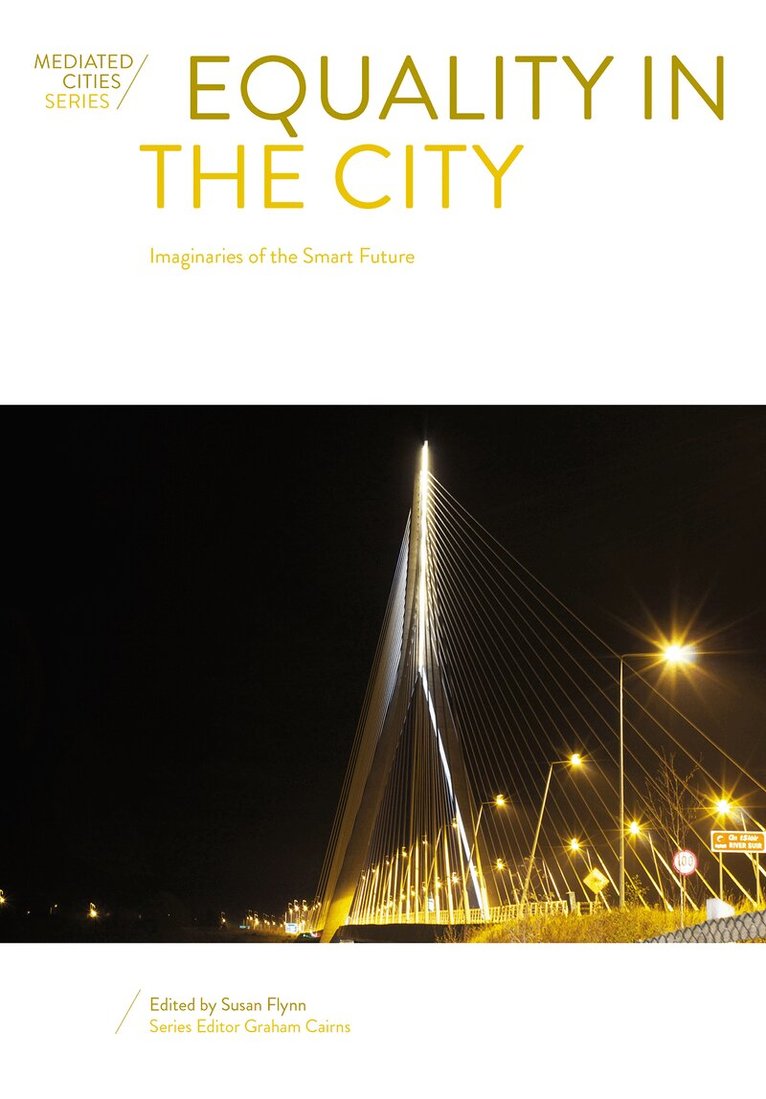
    Equality in the City

    Imaginaries of the Smart Future

    AvSusan Flynn

    Inbunden, Engelska, 2022

    Del i serien Mediated Cities

    1 250 kr

    Skickas . Fri frakt över 249 kr.

    Beskrivning

    This collection considers the city of the future and its relationship to its citizens. It responds to the foregrounding of digital technologies in the management of urban spaces, and addresses some of the ways in which technologies are changing the places in which we live and the way we live in them.A broad range of interdisciplinary contributors reflect on the global agenda of smart cities, the ruptures in smart discourse and the spaces where we might envisage a more user-friendly and bottom-up version of the smart future. The authors adopt an equality studies lens to assess how we might conceive of a future smart city and what fissures need to be addressed to ensure the smart future is equitable. In the project of envisaging this, they consider various approaches and arguments for equality in the imagined future city, putting people at the forefront of our discussions, rather than technologies.In the smart discourse, hard data, technological solutions, global and national policy and macro issues tend to dominate. Here, the authors include ethnographic evidence, rather than rely on the perspective of the smart technologies’ experts, so that the arena for meaningful social development of the smart future can develop.The international contributors respond purposefully to the smart imperative, to the disruptive potential of smart technologies in our cities: issues of change, design, austerity, ownership, citizenship and equality. The collection examines the pull between equality and engagement in smart futures. To date, the topic of smart cities has been approached from the perspective of digital media, human geography and information communications technology. This collection, however, presents a different angle. It seeks to open new discussions about what a smart future could do to bridge divides, to look at governmentality in the context of (in)equality in the city. The collection is an approachable discussion of the issues that surround smart digital futures and the imagined digital cities of the future. It is aspirational in that it seeks to imagine a truly egalitarian city of the future and to ponder how that might come about.Primary readership will be academics and students in social science, architecture, urban planning, government employees, and those working or studying in social justice and equality studies

    Produktinformation

    • Utgivningsdatum:2022-01-21
    • Mått:170 x 244 x 17 mm
    • Vikt:662 g
    • Format:Inbunden
    • Språk:Engelska
    • Serie:Mediated Cities
    • Antal sidor:286
    • Förlag:Intellect
    • ISBN:9781789384642

    Utforska kategorier

    • Medievetenskap inom Samhälle och politik
    • Referensverk och tvärvetenskap inom Samhälle och politik
    • Regional planering inom Naturvetenskap och teknik

    Mer om författaren

    Dr. Susan Flynn is a lecturer at the School of Education and Lifelong Learning at Waterford Institute of Technology, Ireland.

    Recensioner i media

    'One of the strengths of this book is that its authors bridge familiar planning and broader urban studies theory with the contemporary challenges of new technology deployment. This bridging helps ground our engagement with the complexity of new technologies in our long-standing obligation to equitably evaluate how new changes in communities will affect all of our residents.Planners reading this book will gain insight into how we might engage our residents in civic conversations about new technology adoption. [...] Individually and collectively, these chapters will help planners think more critically about the challenges and opportunities new technologies bring before we implement them. Equality in the City has many chapters that could be used in planning theory classes, allowing learners to see how the planning and urbanism theories that have long informed our practice also shed important light on new trends.'

    Innehållsförteckning

    • Introduction Susan Flynn Section 1: Urban Crisis1.     Locked down in the neoliberal Smart City: A-systemic technologies in crisis. Eleanor Dare, Reader in Digital Media, Royal College of Art 2.     If (equality). Delfina Fantini von Ditmar, Lecturer in Digital Research, Royal College of Art 3.     Reading Lefebvre’s right to the city in the age of the internet. Alan Reeve. Reader in Urban Design, Oxford Brookes University 4.     Universities, Equality and the Neoliberal City. Richard Hayes. Vice-President, Waterford Institute of Technology Section 2: City Design 5.     Universal Smart City Design. Eoghan Conor O’Shea, Lecturer in Universal Design and Architecture. Institute of Technology, Carlow, Ireland 6.     The Design and Public Imaginaries of Smart Street Furniture. Justine Humphry, University of Sydney; Sophia Maalsen, University of Sydney; Justine Gangneux, University of Glasgow; Chris Chesher, University of Sydney; Matt Hanchard, University of Glasgow; Simon Joss, University of Glasgow; Peter Merrington, University of Glasgow; Bridgette Wessels, University of Glasgow 7.     Co-creating Place and Creativity Through Media Architecture: The Instabooth. Glenda Caldwell, Associate Professor of Architecture, Queensland University of Technology 8.     Narratives, inequalities and civic participation: A case for 'more-than-technological' approaches to smart city development. Carla Maria Kayanan, Post-Doctoral Fellow, University College Dublin; Niamh Moore-Cherry, Associate Professor of Urban Governance and Development in the School of Geography, University College Dublin and Alma Clavin, Post-Doctoral Fellow, University College Dublin Section3: Spatial Humanism 9.     Building Participatory City 2.0; Folksonomy, Taxonomy, Hyperhumanism. Carl Smith, Director of the Learning Technology Research Centre (LTRC) and Principal Research Fellow Ravensbourne University London; Fred Garnett, London Knowledge Lab and Manuel Laranja, Senior Associate Professor of Innovation and Entrepreneurship, University of Lisbon  10.  Psychogeography: reimagining and re-enchanting the smart city. Adrian Sledmere, Lecturer in Cultural Studies, University of the Arts, London  11.  AfterwordRob Kitchin, Professor of Human Geography, National University of Ireland, Maynooth