• Fri frakt över 249 kr
  • •
  • Snabba leveranser
  • •
  • Billiga böcker
Kundservice

Du är på sajten för privatpersoner.

Företag, bibliotek eller offentlig verksamhet?

Du handlar på classic.bokus.com, där alla dina funktioner finns intakta.
Till classic.bokus.com
Bokus logotyp. Gå till startsidan.
  • Erbjudanden
  • Nyheter
  • Student
  • Topplistor
  • Barn & ungdom
  • Bokus Play
  • E-böcker
  • Pocketböcker
  • Spel & pussel

10% rabatt på allt med kod: NYSTART10 →

Sidfot

Mina sidor

    Hjälp

    • Kundservice
    • Vanliga frågor och svar
    • Frakt och leverans
    • Retur vid ångerrätt
    • Reklamera vara
    • Betalning
    • Köpvillkor
    • Allmänna villkor
    • Information om webbplatsens tillgänglighet

    Om Bokus

    • Om oss
    • Pressrum
    • För studenter
    • För företag
    • För bibliotek och offentlig verksamhet
    • För leverantörer
    • Hållbarhet

    Populärt

    • Aktuella erbjudanden
    • Presentkort
    • Studentlitteratur
    • Nya böcker
    • Topplistor
    • Signerade böcker
    • Engelska böcker

    Inspiration

    • Boktips
    • BookTok
    • Populära bokserier
    • Barnbokskaraktärer
    • Populära författare
    Logotyp för Bokus
    Följ oss på Facebook (extern länk)Följ oss på Instagram (extern länk)Följ oss på YouTube (extern länk)Följ oss på TikTok (extern länk)
    bokus @ CookiesAnpassa cookiesIntegritetspolicyKöpvillkor
    Till Citymail hemsida (extern länk)Till Budbee hemsida (extern länk)Till Postnord hemsida (extern länk)Till Schenker hemsida (extern länk)Till Early Bird hemsida (extern länk)Till Walleys hemsida (extern länk)
    1. Ekonomi och Ledarskap
    2. Industrier och branscher
    3. Servicesektorn

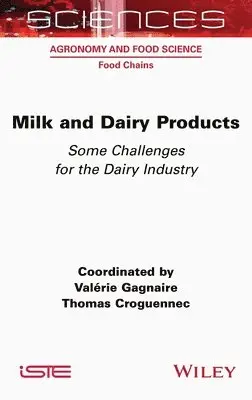
    Milk and Dairy Products: Some Challenges for the Dairy Industry

    AvValérie Gagnaire,Valérie Gagnaire

    Inbunden, Engelska, 2024

    Del i serien ISTE Consignment

    1 731 kr

    Beställningsvara. Skickas inom 5-8 vardagar. Fri frakt över 249 kr.

    Beskrivning

    Milk is considered a complete food, consumed at all stages of life. It is transformed into numerous products, fermented or not, as well as into a variety of ingredients, in order to preserve it or some of its constituents from a few days to a few years.This book addresses the innovations that deal with milk and the use of gentle techniques that best preserve dairy constituents. This book explores some of the current challenges facing the milk processing industry, namely: i) showing the advances in infant milk formula to best mimic breastfeeding and the in vitro models that study newborn digestion, ii) combining tradition and new consumer expectations on emblematic dairy products, such as yogurt and fermented milk products, iii) defining optimal cheese-making practices to control both cheese quality and yield, iv) outlining the current research approaches to meet “consum’actor” demands, as well as those dealing with v) the fouling and cleaning of dairy equipment in a context of increasingly constrained water and energy use.

    Produktinformation

    • Utgivningsdatum:2024-09-17
    • Mått:156 x 234 x 18 mm
    • Vikt:671 g
    • Format:Inbunden
    • Språk:Engelska
    • Serie:ISTE Consignment
    • Antal sidor:288
    • Förlag:ISTE Ltd
    • ISBN:9781789451719

    Utforska kategorier

    • Servicesektorn inom Ekonomi och Ledarskap
    • Lantbruk, fiske och skogsbruk inom Ekonomi och Ledarskap
    • Tillverkningsteknik inom Naturvetenskap och teknik

    Mer om författaren

    Valérie Gagnaire is a research director at INRAE Institut Agro, UMR Science et Technologie du Lait et de l'Oeuf, France. A food biochemist, her research interests include the functionalization of dairy and plant mixes by fermentation with lactic acid bacteria in order to obtain enhanced nutritional, technofunctional and organoleptic properties, as well as health benefits.Thomas Croguennec is a professor in biophysical chemistry of dairy products at Institut Agro Rennes Angers, INRAE Institut Agro, UMR Science et Technologie du Lait et de l'Oeuf, France. His research interests include the structure and functionality relationships of dairy proteins.

    Innehållsförteckning

    • Preface ixValérie GAGNAIRE and Thomas CROGUENNECChapter 1. Infant Formulae: Ingredient Selection, Manufacturing Technology, Innovation, Challenges and Opportunities 1Nicolas MALTERRE, Loreto M. ALONSO-MIRAVALLES and James A. O’MAHONY1.1. Introduction 11.1.1. Context for formula-feeding 11.1.2. Human and bovine milk 21.2. Types of infant formula and respective regulations 41.2.1. Infant or first-age formula 41.2.2. Follow-on or second-age formula 71.2.3. Cereal-based foods and baby foods 81.2.4. Available formats of infant and follow-on formulae 111.2.5. Formulae for special medical purposes 111.3. Ingredients 131.3.1. Proteins 131.3.2. Lipids 151.3.3. Carbohydrates 161.3.4. Minor nutrients 161.3.5. Ingredient innovation for infant formula 171.4. Technological options for manufacture of infant nutritional products 201.4.1. Powders versus liquids 201.4.2. Innovation in processing technologies for infant formula 271.5. Conclusion 281.6. References 28Chapter 2. Strengths and Limitations of Current In Vitro Models Used for Studying Infant Digestion 41Amira HALABI, Thomas CROGUENNEC and Amélie DEGLAIRE2.1. Introduction 412.2. Specificities of infant digestion 432.2.1. Anatomy and function 432.2.2. Protein digestion 452.2.3. Lipid digestion 472.2.4. Carbohydrate digestion 512.3. In vitro gastrointestinal digestion models 512.3.1. In vitro static and semi-dynamic models 582.3.2. In vitro dynamic model 632.4. In vitro colon fermentation models 662.5. Other in vitro models 662.6. Conclusion 672.7. References 68Chapter 3. Yogurts and Fermented Milks 79Marie-Hélène FAMELART, Sylvie TURGEON, Valérie GAGNAIRE, Gwénaël JAN, Eric GUEDON, Audrey GILBERT, Anne THIERRY, Jean-Philippe DROUIN-CHARTIER3.1. What are yogurts and fermented milks? 793.2. Yogurt and fermented milk production 813.2.1. Dairy blend formulation (milk composition and standardization) 813.2.2. Homogenization and heat treatment 823.2.3. The fermentation microbiota and its role in techno-functional and organoleptic properties 843.3. Microstructure--texture--functionality relationships 913.3.1. Microstructure of firm yogurts 913.3.2. Microstructure of stirred yogurts 933.3.3. Techniques for observing yogurt structure 943.3.4. Links between microstructure and physical or sensory properties 973.3.5. Syneresis 983.4. Nutrition and health 993.4.1. Consumption trends 993.4.2. Yogurt and health -- epidemiological perspectives 993.4.3. Yogurt and health -- clinical perspectives 1023.4.4. Yogurt and health -- general outlook 1073.5. General conclusion: yogurts for the future 1093.6. References 111Chapter 4. Enzymatic Gelation of Milk, Curd Draining and Cheese Yields 129Julien BAULAND, Sébastien ROUSTEL, Marc FAIVELEY, Marie-Hélène FAMELART and Thomas CROGUENNEC4.1. Introduction 1294.2. Casein micelle: structure, stability and equilibrium with the soluble phase of milk 1304.2.1. Casein micelle structure and stability 1304.2.2. Mineral equilibrium with the soluble phase of milk 1334.3. Enzymatic coagulation of milk: formation and aging of a colloidal gel. 1374.3.1. Hydrolysis ofκ-casein and aggregation of para-micelles 1374.3.2. Gel structure and rheological properties in the linear domain 1394.3.3. Mechanisms of gel aging 1404.3.4. Effect of variations of physico-chemical conditions and milk composition on the structure and the rheological properties of the enzymatic gel 1434.3.5. Rheological properties at large strains 1474.4. Physics of cheese curd and mechanisms of fat and protein losses during continental cheese manufacture 1484.4.1. Macrosyneresis of the curd 1484.4.2. Fat and protein losses during cutting and stirring 1544.5. Conclusion 1634.6. References 164Chapter 5. Do Technological Operations Have an Impact on the Nutritional Properties of Dairy Products? 173Frédéric GAUCHERON and Constance BOYER5.1. Introduction 1735.2. Uses, benefits and consequences of heat treatments and homogenization 1745.2.1. Heat treatments 1745.2.2. Homogenization 1775.3. Purification of dairy constituents to obtain high value-added fractions 1795.3.1. Dairy proteins 1795.3.2. Bioactive peptides 1795.3.3. Polar lipids 1805.4. Biotechnology for dairy products: using enzymes and micro-organisms of interest 1815.4.1. Lactose removal 1815.4.2. Use of micro-organisms 1815.5. Dairy products for tomorrow? What technologies? What research? 1835.5.1. Dairy products for tomorrow? 1835.5.2. What new milks and technologies need to be adapted? What kind of research? 1845.6. References 188Chapter 6. Fouling in the Dairy Industry 193Weiji LIU and Guillaume DELAPLACE6.1. Introduction 1936.2. Thermal processing of milk and related issues 1946.3. Composition of milk and fouling deposits 1966.4. Thermal denaturation of whey proteins 1986.4.1. β-lactoglobulin (BLG) 1986.4.2. Thermal denaturation mechanisms of BLG 1996.4.3. Thermal denaturation kinetic models of BLG 2076.4.4. Caseins and their chaperone-like functions 2126.5. Mineral precipitations 2206.5.1. Calcium phosphate precipitation. 2206.5.2. Effect of calcium on BLG denaturation and fouling 2226.6. Overall fouling mechanisms and influencing factors 2256.7. Fouling models 2296.7.1. Fouling characteristics: definition and evolution 2296.7.2. One-dimensional fouling models 2326.7.3. Two/three-dimensional CFD fouling models 2366.7.4. Other fouling models 2376.8. Cleaning of dairy fouling 2406.9. Conclusions 2416.10. References 242List of Authors 261Index 265