• Fri frakt över 249 kr
  • •
  • Snabba leveranser
  • •
  • Billiga böcker
Kundservice

Du är på sajten för privatpersoner.

Företag, bibliotek eller offentlig verksamhet?

Du handlar på classic.bokus.com, där alla dina funktioner finns intakta.
Till classic.bokus.com
Bokus logotyp. Gå till startsidan.
  • Erbjudanden
  • Nyheter
  • Student
  • Topplistor
  • Barn & ungdom
  • Bokus Play
  • E-böcker
  • Pocketböcker
  • Spel & pussel

10% rabatt på allt med kod: NYSTART10 →

Sidfot

Mina sidor

    Hjälp

    • Kundservice
    • Vanliga frågor och svar
    • Frakt och leverans
    • Retur vid ångerrätt
    • Reklamera vara
    • Betalning
    • Köpvillkor
    • Allmänna villkor
    • Information om webbplatsens tillgänglighet

    Om Bokus

    • Om oss
    • Pressrum
    • För studenter
    • För företag
    • För bibliotek och offentlig verksamhet
    • För leverantörer
    • Hållbarhet

    Populärt

    • Aktuella erbjudanden
    • Presentkort
    • Studentlitteratur
    • Nya böcker
    • Topplistor
    • Signerade böcker
    • Engelska böcker

    Inspiration

    • Boktips
    • BookTok
    • Populära bokserier
    • Barnbokskaraktärer
    • Populära författare
    Logotyp för Bokus
    Följ oss på Facebook (extern länk)Följ oss på Instagram (extern länk)Följ oss på YouTube (extern länk)Följ oss på TikTok (extern länk)
    bokus @ CookiesAnpassa cookiesIntegritetspolicyKöpvillkor
    Till Citymail hemsida (extern länk)Till Budbee hemsida (extern länk)Till Postnord hemsida (extern länk)Till Schenker hemsida (extern länk)Till Early Bird hemsida (extern länk)Till Walleys hemsida (extern länk)
    1. Samhälle och politik
    2. Politik och statsskick
    3. Centralt styre och förvaltning

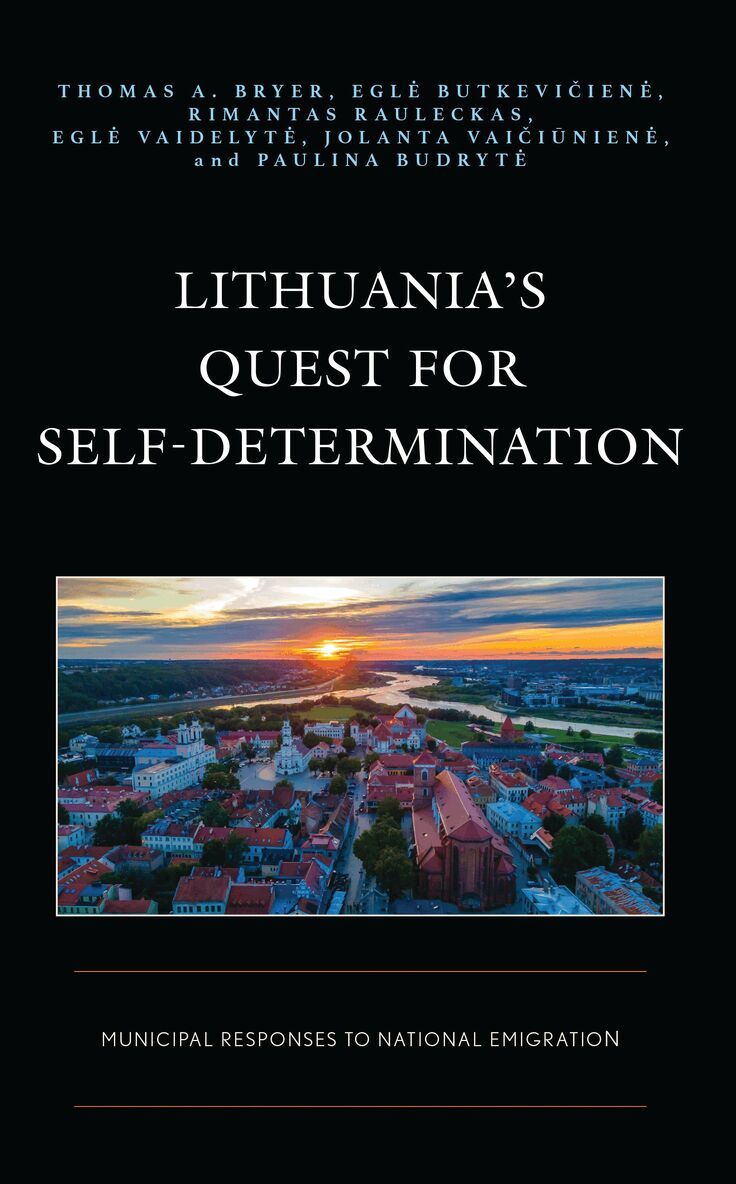
    Lithuania’s Quest for Self-Determination

    Municipal Responses to National Emigration

    AvThomas A. Bryer,Egle Butkeviciene

    Inbunden, Engelska, 2023

    Del i serien Democratic Dilemmas and Policy Responsiveness

    978 kr

    Beställningsvara. Skickas inom 10-15 vardagar. Fri frakt över 249 kr.

    Beskrivning

    Self-determination in the European Union rests on the strength and skills of a country’s representatives to manage and leverage relationships with other nations, and for individuals it rests on the ability to use autonomy and freedom wisely. To flourish, an individual must consciously determine their own path. Similarly, we can say a country can flourish. Self-determinism for a country is conditioned on the forces that facilitate or hinder its ability to succeed as a society. The same forces that can help a nation to flourish might also accelerate the decision to emigrate among a nation’s people. This is the paradox, and it is the quest: national and individual self-determination, to allow choice for emigration but to have strength of culture, civics, and institutions to discourage it, or to encourage return migration for those who have left. In this book, we address this paradox and this quest using the case of Lithuania. More specifically, we examine how municipalities can and do respond to ongoing population shrinking due to emigration in Lithuania, the non-economic factors that facilitate decisions to emigrate, and the opportunities for local governments to shrink smartly or reverse shrinkage.

    Produktinformation

    • Utgivningsdatum:2023-11-24
    • Mått:160 x 237 x 17 mm
    • Vikt:399 g
    • Format:Inbunden
    • Språk:Engelska
    • Serie:Democratic Dilemmas and Policy Responsiveness
    • Antal sidor:158
    • Förlag:Bloomsbury Publishing Plc
    • ISBN:9781793642523

    Utforska kategorier

    • Centralt styre och förvaltning inom Samhälle och politik
    • Migration inom Samhälle och politik
    • Statsskick: demokrati inom Samhälle och politik

    Mer om författaren

    Thomas Andrew Bryer is professor of public administration at the University of Central Florida and in the Faculty of Social Sciences, Arts, and Humanities at Kaunas University of Technology. Paulina Budryte is researcher and lecturer at Kaunas University of Technology.Egle Vaidelyte is full professor, vice-dean for studies and a member of research group “Civil Society and Sustainability” at Kaunas University of Technology.Egle Butkeviciene is full professor of Sociology and head of Committee for Political Science, Sociology and Public Governance Study Programs at Kaunas University of Technology.Rimantas Rauleckas is associate professor and a member of “Public Governance” research group at Kaunas University of Technology. Jolanta Vaiciuniene is head of the Municipal Training Centre and member of the research ground "Civil Society and Sustainable Development" at Kaunas University of Technology.

    Recensioner i media

    “Lithuania, a small northern eastern European country with 2.8 million people, has a long history of emigration and lost around two million of its citizens during centuries. Its sixth citizen left the country during the last 25 years. Why did Lithuanians migrate in the 19th century? What were the main motives for emigration and how did these patterns change in the 20th and 21st century? How could this be explained? What do Lithuanian municipalities think about emigration and how do they respond to it? Go to the Lithuanian migration journey with 'Democratic Dilemmas and Policy Responsiveness' and you will find the answers to those questions.”

    Innehållsförteckning

    • Introduction: The Lithuanian Paradox—Opportunity for Her People, Emigration from Her Municipalities Part I: Emigration: Causes, Consequences, and Municipal ResponsesChapter 1: Causes of Emigration—Cross-Disciplinary PerspectivesChapter 2: Municipal Responses to Emigration—Dealing with EmigrationPart II. The Case of Lithuania—Historical PerspectiveChapter 3: History of Lithuania: Summary from Early Times to Today and BeyondChapter 4: Population Trends in Lithuania from a Historical PerspectivePart III: Contemporary Emigration Causes, Consequences, and Municipal Responses in LithuaniaChapter 5: Profiles and Intentions of Lithuanians to EmigrateChapter 6: Emigration as a Civic ConcernChapter 7: Emigration as a Loyalty ConcernChapter 8: Municipal Responses to EmigrationPart IV: Final ReflectionsConclusion: Conclusion and Recommendations for Municipalities