Inbunden, Engelska, 2022
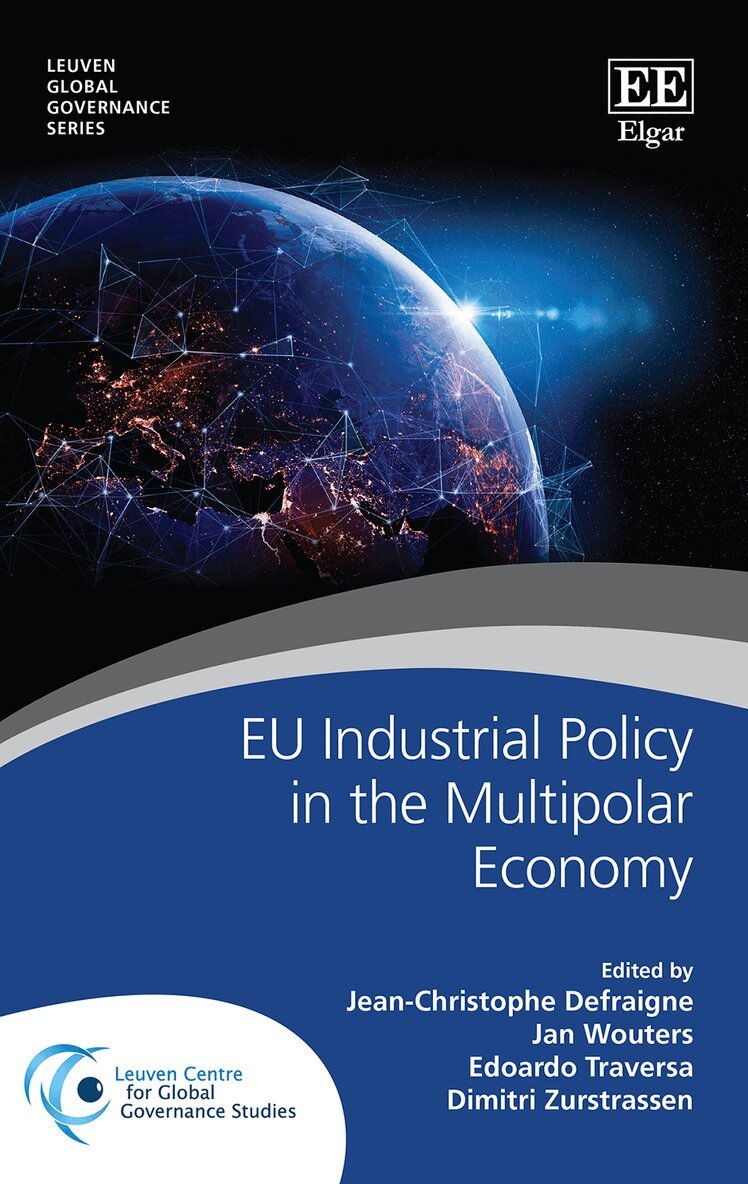
EU Industrial Policy in the Multipolar Economy
Av Jean-Christophe Defraigne, Jan Wouters, Edoardo Traversa, Dimitri Zurstrassen
Del i serien Leuven Global Governance series
2284 kr
Beställningsvara. Skickas inom 7-10 vardagar. Fri frakt över 249 kr.
Beskrivning
Produktinformation
- Utgivningsdatum: 2022-10-14
- Mått: 156 x 234 x undefined mm
- Format: Inbunden
- Språk: Engelska
- Serie: Leuven Global Governance series
- Förlag: Edward Elgar Publishing Ltd
- ISBN: 9781800372627
Utforska kategorier
Mer om författaren
Edited by Jean-Christophe Defraigne, Professor of International Economics, Institute for European Studies-CRIDIS, UC Louvain, Jan Wouters, Full Professor of International Law and International Organizations, Jean Monnet Chair ad personam, KU Leuven, Edoardo Traversa, Professor of Tax Law and European Law, Université Catholique de Louvain, Belgium and Dimitri Zurstrassen, Policy analyst and Lecturer on EU Industrial Policy, Luiss Hub for New Industrial Policy and Economic Governance (LUHNIP), Luiss Guido Carli University, Italy
Recensioner i media
‘In today’s global economy, high-tech rivalries, the transition to a green economy, and security concerns have encouraged more and more countries to expand government intervention in industry. Although many observers focus on the United States and China, the EU is economically comparable in size to both countries. In an increasingly multipolar world, the policies Europeans adopt may be decisive for the future of the global economy. Most analysts are pessimistic, given that the member states of the EU have failed to create the effective, centralized institutions they would need to manage such a policy at a continental scale. But these authors point to a silver lining. Centralized subsidy policies no longer really work, except where governments buy the output—as happens in the areas of transport, energy, and military arms production. Instead, key European interventions take the shape of the imposition of antitrust policy, regulatory standards, coordinated trade policy, and supply chain management—and here the EU wields much geo-economic power. It remains to be seen whether Europe’s regulatory clout can help it become an independent global competitor, a junior partner in a transatlantic alliance, or the object of manipulation by China and the United States. This book’s survey is a good starting point to understanding Europe’s current efforts to secure a place in the future global economy.’
Betyg & recensioner
0 recensioner
Inga recensioner tillgängliga.