• Fri frakt över 249 kr
  • •
  • Snabba leveranser
  • •
  • Billiga böcker
Kundservice

Du är på sajten för privatpersoner.

Företag, bibliotek eller offentlig verksamhet?

Du handlar på classic.bokus.com, där alla dina funktioner finns intakta.
Till classic.bokus.com
Bokus logotyp. Gå till startsidan.
  • Erbjudanden
  • Nyheter
  • Student
  • Topplistor
  • Barn & ungdom
  • Bokus Play
  • E-böcker
  • Pocketböcker
  • Spel & pussel

10% rabatt på allt med kod: NYSTART10 →

Sidfot

Mina sidor

    Hjälp

    • Kundservice
    • Vanliga frågor och svar
    • Frakt och leverans
    • Retur vid ångerrätt
    • Reklamera vara
    • Betalning
    • Köpvillkor
    • Allmänna villkor
    • Information om webbplatsens tillgänglighet

    Om Bokus

    • Om oss
    • Pressrum
    • För studenter
    • För företag
    • För bibliotek och offentlig verksamhet
    • För leverantörer
    • Hållbarhet

    Populärt

    • Aktuella erbjudanden
    • Presentkort
    • Studentlitteratur
    • Nya böcker
    • Topplistor
    • Signerade böcker
    • Engelska böcker

    Inspiration

    • Boktips
    • BookTok
    • Populära bokserier
    • Barnbokskaraktärer
    • Populära författare
    Logotyp för Bokus
    Följ oss på Facebook (extern länk)Följ oss på Instagram (extern länk)Följ oss på YouTube (extern länk)Följ oss på TikTok (extern länk)
    bokus @ CookiesAnpassa cookiesIntegritetspolicyKöpvillkor
    Till Citymail hemsida (extern länk)Till Budbee hemsida (extern länk)Till Postnord hemsida (extern länk)Till Schenker hemsida (extern länk)Till Early Bird hemsida (extern länk)Till Walleys hemsida (extern länk)
    1. Ekonomi och Ledarskap
    2. Industrier och branscher
    3. Servicesektorn

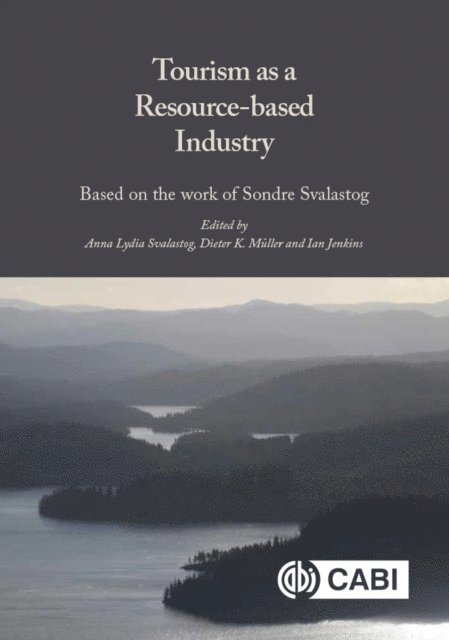
    Tourism as a Resource-based Industry

    Based on the Work of Sondre Svalastog

    AvAnna Lydia Svalastog,Dieter Müller

    E-bok
    Engelska, 2022

    1 581 kr

    Läs direkt i Bokus Reader – eller ladda ned till din enhet

    Beskrivning

    Tourism as a Resource-based Industry presents the conceptual framework of the Norwegian economic geographer Sondre Svalastog and functions as a practical tool for analyzing and identifying resources when working towards a more sustainable tourism industry. Tourism resources and their sustainability are analysed through the lens of a multidisciplinary approach which includes social, economic, cultural and natural dimensions. Contextual awareness is achieved by combining research-based knowledge with local know-how and information on local conditions. The book facilitates a way forward that examines both productivity and sustainability. The usefulness and value of Svalastog's conceptual work is demonstrated by a selection of new case studies by experts in the field, from different countries including Sweden, Norway, Slovenia, and the UK. This book: - Identifies local conditions and resources, climate change concerns, different types of tourists and a variety of challenges in high-cost and low-cost countries. - Considers how best to maximise potential and production, ensuring that both the host community and tourist benefits. - Provides a wide-ranging selection of case studies covering topics such as urban heritage, national parks, niche tourism and location-specific tourism products. - Presents ideas on how to secure sound planning within the industry, using conceptual and methodological tools. Tourism researchers and students will find this book helpful for understanding the development of tourism and how it can contribute to the UN Agenda 2030 which reflects the urgency for change, to secure cultural and natural resources, health and social resilience, and the stability of a socially constructed economy. Thus, tourism research needs to include a constant review and if required, renewal of processes that manage how society, culture and natural resources are used to achieve a balanced sustainable tourism process.

    Produktinformation

    • Utgivningsdatum:2022-08-17
    • Språk:Engelska
    • Antal sidor:176
    • Filformat:EPUB
    • Kopieringsskydd:LCP
    • ISBN:9781800621480
    • Förlag:CABI Publishing

    Utforska kategorier

    • Servicesektorn inom Ekonomi och Ledarskap

    Mer om författaren

    Anna Lydia Svalastog (Edited By) University where her research went in two directions, in part Sámi Studies, and in part Science and Technology Studies, in particular risk handling of plant science and GMO. In 2005 she became Associate Professor of religious studies. In 2007 she returned to Uppsala University and Centre for Resarch Ehics and Bioethics where she worked on research ethics and biobanks, and wrote the history of genetic research on the Sámi people in Sweden. From 2014 she has been professor of psychosocial work, and primarily published in the area of health in the digital society. Svalastog has ben a member of the COST Acion 1001 Bio-objects, and is at the advisory board for the H2020 project PANELFIT. She chairs the European based research network Navigating Knowledge Landscape. Svalastog has been co-editor of six previous anthologies.Dieter K Müller (Edited By) Prof. Dieter K. Müller holds a PhD from Umeå University and is now employed as professor. Currently, he is Deputy Vice-chancellor with special responsibility for research, research education and outreach within the Social Sciences and the Humanities. Dieter Müller has research interests with respect to tourism and regional development, mobility and tourism in peripheral areas. His research interests specifically include almost all aspects of second homes and second home related mobility, Sami tourism, nature-based tourism, tourism labor markets, regional development and rural change particularly in Northern peripheries and Polar areas. He has been the chair of International Geographical Union's Commission on Tourism, Leisure and Global Change (2012-20) and is a member of the International Polar Tourism Research Network (IPTRN). He has previously been selected for American Association of Geographers Roy Wolfe Award for outstanding contributions to the field presented by the Recreation, Tourism and Sport Specialty Group (2018). Currently Dieter Müller serves on the editorial board of Current Issues in Tourism, Tourism Geographies, Scandinavian Journal of Hospitality and Tourism, Matkailututkimus - The Finnish Journal of Tourism Research and the Croatian Geographical Bulletin.Ian Jenkins (Edited By) Dr Ian Jenkins is a geographer who has worked in the tourism and leisure industries for the last twenty seven years as a researcher, senior lecturer, consultant and director of several research units. His work has resulted in numerous publications including industry reports, conference papers, academic articles and book chapters; he has also been a peer reviewer for journal articles. Some of the research projects he has been involved with have resulted in legislative change and improved industry standards. In addition, he has undertaken work for prestigious organisations such as UNESCO, British Council, British Standards Institute, Health and Safety Executive, VisitWales and CEN. His research and consultancy expertise covers subjects such as: responsible/sustainable tourism, niche tourism development, risk and safety management and adventure tourism. Ian is currently an examiner for the University of South Wales and has recently been an external examiner for the University of Birmingham at both undergraduate and postgraduate level and also a PhD examiner at Cranfield University. Ian has been the co-editor of a special edition of the Laureate Hospitality Journal.

    Innehållsförteckning

    • 1: Introduction: A resource approach to tourism. Anna Lydia Svalastog, Ian Jenkins and Dieter K. Müller. Section 1: Tourism as a Resource-based Industry. 2: Tourism in local communities. Sondre Svalastog. 3: Localization of tourism. Sondre Svalastog. 4: About resource analyses. Sondre Svalastog. 5: On the production process and international competitiveness. Sondre Svalastog. Section 2: Case Studies. 6: National parks, protected areas and tourism labor markets in Arctic Sweden. Dieter K. Müller. 7: The competitive power in the Norwegian and local tourist industry. Børge Dahle. 8: Norwegian salmon fishing tourism: Only a resource-based tourism product? Øystein Aas, Stian Stensland & Sjur Baardsen. 9: Postmodernist niches in tourism development. Ian Jenkins. 10: Living environment and attractiveness. Lars Aronsson. 11: Heritage trails through Dolenjska and Bela krajina in Slovenia: Tourism entrepreneurship in action and stakeholders’ relationship. Marko Koscak. 12: The post-industrial urban landscape: Heritage resources enhancement in urban renewal: The case-study of Central Birmingham (UK). Anthony S.Travis. 13: Rethinking tourism development: Theoretical perspectives -Concluding synopsis. Ian Jenkins.