• Fri frakt över 249 kr
  • •
  • Snabba leveranser
  • •
  • Billiga böcker
Kundservice

Du är på sajten för privatpersoner.

Företag, bibliotek eller offentlig verksamhet?

Du handlar på classic.bokus.com, där alla dina funktioner finns intakta.
Till classic.bokus.com
Bokus logotyp. Gå till startsidan.
  • Erbjudanden
  • Nyheter
  • Student
  • Topplistor
  • Barn & ungdom
  • Bokus Play
  • E-böcker
  • Pocketböcker
  • Spel & pussel

10% rabatt på allt med kod NYSTART10 →

Sidfot

Mina sidor

    Hjälp

    • Kundservice
    • Vanliga frågor och svar
    • Frakt och leverans
    • Retur vid ångerrätt
    • Reklamera vara
    • Betalning
    • Köpvillkor
    • Allmänna villkor
    • Information om webbplatsens tillgänglighet

    Om Bokus

    • Om oss
    • Pressrum
    • För studenter
    • För företag
    • För bibliotek och offentlig verksamhet
    • För leverantörer
    • Hållbarhet

    Populärt

    • Aktuella erbjudanden
    • Presentkort
    • Studentlitteratur
    • Nya böcker
    • Topplistor
    • Signerade böcker
    • Engelska böcker

    Inspiration

    • Boktips
    • BookTok
    • Populära bokserier
    • Barnbokskaraktärer
    • Populära författare
    Logotyp för Bokus
    Följ oss på Facebook (extern länk)Följ oss på Instagram (extern länk)Följ oss på YouTube (extern länk)Följ oss på TikTok (extern länk)
    bokus @ CookiesAnpassa cookiesIntegritetspolicyKöpvillkor
    Till Citymail hemsida (extern länk)Till Budbee hemsida (extern länk)Till Postnord hemsida (extern länk)Till Schenker hemsida (extern länk)Till Early Bird hemsida (extern länk)Till Walleys hemsida (extern länk)
    1. Samhälle och politik
    2. Sociologi och antropologi
    3. Antropologi

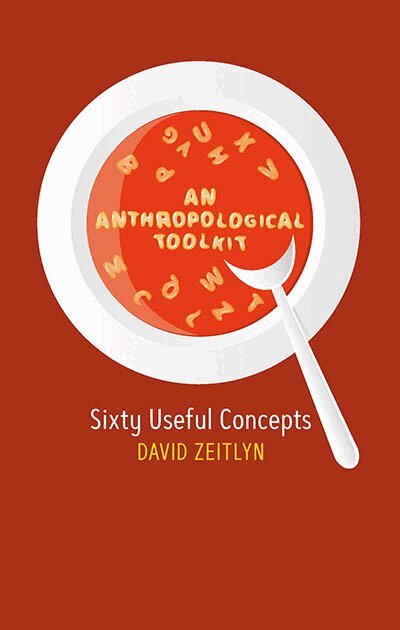
    Anthropological Toolkit

    Sixty Useful Concepts

    AvDavid Zeitlyn

    Häftad, Engelska, 2022

    192 kr

    Beställningsvara. Skickas inom 5-8 vardagar. Fri frakt över 249 kr.

    Fler format och utgåvor

    Inbunden

    1 648 kr

    Beskrivning

    Presenting sixty theoretical ideas, David Zeitlyn asks ‘How to write about anthropological theory without making a specific theoretical argument.’ “David Zeitlyn has written a wryly engaging, short book on, essentially, why we should not become theoretical partisans—that, indeed, being a serious theorist means accepting precisely that principle.”—Michael Herzfeld, Harvard UniversityTo answer, he offers a series of mini essays about an eclectic collection of theoretical concepts that he has found helpful over the years. The book celebrates the muddled inconsistencies in the ways that humans live their messy lives. There are, however, still patterns discernible: the actors can understand what is going on, they see an event unfolding in ways that are familiar, as belonging to a certain type and therefore, Zeitlyn suggests, so can researchers.From the introduction:This book promotes an eclectic, multi-faceted anthropology in which multiple approaches are applied in pursuit of the limited insights which each can afford…. I do not endorse any one of these idea as supplying an exclusive path to enlightenment: I absolutely do not advocate any single position. As a devout nonconformist, I hope that the following sections provide material, ammunition and succour to those undertaking nuanced anthropological analysis (and their kin in related disciplines)…. Mixing up or combining different ideas and approaches can produce results that, in their breadth and richness, are productive for anthropology and other social sciences, reflecting the endless complexities of real life. …This is my response to the death of grand theory. I see our task as learning how to deal with that bereavement and how to resist the siren lures of those promising synoptic overviews.This book is relevant to anthropology, communication studies, cultural studies and sociology.

    Produktinformation

    • Utgivningsdatum:2022-09-13
    • Mått:127 x 203 x 8 mm
    • Vikt:159 g
    • Format:Häftad
    • Språk:Engelska
    • Antal sidor:150
    • Förlag:Berghahn Books
    • ISBN:9781800735354

    Utforska kategorier

    • Antropologi inom Samhälle och politik
    • Sociologi inom Samhälle och politik
    • Kulturhistoria inom Historia och arkeologi

    Mer om författaren

    David Zeitlyn has been working with Mambila people in Cameroon since 1985. He taught at the University of Kent, Canterbury, for fifteen years before moving to Oxford as Professor of Social Anthropology in 2010. His recent books include Mambila Divination: Framing Questions, Constructing Answers (Routledge, 2020).

    Recensioner i media

    “Reflecting this eclecticism of social science research and writing, this slim volume is a good complement to college and university programs in the social sciences. Its message and contributions will also resonate with practicing professionals in social science fields…Recommended.” • Choice“The book’s pocket size and relatively short length are deceptive, given what it actually offers…While it works really well as a pedagogical tool for teaching both ethnography and anthropological theory, it offers more than that. Zeitlyn has written a book that is inspirational for seasoned anthropologists too… This is a methodologically and theoretically grounded starting point for appreciating both the complexity and messiness in people’s conduct and lives, while also not shying away from trying to apprehend the patchworks (or dapples) of ‘discernible patterns in the way that people live their lives’.” • Social Anthropology/Anthropologie Sociale“An Anthropological Toolkit is an engaging and readable rethink of how ethnographers might approach their materials… The chapters will help any reader think more richly about their interpretations of the world.” • Anthropological Journal of European Culture“I have much enjoyed reading this book. It is a rich collection of ideas and images to support empirical qualitative social science. It is phrased for anthropologists in the first instance, but is applicable as well to historians, sociologists, and anyone else trying to deliver a close and insightful account of social life.” • Michael Carrithers, Durham University

    Innehållsförteckning

    • List of FiguresAcknowledgementsIntroduction60 Words To Think WithA. Affordance; Agnosia‬; Aporia; Archaeology; Argumentation theory; Autopoiesis; Axonometric projectionB. Bifocal ethnography; Blueprints, scores and maps; Boundary objectsC. Cabling; Catachresis; Chronotopes and chronotypes; Collage/montage; Colligation; CommitmentD. Dialetheism/paraconsistencyE. Ekphrasis;Emic and etic; Epistemography; Epiphanies; Equifinality; Equivocation (controlled equivocation);. Essentially contested concepts; Exaptation;. ExemplarsF. Faithfulness; Figuration; Finitism; meaning finitism; Forbearing and ‘subjective counterfactuals’H. Hapax; Hesse NetsI. Incommensurability; Infirming; Instauration; Ironic detachment; Irrealism; IsolarionL. Life writingM. MosaicsN. Non-ergodicityO. OstensionP. Palimpsest memory; Partial views and partiality; Pattern language; Paraethnography; Positioning theory; ProsopographyR. Repleteness; Representation/non-representation; Representational forceS. Sgraffiti; Stochastic variation; SynaesthesiaT. Teleoanalysis; Things; Translation (anthropological translation)V. Vagueness; VignettesW. Wicked problemsCoda: So What? A Worked Example of Making Sense of Ethnographic FragmentIndex