• Fri frakt över 249 kr
  • •
  • Snabba leveranser
  • •
  • Billiga böcker
Kundservice

Du är på sajten för privatpersoner.

Företag, bibliotek eller offentlig verksamhet?

Du handlar på classic.bokus.com, där alla dina funktioner finns intakta.
Till classic.bokus.com
Bokus logotyp. Gå till startsidan.
  • Erbjudanden
  • Nyheter
  • Student
  • Topplistor
  • Barn & ungdom
  • Bokus Play
  • E-böcker
  • Pocketböcker
  • Spel & pussel

10% rabatt på allt med kod NYSTART10 →

Sidfot

Mina sidor

    Hjälp

    • Kundservice
    • Vanliga frågor och svar
    • Frakt och leverans
    • Retur vid ångerrätt
    • Reklamera vara
    • Betalning
    • Köpvillkor
    • Allmänna villkor
    • Information om webbplatsens tillgänglighet

    Om Bokus

    • Om oss
    • Pressrum
    • För studenter
    • För företag
    • För bibliotek och offentlig verksamhet
    • För leverantörer
    • Hållbarhet

    Populärt

    • Aktuella erbjudanden
    • Presentkort
    • Studentlitteratur
    • Nya böcker
    • Topplistor
    • Signerade böcker
    • Engelska böcker

    Inspiration

    • Boktips
    • BookTok
    • Populära bokserier
    • Barnbokskaraktärer
    • Populära författare
    Logotyp för Bokus
    Följ oss på Facebook (extern länk)Följ oss på Instagram (extern länk)Följ oss på YouTube (extern länk)Följ oss på TikTok (extern länk)
    bokus @ CookiesAnpassa cookiesIntegritetspolicyKöpvillkor
    Till Citymail hemsida (extern länk)Till Budbee hemsida (extern länk)Till Postnord hemsida (extern länk)Till Schenker hemsida (extern länk)Till Early Bird hemsida (extern länk)Till Walleys hemsida (extern länk)
    1. Medicin
    2. Medicin: allmänt
    3. Medicinhistoria

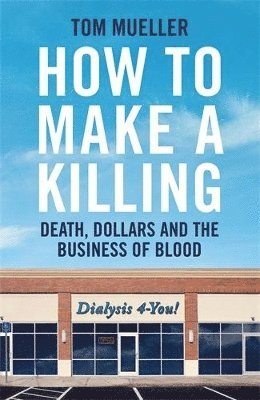
    How to Make a Killing

    Death, Dollars and the Business of Blood

    AvTom Mueller

    Inbunden, Engelska, 2023

    218 kr

    Skickas . Fri frakt över 249 kr.

    Fler format och utgåvor

    Häftad

    174 kr

    Inbunden

    285 kr

    E-bok

    204 kr

    Beskrivning

    'A terrifying story of profit before patients, and a chilling glimpse of what can happen when private companies are allowed to take charge of healthcare.' Gavin FrancisSix decades ago, researchers achieved the impossible: developing a treatment that transformed kidney failure from a death sentence to a manageable condition. Yet, in the hands of a predatory medical industry, this triumph led to skyrocketing costs and worsening care.A gripping account of privatised healthcare gone wrong, How to Make a Killing recounts how the optimism of the 1950s and 1960s - when transplants and dialysis machines offered hope - gave way to anguished debates about the ethics of rationing and profiting from life-saving care, and how Big Dialysis proliferated at the expense of its patients.A triumph of investigative research, Tom Mueller's book features an unforgettable cast of characters: CEOs who dress as musketeers to exhort more aggressive profit-seeking, nephrologist insiders who reveal the substandard care this causes, and heroic patients who risk their lives to reveal the truth.

    Produktinformation

    • Utgivningsdatum:2023-08-01
    • Mått:162 x 240 x 30 mm
    • Vikt:488 g
    • Format:Inbunden
    • Språk:Engelska
    • Antal sidor:288
    • Förlag:Profile Books Ltd
    • ISBN:9781800818422

    Utforska kategorier

    • Medicinhistoria inom Medicin
    • Njurmedicin och nefrologi inom Medicin
    • Samhällsmedicin och preventiv medicin inom Medicin

    Mer om författaren

    Tom Mueller is a New York Times bestselling author whose previous books include Crisis of Conscience: Whistleblowing in an Age of Fraud and Extra Virginity: The Sublime and Scandalous World of Olive Oil. His writing has appeared in the New Yorker, New York Times Magazine, National Geographic, and the Atlantic Monthly. He divides his time between the Pacific Northwest and Italy.

    Recensioner i media

    [A] grimly fascinating and humane exposé...How to Make a Killing is about a small part of the US health economy, but it functions as an eye-openingly baleful illustration of where the embedded incentives of such a system, if not sternly regulated, would inevitably lead in any country.